Clear Sky Science · en
Afuresertib plus fulvestrant for pretreated HR-positive, HER2-negative, advanced breast cancer: a phase Ib trial
Why this study matters to patients and families
For many people with advanced breast cancer, today’s drugs can keep the disease under control for a time, but often the cancer eventually learns to grow again. This study tests a new drug combination designed to "re-lock" some of the growth switches that cancer cells use after they become resistant to standard hormone-based treatments. Understanding whether this approach works, and how safe it is, may open another option for patients who have already been through several rounds of therapy.
A new partner for hormone therapy
Most breast cancers are driven by hormones such as estrogen. These tumors are called hormone receptor–positive and usually lack extra copies of a protein called HER2. Standard care for such advanced cancers combines hormone-blocking medicines with drugs that slow cell division, known as CDK4/6 inhibitors. While this strategy has improved survival, many tumors eventually outsmart it. Researchers have learned that one of the main escape routes runs through a chain of signals inside the cell often referred to as the PI3K–AKT–PTEN pathway, which helps cancer cells grow, survive, and resist hormone therapy. The current study explores whether blocking a key link in this chain, called AKT, together with the hormone-blocking drug fulvestrant, can regain control over tumors that have already progressed on earlier treatments.
The medicines being tested
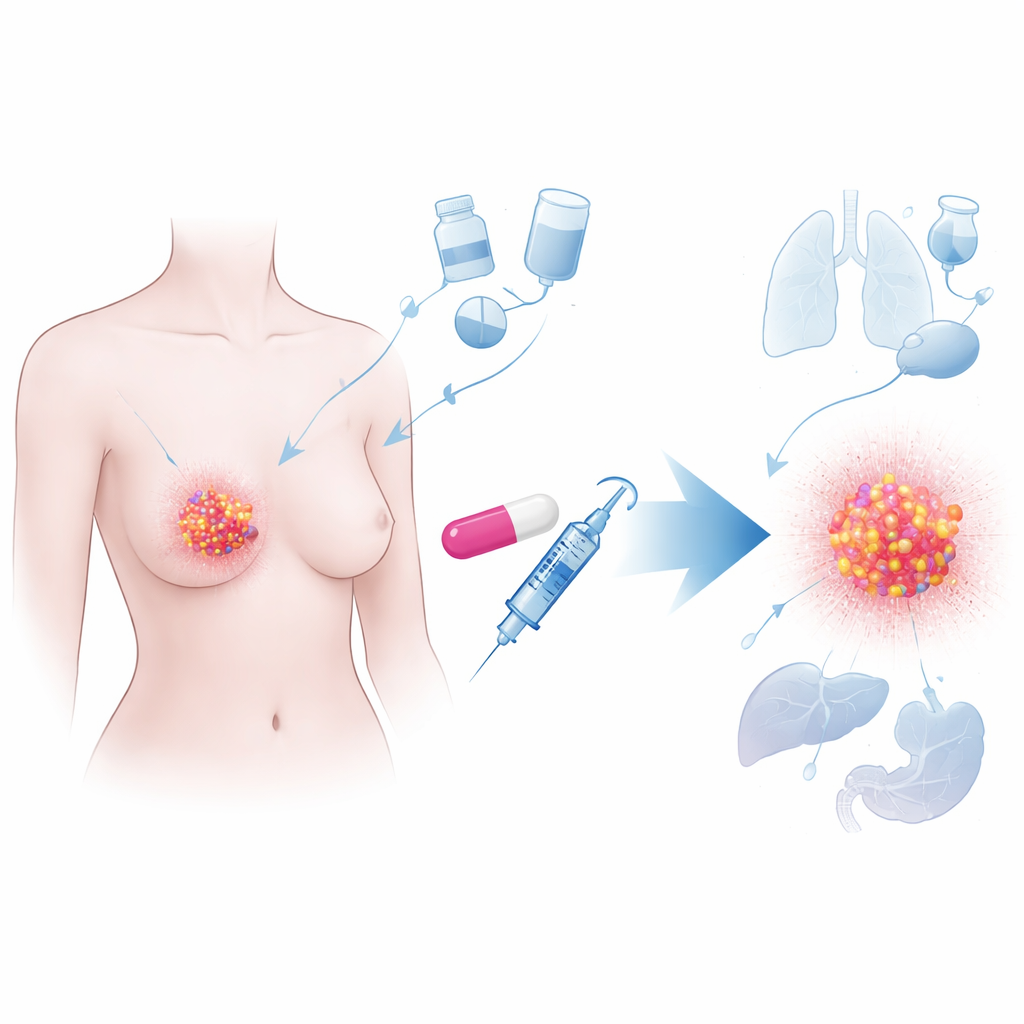
The trial focused on afuresertib, an oral drug that blocks all three major forms of AKT, and fulvestrant, an injectable hormone therapy that degrades the estrogen receptor inside cancer cells. Laboratory work suggested that afuresertib is highly selective for AKT, which might limit side effects such as high blood sugar that are seen with some similar medicines. It also works well at once-daily dosing. Because many patients’ tumors carry changes in genes linked to the AKT pathway (PIK3CA, AKT1, or PTEN), and some also have changes in the estrogen receptor gene ESR1, the team was especially interested in whether these genetic features influenced how well the drug pair worked.
How the trial was carried out
This phase Ib study was an early, single-arm trial designed mainly to test safety and look for signs of benefit. Thirty-one adults with hormone receptor–positive, HER2‑negative breast cancer that had spread beyond the breast took part in centers in China and the United States. Nearly all had already received hormone therapy, about two-thirds had been treated with a CDK4/6 inhibitor, and almost one-third had prior chemotherapy for advanced disease. Participants took 125 milligrams of afuresertib by mouth each day and received standard-dose fulvestrant injections on a schedule commonly used in practice. Treatment continued in four‑week cycles until the cancer worsened or side effects became unacceptable. Tumors were measured regularly using standard imaging rules, and blood or tissue samples were tested for pathway-related gene changes and ESR1 mutations.
What the researchers found
After a median follow-up of about 17 months, 8 of the 31 patients (26 percent) had their tumors shrink enough to be classified as a partial response, and another 17 had stable disease as their best outcome. Altogether, 71 percent of patients experienced "clinical benefit," meaning tumor shrinkage or stable disease lasting at least 24 weeks. The median time before the cancer started growing again was 8.2 months, with about one‑third of patients still progression‑free at one year. Among patients whose tumors carried PIK3CA, AKT1, or PTEN changes, responses were somewhat more frequent than in those without such changes, though both groups showed benefit. Patients with ESR1‑mutated tumors, which are often resistant to standard hormone therapy, appeared to respond at least as well as those without these mutations, and those with both ESR1 mutations and AKT‑pathway alterations showed particularly promising response and benefit rates.

Safety and side effects
All participants experienced some side effects, which is expected when testing drugs that interfere with major growth and metabolism pathways. The most frequent problems were increased blood sugar, diarrhea, and skin rash. Importantly, no patient developed severe high blood sugar, and fewer than one in ten had severe diarrhea or liver‑related lab abnormalities. About one‑third of patients needed temporary treatment interruptions, and a small number required dose reductions of afuresertib, but no one had to permanently stop either drug because of side effects. There were no deaths related to treatment, and serious complications were rare, suggesting that this combination is manageable for most patients under careful monitoring.
What this could mean going forward
To a non‑specialist, these results suggest that pairing afuresertib with fulvestrant helped hold advanced hormone-driven breast cancers in check for many patients who had already exhausted standard hormone options, without causing unexpected safety problems. Although the trial was small and lacked a comparison group, the level and durability of tumor control look similar to those seen with another approved AKT‑blocking drug, and may offer advantages in side effects for some patients. Larger, randomized phase III studies now underway will be needed to confirm whether afuresertib truly improves survival and to identify which genetic profiles gain the most from this strategy. If confirmed, this approach could join the growing toolbox of targeted therapies that extend and personalize treatment for people living with advanced breast cancer.
Citation: Zhang, P., Sun, T., Wang, Y. et al. Afuresertib plus fulvestrant for pretreated HR-positive, HER2-negative, advanced breast cancer: a phase Ib trial. Nat Commun 17, 2456 (2026). https://doi.org/10.1038/s41467-026-69225-2
Keywords: advanced breast cancer, hormone receptor positive, AKT inhibitor, targeted therapy, clinical trial