Clear Sky Science · en
Indolent primary cutaneous B-cell lymphomas resemble persistent antigen reactions without signs of dedifferentiation
Why slow-growing skin lymphomas matter
Some skin “lymphomas” behave more like stubborn but gentle immune reactions than classic cancers. This study asks a question that deeply affects diagnosis, treatment, and patient anxiety: are certain primary cutaneous B‑cell lymphomas truly malignant, or are they prolonged immune responses driven by an unknown trigger in the skin?
Different kinds of skin B-cell growths
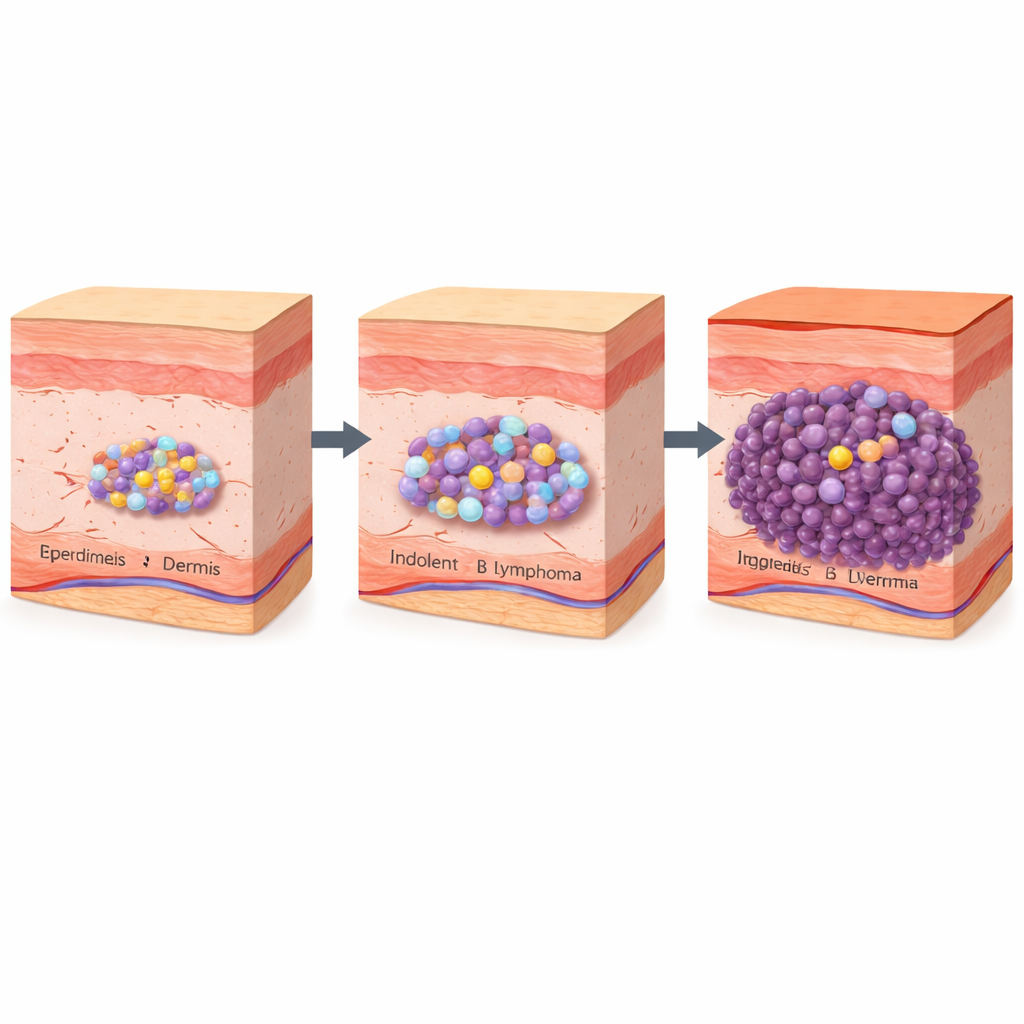
Doctors group several disorders under the umbrella of primary cutaneous B‑cell lymphomas. Two of them—primary cutaneous marginal zone lymphoma (pcMZL) and primary cutaneous follicle centre lymphoma (pcFCL)—usually grow very slowly and rarely threaten life. A third, primary cutaneous diffuse large B‑cell lymphoma, leg type (pcDLBCL‑LT), is much more aggressive. There are also purely reactive conditions, once called “pseudolymphomas,” now termed reactive B‑cell–rich lymphoid proliferations (rB‑LP), which look lymphoma‑like under the microscope but generally behave benignly. Because labels like “lymphoma” strongly influence how patients perceive their illness and how doctors treat it, the authors set out to clarify which of these conditions are true cancers and which are more akin to chronic immune reactions.
Single cells reveal the immune landscape
The researchers used single‑cell RNA sequencing, a technique that reads which genes are active in thousands of individual cells at once, combined with detailed mapping of B‑cell receptors, the molecules that recognize antigens. They analysed skin biopsies from patients with pcMZL, pcFCL, pcDLBCL‑LT, rB‑LP, and from healthy volunteers, and compared them with published data from systemic lymphomas and gastric MALT (mucosa‑associated lymphoid tissue) lymphoma. This allowed them to separate normal “bystander” immune cells from clonally expanded B cells, which share the same receptor sequence and are presumed to be the main disease‑driving population. At the same time, they used advanced tissue staining to confirm, in independent samples, how many naïve, germinal‑centre‑like, memory, and plasma B cells were present in each disease.
A persistent but organized immune reaction
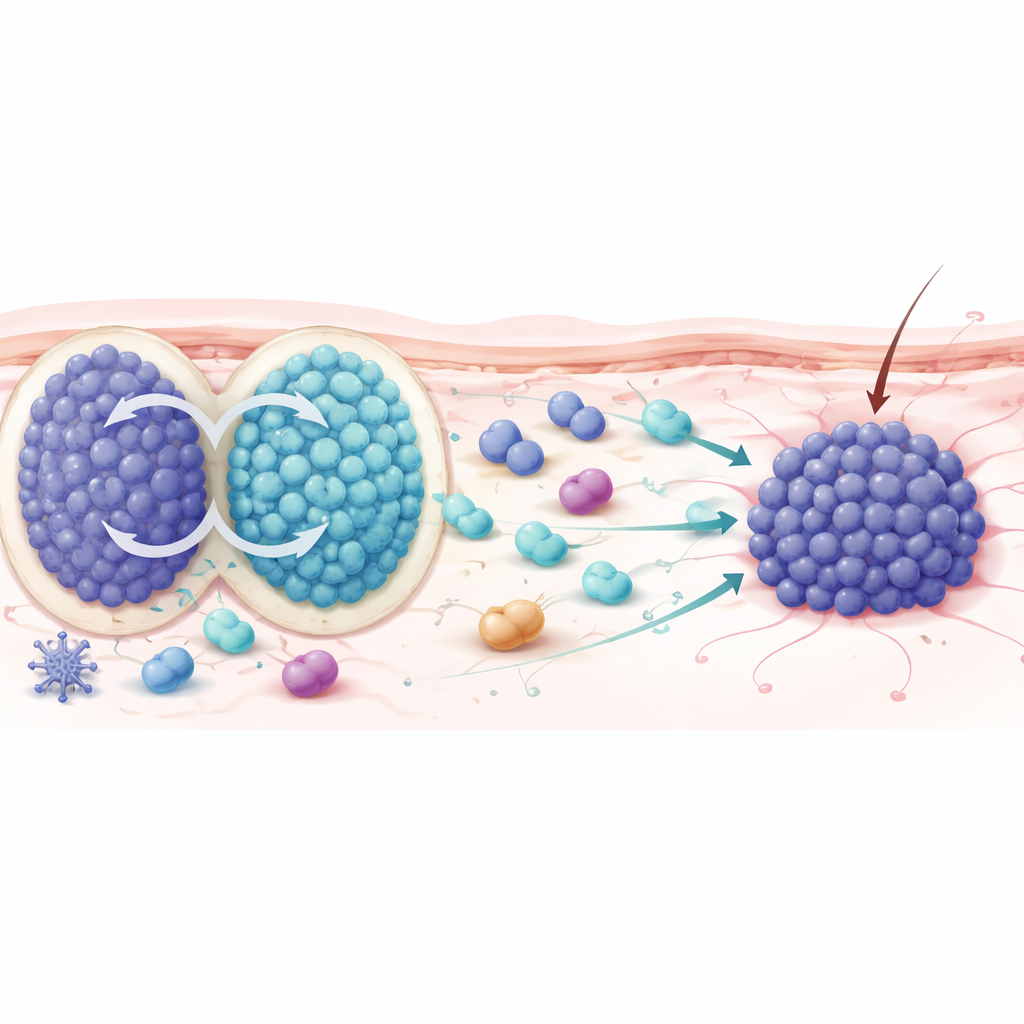
In pcMZL, pcFCL, and rB‑LP, the team found that the skin lesions contain all the pieces of an active germinal centre reaction—the normal structure where B cells mutate and are selected to improve their ability to recognize an antigen. These lesions harboured a mix of B‑cell stages, specialised helper T cells, and follicular dendritic cells, along with clear signatures of ongoing mutation in the B‑cell receptor genes. In other words, these indolent skin conditions looked like chronic, focused immune responses that never fully shut off. Moreover, in pcMZL the expanded clone followed the usual developmental path from naïve B cells through to plasma cells, and represented only a small fraction of all B cells in the lesion, more in line with a limited overgrowth than with a mass of runaway cancer cells.
How aggressive lymphomas differ
By contrast, pcDLBCL‑LT and systemic diffuse large B‑cell lymphoma showed very different behaviour. Their lesions were dominated by a single clone of “aberrant” B cells that no longer fit into normal developmental stages and expressed gene programs linked to high metabolic activity and survival rather than to a regulated immune response. These cells displayed high but relatively fixed levels of mutation, suggesting that the usual cycles of refinement had stopped; the cells had, in effect, broken free from the controls of the germinal centre. Gastric MALT lymphoma, despite being a marginal zone lymphoma like pcMZL on paper, also differed: its main clones resembled mature memory B cells and plasma cells that were no longer participating in an active germinal centre process. Together, these patterns show that aggressive and systemic lymphomas have lost the orderly structure and support network that characterise a physiological immune reaction.
Refining what we call cancer
These findings support a re‑framing of slow‑growing cutaneous B‑cell conditions. pcMZL, and to a large extent pcFCL, look more like long‑lasting, antigen‑driven immune reactions than like fully autonomous cancers. pcMZL in particular lacks strong clonal dominance, follows normal B‑cell maturation, and shares many features with reactive lesions, strengthening its reclassification as a lymphoproliferative disorder rather than a true lymphoma. For patients, this distinction matters: it suggests that, beyond directly targeting B cells, future treatments might aim to identify and remove the still‑unknown trigger in the skin, potentially turning off the reaction at its source and reducing both overtreatment and fear associated with the word “lymphoma.”
Citation: Griss, J., Gansberger, S., Oyarzun, I. et al. Indolent primary cutaneous B-cell lymphomas resemble persistent antigen reactions without signs of dedifferentiation. Nat Commun 17, 2366 (2026). https://doi.org/10.1038/s41467-026-69210-9
Keywords: cutaneous B-cell lymphoma, germinal center reaction, single-cell RNA sequencing, lymphoproliferative disorder, skin immune response