Clear Sky Science · en
Global patterns of inequality in pedestrian shade provision
Why shade on city sidewalks matters to everyone
On a scorching summer day, a patch of shade can mean the difference between a comfortable stroll and a dangerous ordeal. As heatwaves become more frequent and intense, city residents rely more and more on shade from trees and buildings to stay safe outdoors. This study asks a simple but powerful question: who actually gets to walk in the shade? By examining nine cities around the world, the authors reveal that shade along sidewalks is not shared fairly, and that this hidden divide often follows lines of income and privilege.
Heat, cities, and the simple power of shade
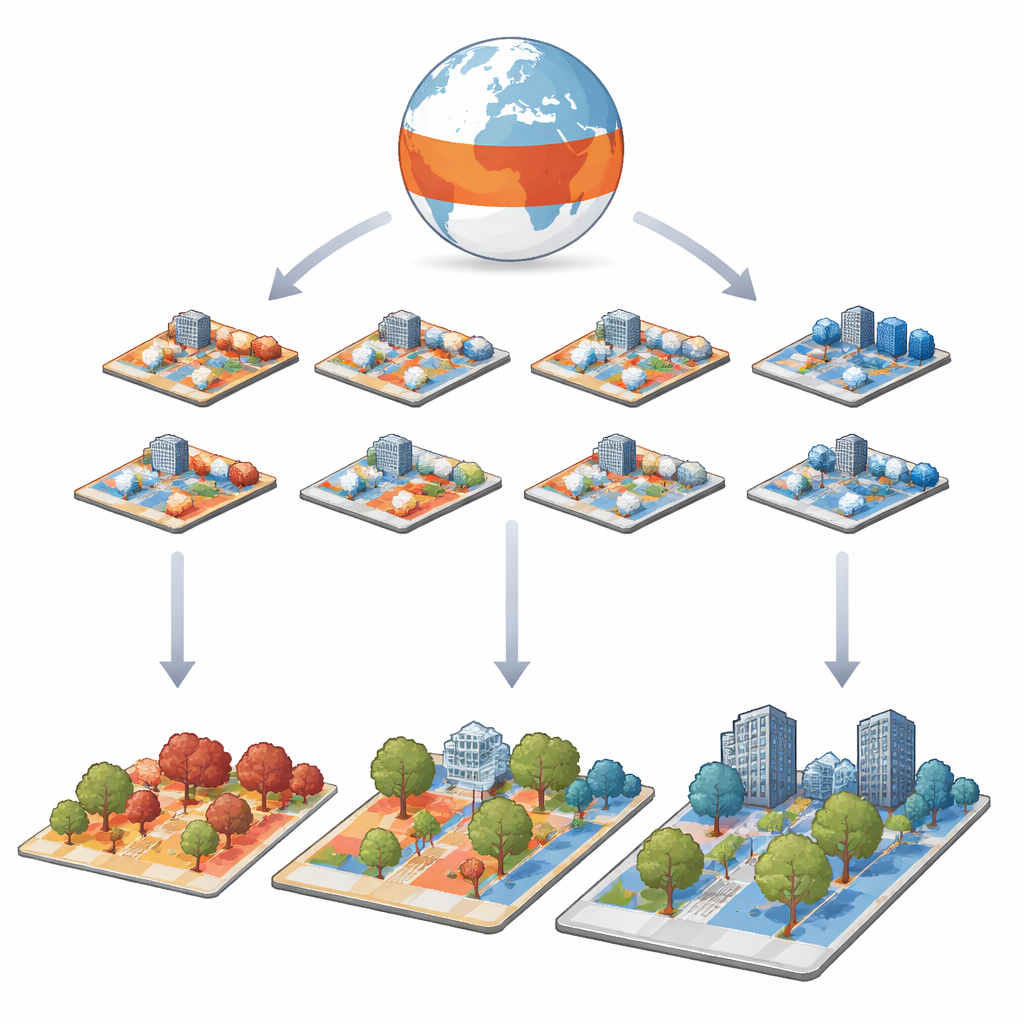
Modern cities trap heat, creating what scientists call urban heat islands—places where temperatures can soar well above surrounding regions. This extra heat strains power grids, damages infrastructure, and worsens health problems, especially for people who must work or travel outside during the hottest hours. One of the most effective ways to ease this burden is simple: block the sun. Trees and buildings that cast shadows onto streets and sidewalks can dramatically reduce the heat people feel, in some cases lowering the perceived burden by many degrees. Tree shade is especially powerful because leaves not only block sunlight but also cool the air through the release of moisture.
Measuring shade where people actually walk
Most past studies looked at green space or tree canopy in general, without asking whether that shade falls where people live and move. In contrast, this research focuses specifically on public pedestrian areas. The team generated detailed shade maps, at half-metre resolution, for sidewalks and footpaths in Amsterdam, Barcelona, Belém, Boston, Hong Kong, Milan, Rio de Janeiro, Stockholm, and Sydney. They simulated how shadows from buildings and trees fall between 10 a.m. and 5 p.m. on the summer solstice—the period of strongest sunlight in each city—then combined these maps with neighbourhood data on income, housing values, and population.
Unequal shade across and within cities
The maps reveal stark differences in how much sidewalk shade exists both across cities and between neighbourhoods within each city. High-latitude cities such as Stockholm and Milan tend to have more widespread shade, thanks to a mix of tall buildings and greenery. Yet even there, wealthier areas often enjoy more shade than poorer ones. In tropical cities like Belém and Rio de Janeiro, where intense sun makes shade most crucial, large swaths of low-income districts have almost no shaded pedestrian space. Peripheral and hillside neighbourhoods, many with informal housing and limited infrastructure, are especially exposed. Even in cities that seem well shaded overall, like Stockholm, the authors find that affluent communities still receive a disproportionate share.
How city form and wealth shape the shadows
To understand what drives these patterns, the researchers used a machine-learning model to relate shade levels to social and physical features of neighbourhoods. Two factors stand out: average tree height and average building height. Taller trees and taller buildings both increase shade on sidewalks, though in different ways. Mature trees cool air and surfaces, while building “street canyons” cast long shadows. Wealth indicators, such as per-capita income and home value, often show that poorer areas receive less shade, pointing to long-term underinvestment in trees and cooling infrastructure. In some European cities, lower-income districts do have more shade, but this is the exception rather than the rule. Overall, shade tends to cluster where money and political influence are stronger.
Shade as a sign of privilege, not a shared city benefit
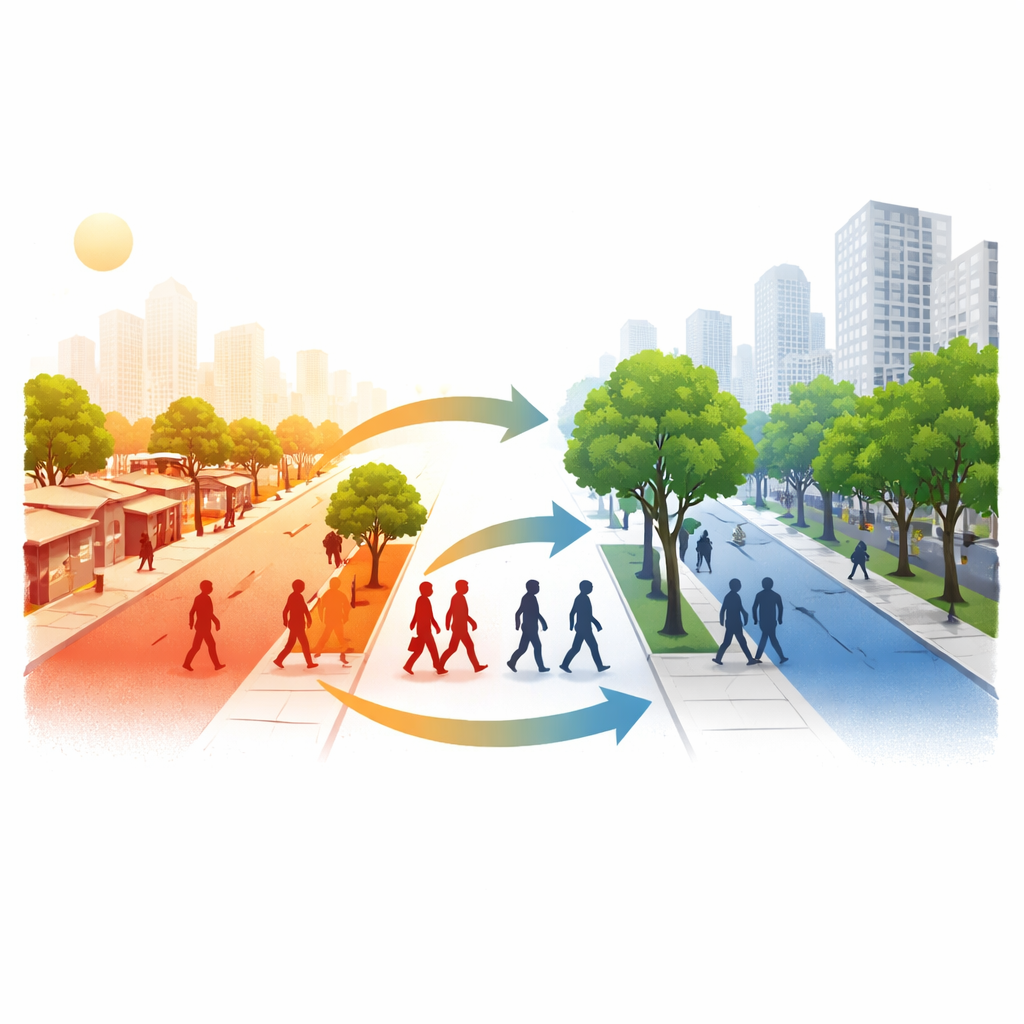
The study concludes that urban shade functions less as a common good and more as a spatial privilege. It is not just that many neighbourhoods have too little shade; it is that some already comfortable areas have much more than they need, while vulnerable communities are left exposed. Because the analysis focuses on public walkways, it highlights an everyday form of inequality that is easy to overlook when counting parks or tree cover in private yards. The authors argue that cities should treat shade as critical life-supporting infrastructure, like clean water or transit, and direct new trees, shade structures, and cooling designs first to overheated, underserved neighbourhoods. In a warming world, making sure everyone can walk in the shade is a matter of health, fairness, and basic dignity.
Citation: Gu, X., Beuster, L., Liu, X. et al. Global patterns of inequality in pedestrian shade provision. Nat Commun 17, 2563 (2026). https://doi.org/10.1038/s41467-026-69190-w
Keywords: urban heat, environmental justice, pedestrian shade, climate adaptation, city planning