Clear Sky Science · en
Maximising environmental savings from silicon photovoltaics manufacturing to 2035
Why cleaner solar panels matter
Solar power is often seen as an environmental silver bullet, but building solar panels still consumes energy and raw materials. As the world races to install tens of trillions of watts of solar capacity by mid-century, even small differences in how panels are made can add up to huge global effects. This study asks a simple question with big consequences: as the industry shifts to a new, more efficient type of silicon solar cell, can we also cut the hidden environmental costs of manufacturing all those panels?
A new kind of solar panel takes the stage
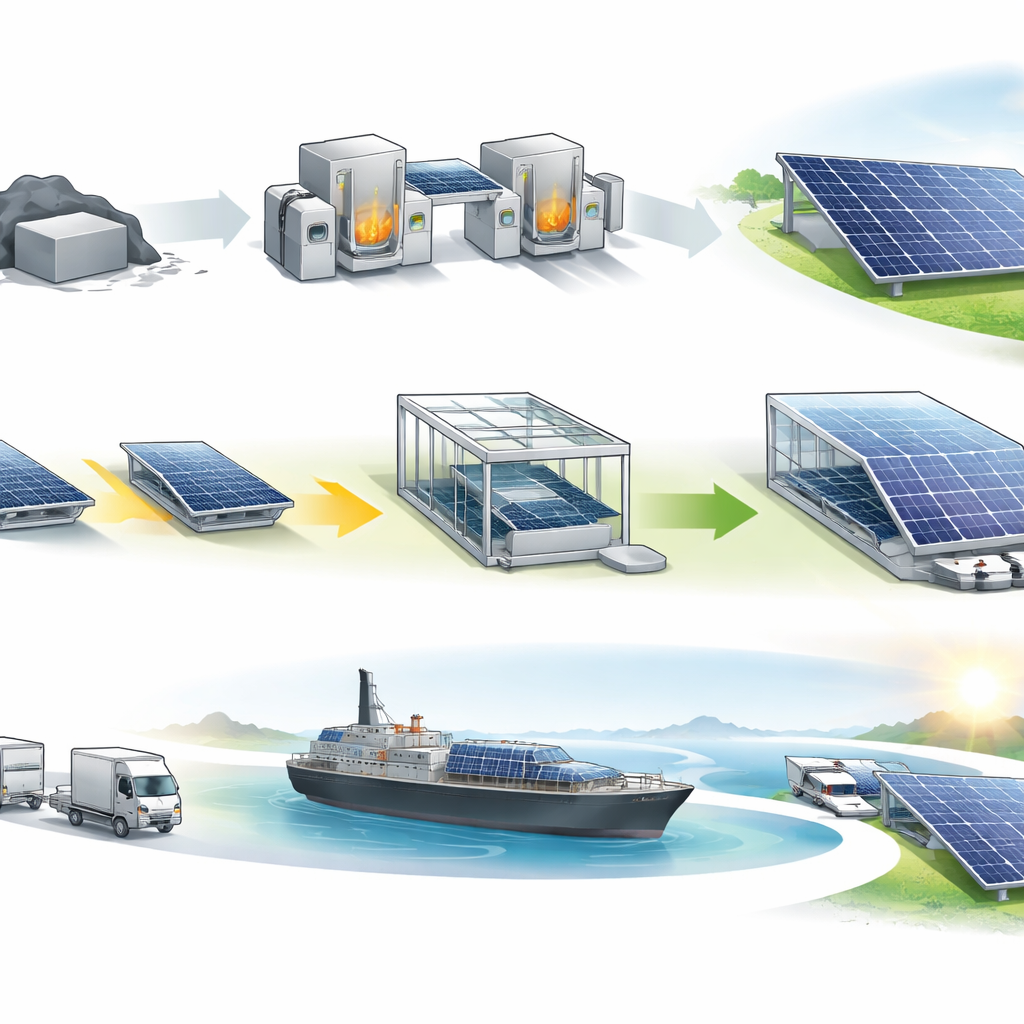
Today’s silicon solar market is rapidly moving from an older design called PERC to a higher-performance design known as TOPCon. Both are built on similar silicon wafers, but they differ in how the surfaces are treated and how metal contacts are added to harvest electricity. Those technical tweaks give TOPCon cells better efficiency, meaning each panel can produce more power from the same area. The authors use a comprehensive “life cycle” analysis, from raw quartz mining through cell and panel assembly to shipping modules from factories to central Europe, to see how these two technologies stack up environmentally per unit of power produced.
Counting every impact, not just carbon
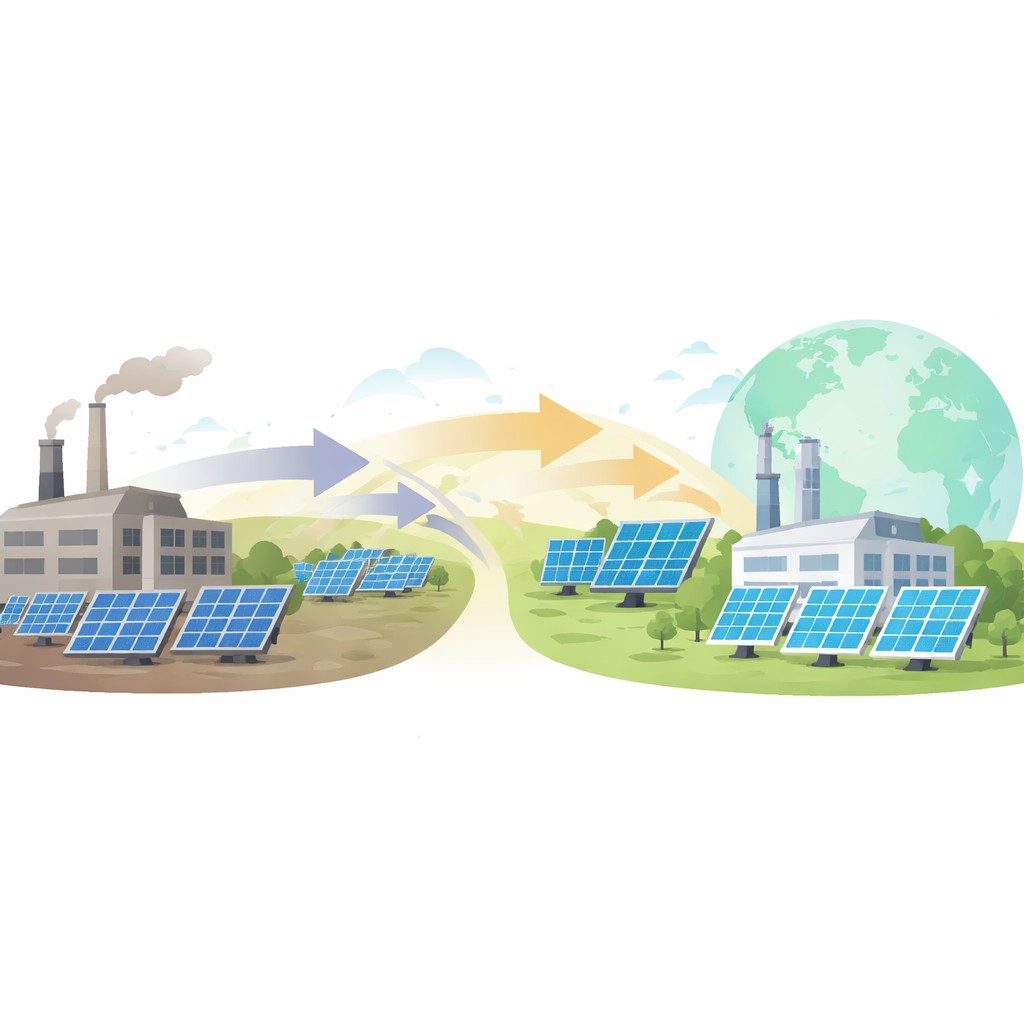
Instead of focusing only on climate-warming emissions, the team examines 16 types of environmental impact, including air pollution, damage to ecosystems, land use and the use of fossil fuels and metals. For panels made in China and shipped to Europe, TOPCon comes out ahead in 15 of the 16 categories. On average, it cuts climate-warming emissions by about 6.5 percent per watt compared with PERC, largely because higher efficiency means less material and processing for the same output. The one area where TOPCon performs worse is metal use: its design demands more silver in the cell contacts, increasing pressure on scarce resources.
Where the hidden footprints really come from
Digging deeper, the analysis reveals a few key “hotspots” that dominate the footprint of a modern solar module. Making the silicon wafer, especially the highly purified material that starts as quartz and becomes large ingots and thin slices, is by far the most energy-hungry step and drives much of the climate and air‑pollution impact. Because most of that electricity still comes from fossil fuels in many regions, the carbon intensity of the local power grid strongly shapes the final footprint of the panel. Other hotspots include the silver used to print fine electrical lines on the cells, the copper wiring and solar glass in the finished module, and the fuels burned in ships and trucks that move panels from Asian factories to European markets.
Location and future grids change everything
The authors then look ahead to 2035, combining projected improvements in panel efficiency, thinner wafers and reduced silver use with scenarios for how electricity grids in India, China, the United States and Europe may clean up over time. They find that making TOPCon modules in Europe already has roughly half the climate impact per watt of making the same modules in India, mainly because European electricity is less coal‑dependent. If grids decarbonise as expected, the footprint of manufacturing falls everywhere, but especially in regions that move fastest toward renewable power. Over the next decade, shifting more production toward low‑carbon electricity systems and steadily improving panel designs could avoid around 8.2 billion tonnes of carbon‑dioxide‑equivalent emissions compared with business as usual.
Balancing climate gains and resource strain
While cleaner grids sharply cut climate and air‑pollution impacts, they also increase reliance on certain critical metals because wind and solar farms require more of these materials than fossil‑fuel plants. As the share of renewables in electricity mixes rises, the study sees a modest uptick in the “metal use” indicator, especially in regions that deploy large amounts of clean power. For solar manufacturing, the single most powerful levers are boosting panel efficiency and reducing electricity use in wafer production; cutting silver usage mainly helps with metal scarcity but has smaller effects elsewhere. Sensitivity tests and uncertainty analysis show that, in most categories, TOPCon is very likely to be environmentally preferable to PERC.
What this means for the clean energy transition
For non-specialists, the key message is that not all solar panels are created equal, and where we build them matters almost as much as which design we choose. The new TOPCon technology can generate more electricity with lower overall environmental harm than its predecessor, provided industry also tackles its heavier appetite for silver. If manufacturers pair high‑efficiency designs with cleaner electricity supplies, the solar boom to 2035 could avoid tens of billions of tonnes of carbon emissions over panels’ lifetimes, far outweighing the costs of making them. In short, smarter manufacturing can turn solar power into an even more powerful tool for protecting the planet.
Citation: Willis, B.L., Rigby, O.M., Pain, S.L. et al. Maximising environmental savings from silicon photovoltaics manufacturing to 2035. Nat Commun 17, 2311 (2026). https://doi.org/10.1038/s41467-026-69165-x
Keywords: solar photovoltaics, life cycle assessment, TOPCon solar cells, low-carbon manufacturing, renewable energy transition