Clear Sky Science · en
Engineering thin 3D Li-composite foil negative electrodes with high mechanical toughness
Why Better Batteries Matter
Lightweight, long‑lasting batteries are central to everything from electric cars to grid storage for renewable energy. Many researchers see lithium metal as the ideal negative electrode because it can store far more energy than today’s graphite. Yet in practice, lithium metal tends to grow needle‑like structures, crack, and fail long before a battery’s promised lifetime. This study describes a new way to build an ultra‑thin, tough lithium‑metal–based foil that can survive heavy use while safely delivering high energy.
The Challenge of Fragile Lithium Metal
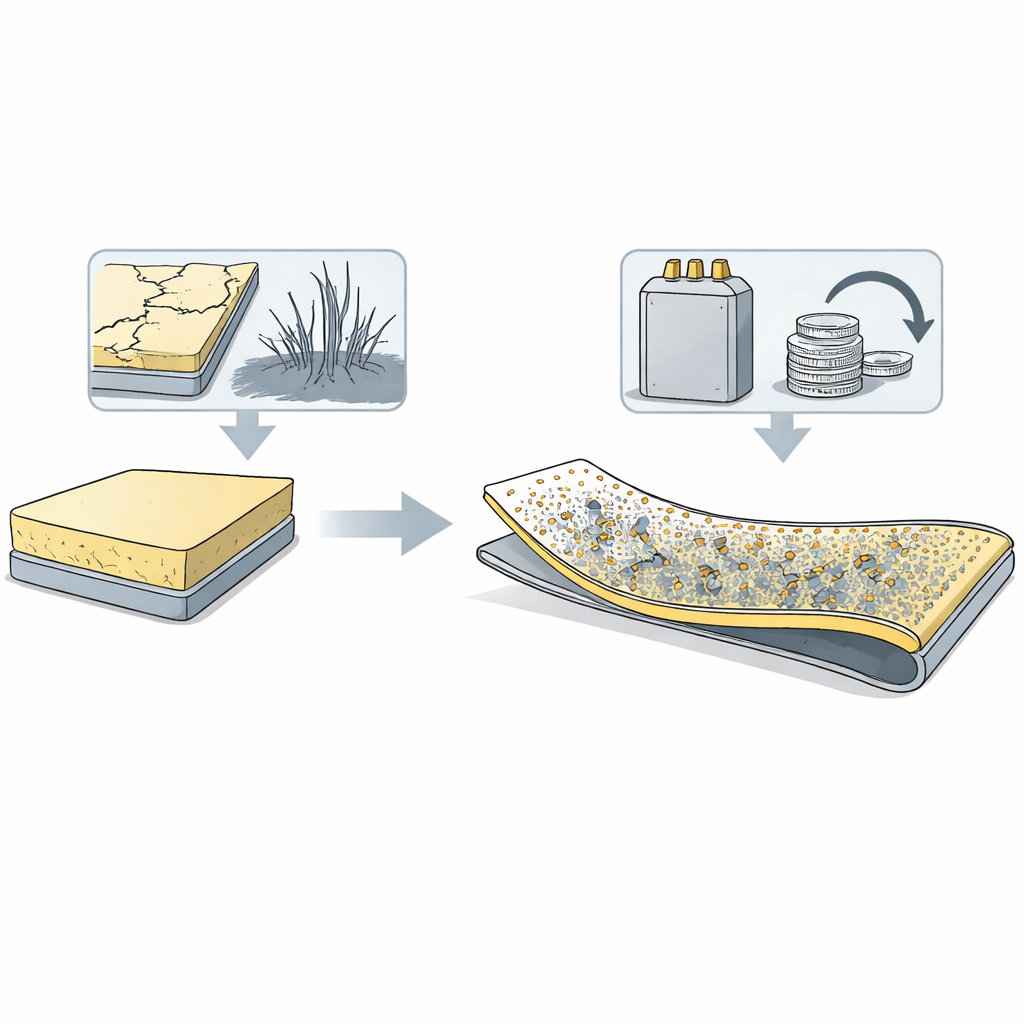
Conventional lithium metal is soft and brittle, like a thick layer of cold butter. As a battery charges and discharges, lithium is repeatedly removed and redeposited, making the metal expand and shrink. This motion creates sharp protrusions called dendrites and causes the foil to fracture. Three‑dimensional supports made of metal or carbon can help distribute lithium more evenly, but they often crack, are hard to make very thin, or require heavy backing foils that reduce the overall energy of the cell. The field has been stuck in a trade‑off between mechanical strength, thinness, and electrochemical performance.
A New Composite Foil Design
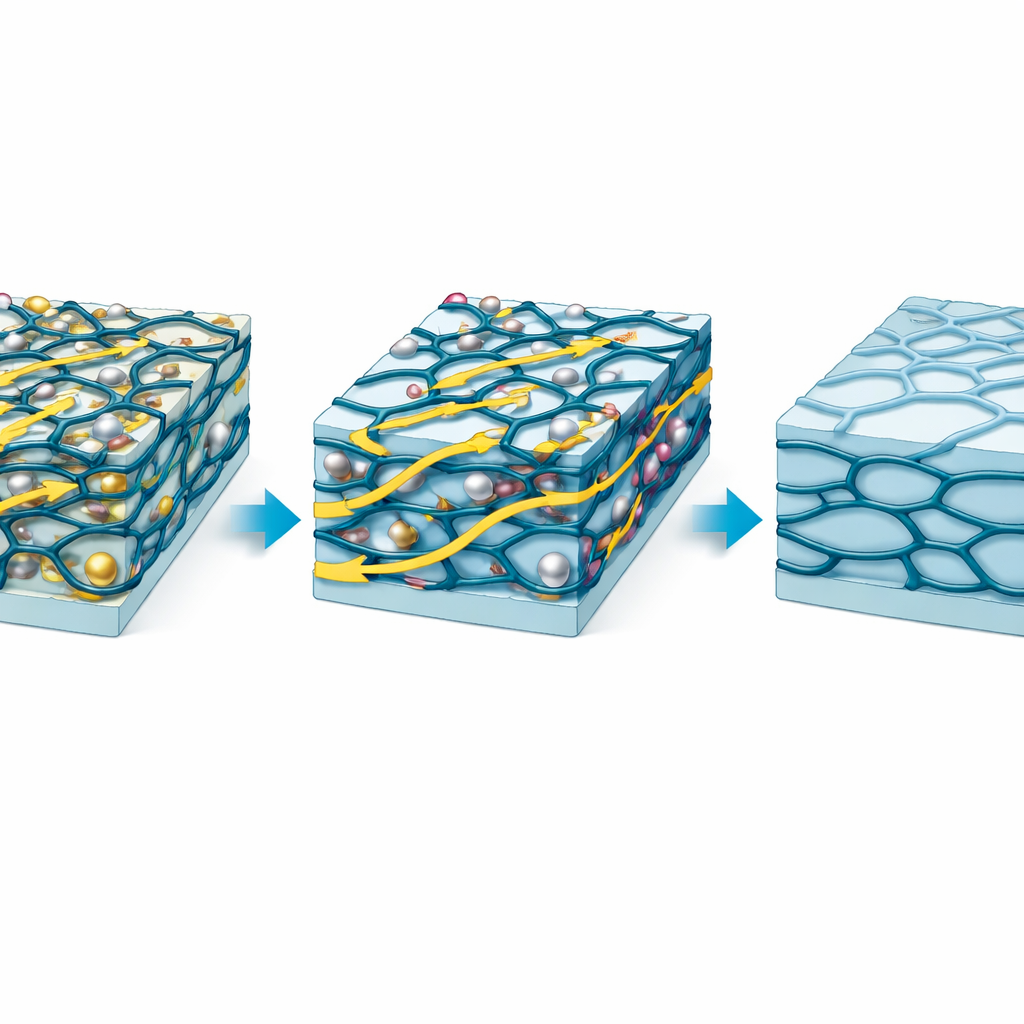
The authors engineer a freestanding composite foil, called LZNC, that combines three ingredients: a lithium–zinc alloy, a fast‑conducting lithium nitride phase, and a web of carbon nanotubes. They form this material by reacting molten lithium with a zinc nitride powder, which produces both the alloy and lithium nitride, and then blending in carbon nanotubes before rolling the solid into thin sheets. In this structure, the alloy offers ductility and favorable sites for lithium to deposit, while the nanotube network, coated with lithium nitride, acts like a resilient mesh that binds the whole foil together and speeds lithium‑ion transport.
Strong, Thin, and Stable in Action
Mechanical tests show that the composite foil is dramatically tougher than plain lithium, absorbing about twelve times more energy before breaking. It can be rolled down to less than ten micrometers thick—thinner than a human hair—without developing cracks, and large smooth sheets can be produced, hinting at scalable manufacturing. Microscopy and X‑ray imaging reveal that even after lithium is fully removed during charging, the intertwined zinc‑nanotube framework remains intact, with internal pores ready to host lithium on the next discharge. When the researchers cycle these foils in simple test cells, the voltage remains stable for hundreds of hours, with low resistance and no sign of runaway dendrite growth, even at very high charge and discharge rates.
From Lab Foil to Practical Cells
The team then pairs the new negative electrode with a high‑energy commercial‑style positive electrode made of a nickel‑rich material known as NCM811. In coin‑cell tests, batteries using the composite foil retain their capacity over more than 500 cycles, while comparable cells with regular lithium metal fade quickly and waste active lithium. The composite foil also supports rapid charging and discharging, up to ten times the standard rate, with much higher usable capacity than the conventional design. Moving to pouch cells closer to real products, the researchers demonstrate multi‑ampere‑hour batteries that keep over 90 percent of their capacity after 300 cycles and reach a cell‑level specific energy of around 553 watt‑hours per kilogram, even when the mass of packaging is included.
What This Means for Future Batteries
To a non‑specialist, the key message is that the authors have turned brittle lithium metal into a thin, flexible, and long‑lived foil by weaving it together with alloy particles and a conductive nanotube mesh. This architecture keeps the internal framework intact as lithium moves in and out, guiding smooth deposition and preventing dangerous spikes and cracks. Because the foil can be made very thin while still being robust, it allows batteries to carry more energy without sacrificing safety or lifespan. If scaled up successfully, this design could bring us closer to electric vehicles and portable devices that run longer on a charge and last through many years of daily use.
Citation: Wang, YH., Tan, SJ., Zhang, CH. et al. Engineering thin 3D Li-composite foil negative electrodes with high mechanical toughness. Nat Commun 17, 2345 (2026). https://doi.org/10.1038/s41467-026-69155-z
Keywords: lithium metal batteries, battery anode materials, energy storage, carbon nanotube composites, lithium dendrite suppression