Clear Sky Science · en
Mutation in HER1 enhances stigma exsertion and hybrid seed production in rice
Why Bigger Rice Flowers Matter
Rice feeds more than half the world, and hybrid rice—produced by crossing two different parent lines—can deliver bumper harvests. But making enough hybrid seed is surprisingly hard because rice flowers prefer to fertilize themselves. This study uncovers a genetic switch that helps rice flowers expose their pollen-catching tips more often, making it easier to produce large quantities of hybrid seed and potentially boosting grain yields for farmers.
The Hidden Gatekeepers of Rice Pollination
Each rice grain begins inside a tiny flower protected by husks that tend to close around both male and female organs, favoring self-pollination. For hybrid seed production, breeders need the female part—the stigma—to poke out beyond the husk so it can catch pollen from a different plant. This trait, called stigma exsertion, is influenced by the size and position of the stigma. Until now, most known genes that affected stigma exsertion did so indirectly by changing the shape of the grain. The authors set out to find factors that directly control the stigma itself.
A Rice Mutant with Extra-Reaching Stigmas
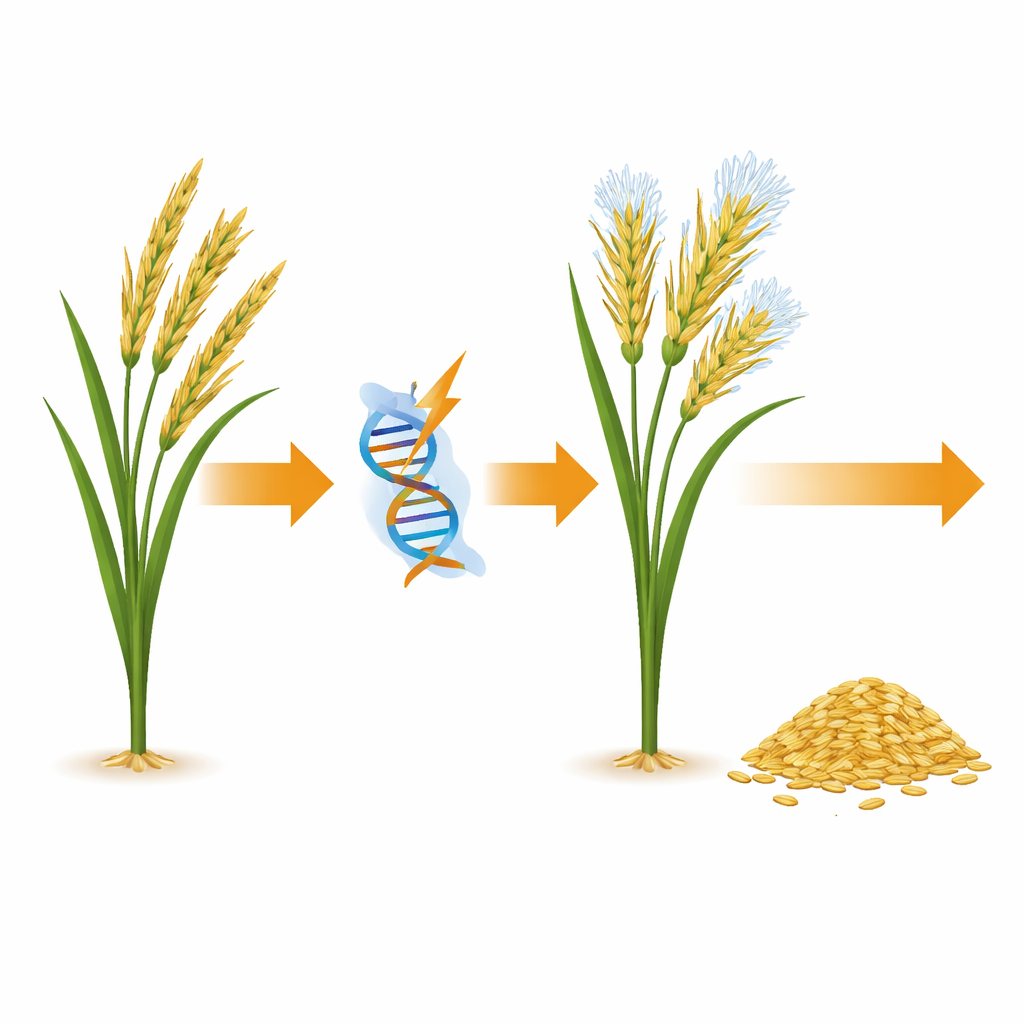
Working with a widely used breeding line, the researchers screened plants that had been randomly mutagenized and discovered one with unusually prominent, feathery stigmas. This mutant, named her1 for “high exsertion rate 1,” nearly doubled the proportion of flowers whose stigmas emerged from the husks compared with normal plants. Microscopy showed that its stigmas were longer, wider, and denser, and the supporting style contained more cells, making the entire female structure larger. Despite slightly smaller grains and a modest drop in seed set on self-pollination, other yield-related traits were largely unchanged, hinting that this mutation could be valuable for breeding.
A Molecular Brake on Stigma Growth
To understand what caused this dramatic change, the team traced the mutation to a single gene, HER1, which encodes a protein that recognizes specific chemical marks on DNA-packaging proteins called histones. These marks, especially one known as H3K9me2, are part of the cell’s epigenetic system for turning genes on or off without altering the underlying DNA code. In normal plants, HER1 binds to histones carrying this mark and helps maintain their modified state, which tends to keep nearby genes quiet. In the her1 mutant, the protein is truncated and can no longer bind properly, leading to reduced H3K9me2 levels at select locations and allowing certain genes to become more active.
Switching On a Stigma-Enlarging Gene
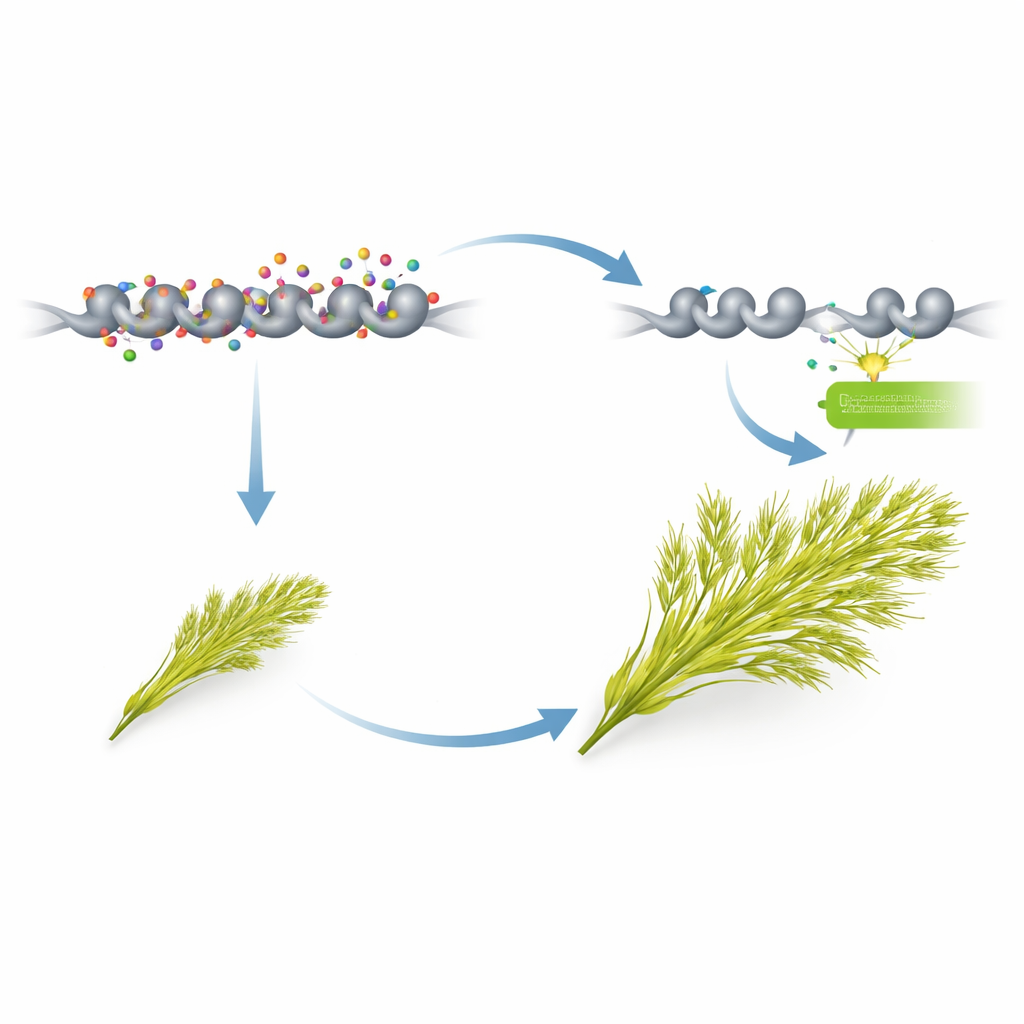
By combining genome-wide mapping of these histone marks with measurements of gene activity in stigmas, the researchers homed in on a single downstream gene they named DS2. In normal flowers, HER1 sits on the DS2 region together with H3K9me2 marks, keeping DS2 expression low. In the her1 mutant, both the marks and HER1 binding are reduced and DS2 switches on strongly in stigma cells. DS2 encodes an enzyme from a family often involved in hormone and metabolite pathways. When DS2 was artificially overexpressed in otherwise normal plants, stigmas became larger and exsertion increased; when DS2 was knocked out, stigmas shrank, and removing DS2 in the her1 background largely reversed the oversized-stigma trait. Together these experiments show that HER1 normally acts as an epigenetic brake on DS2, limiting stigma growth.
Turning a Discovery into a Breeding Tool
Because natural variation in HER1 is rare and shows little link to stigma size, the authors introduced the loss-of-function her1 allele into a standard male-sterile line used for hybrid seed production, creating a new line called herA. In field trials where herA plants received pollen from a matching male line, the enhanced stigma exsertion translated into roughly 23% higher outcrossing rates and about 20–22% more seed yield per area than the original sterile line. Importantly, when herA was used to produce commercial F1 hybrids with several restorer lines, the resulting hybrid plants showed normal agronomic traits and yields, indicating that any minor negative effects of the mutation are masked once the hybrid is formed.
What This Means for Future Rice Harvests
To a lay observer, the key message is straightforward: by loosening an epigenetic brake on a single gene, scientists made the pollen-catching tips of rice flowers grow bigger and reach farther out of the husk. This simple physical change allows rice plants used as female parents to receive more pollen from partner lines and produce more hybrid seed without sacrificing the performance of the final crop. The HER1–DS2 module thus offers breeders a targeted way to lower the cost and increase the availability of high-yielding hybrid rice, with potential benefits for food security in many rice-growing regions.
Citation: Guo, D., Du, K., Xu, P. et al. Mutation in HER1 enhances stigma exsertion and hybrid seed production in rice. Nat Commun 17, 2364 (2026). https://doi.org/10.1038/s41467-026-69149-x
Keywords: hybrid rice, stigma exsertion, epigenetics, histone modification, crop breeding