Clear Sky Science · en
The crucial but insufficient role of E2s domain’s residues 490 and 492 in determining the host tropism of hepatitis E virus
Why tiny changes in a virus matter to everyone
Hepatitis E virus is a major cause of acute liver inflammation worldwide and can be especially deadly for pregnant women. Some forms of this virus spread mainly between people, while others quietly circulate in animals such as pigs and occasionally jump into humans through undercooked meat. This study asks a deceptively simple question with big public health implications: which tiny pieces of the virus decide whether it can infect pigs, people, or both? By zooming in on just a few building blocks on the virus surface, the researchers reveal how small molecular tweaks can open or close the door to cross-species infection.
Different virus types, different animal targets
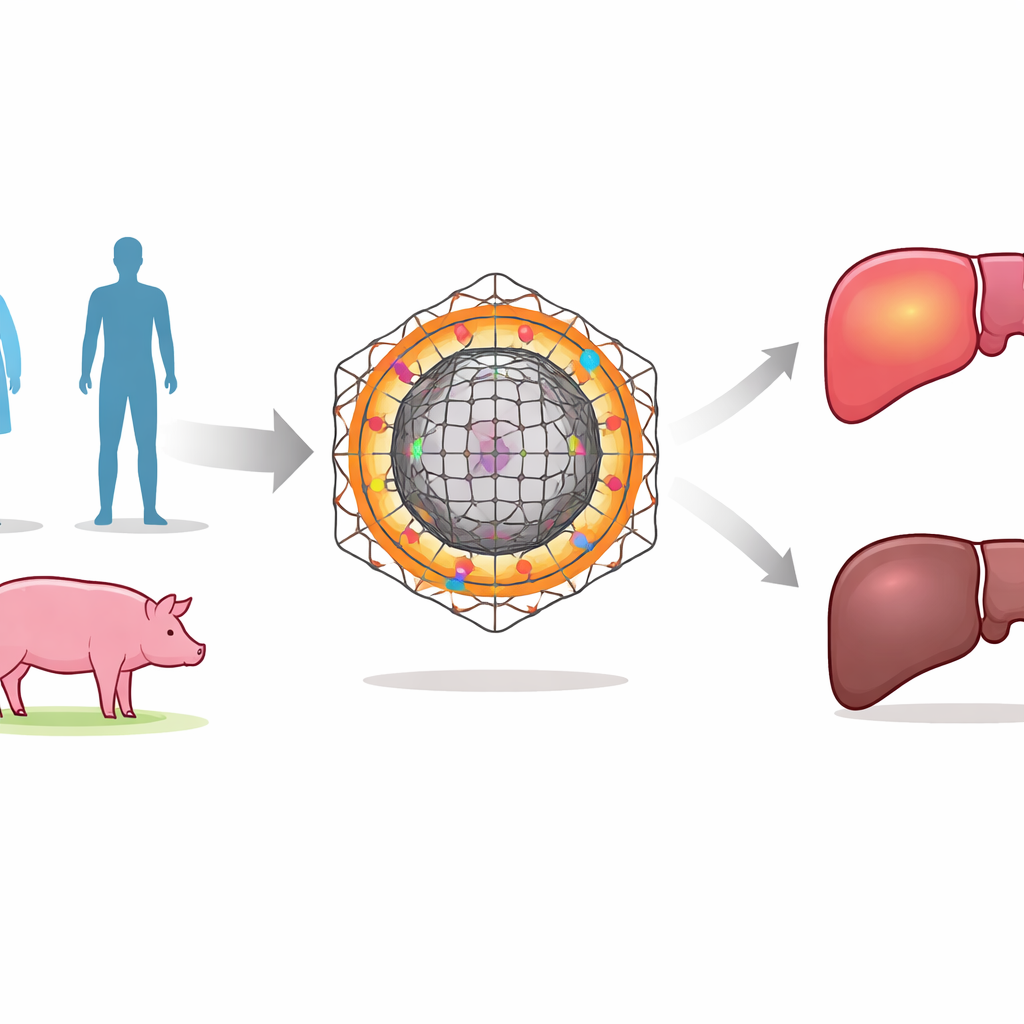
Not all hepatitis E viruses behave the same. Human infections are mostly caused by four major genotypes. Types 1 and 2 infect only humans and other primates, usually spreading through contaminated water in low-resource settings. Types 3 and 4 are “zoonotic” – they circulate in pigs and other animals and can spill over into people, often via pork products. To find out why some genotypes thrive in pigs while others do not, the team compared how well different hepatitis E strains and their virus-like particles could attach to and infect liver cells from humans and from pigs grown in the lab. They found that the pig-derived strains (types 3 and 4) latched onto pig liver cells far more strongly than the strictly human type 1 virus, even though all three could enter human liver cells with similar ease. This pointed to specific features on the virus surface that favor pig cells.
A specialized antibody as a molecular spotlight
To home in on the crucial region, the researchers used a monoclonal antibody called 6H8 that recognizes only the zoonotic group (types 3 and 4), not the human-restricted types 1 and 2. Because antibodies stick very precisely to their targets, 6H8 served as a probe for the part of the virus that distinguishes pig-tropic strains. Structural methods, including X-ray crystallography and cryo-electron microscopy, mapped where 6H8 binds on the outer shell of the virus. The binding site sits on flexible loop regions of the capsid protein, an area already known to help the virus grab onto cells. Within this patch, just a handful of amino acids—individual molecular “beads” in the protein chain—proved central to antibody recognition.
Two key building blocks stabilize the ‘pig-friendly’ shape
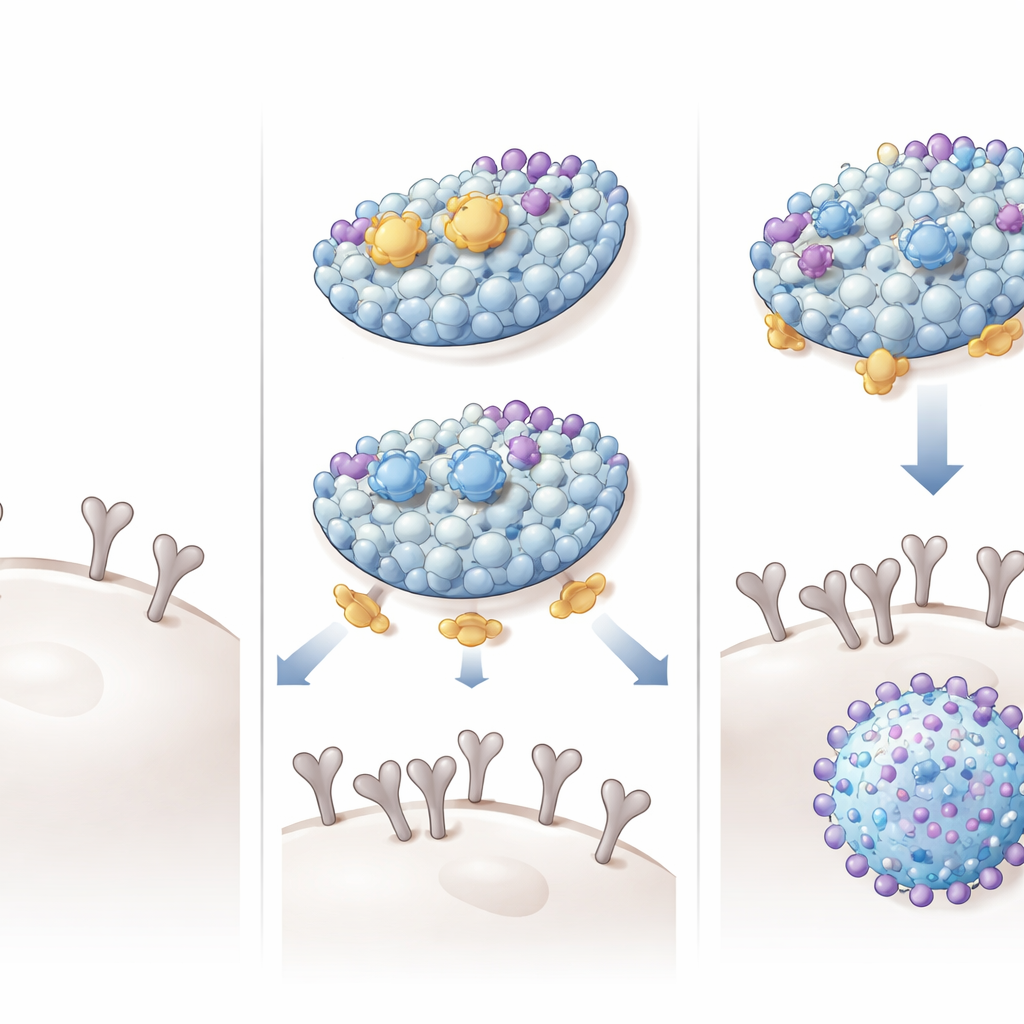
By systematically mutating each amino acid within the 6H8-recognized patch, the team identified four residues that were essential for antibody binding and for attachment to pig liver cells. Two of them, numbered 490 and 492 in the protein, stood out because they differ consistently between human-only and zoonotic viruses. In pig-tropic strains, these positions are occupied by the amino acids asparagine and methionine; in human-only strains, they are glycine and valine. Detailed computer simulations showed that asparagine at position 490 forms a stabilizing bridge to another residue, helping to hold two loops of the capsid in a precise shape. This stable conformation appears to be necessary for both strong antibody binding and efficient docking onto pig liver cells. Methionine at position 492 further supports this stabilized arrangement, reducing the wobble of the loops.
Swapping parts between human and pig viruses
To test whether these two residues truly control which hosts the virus can infect, the researchers engineered “swap” viruses using reverse genetics. They gave a human-restricted type 1 virus the pig-like versions at positions 490 and 492 and, conversely, replaced the pig-like versions in a type 4 virus with the human-type residues. In cell culture, these changes had dramatic effects. The modified type 1 virus gained the ability to bind to and infect pig liver cells as efficiently as natural type 4 virus. The altered type 4 virus, in contrast, lost its ability to attach to pig cells and behaved more like the human-only type. Yet when these engineered viruses were tested in live miniature pigs, only the original type 4 virus could establish a full infection; the modified viruses, including the “pig-like” type 1, failed to cause disease, even though all viruses readily infected monkeys.
More than one key for crossing the species barrier
The findings show that residues 490 and 492 on the hepatitis E capsid are critical molecular keys that help certain viral strains latch onto pig liver cells and infect swine, while still allowing infection of humans. However, these two positions are not the whole story: giving a human-restricted virus the pig-style keys was not enough to make it truly pig-adapted in living animals. Other parts of the viral genome, and likely host factors such as cell-surface receptors and immune responses, must work together to determine whether a strain can jump species and spread. By pinpointing these influential hotspots on the virus surface, this work sharpens our understanding of how small genetic changes can shift a virus’s host range and offers a foundation for better surveillance, vaccines, and strategies to curb animal-to-human transmission.
Citation: Tang, ZM., Yang, CY., Wen, GP. et al. The crucial but insufficient role of E2s domain’s residues 490 and 492 in determining the host tropism of hepatitis E virus. Nat Commun 17, 2528 (2026). https://doi.org/10.1038/s41467-026-69125-5
Keywords: hepatitis E virus, zoonotic transmission, host tropism, viral capsid, cross-species infection