Clear Sky Science · en
Predator-prey temporal niche partitioning under human disturbance: a meta-analysis
Why the daily rhythms of wild animals matter
Most wild mammals live by the clock, timing their daily routines to find food, avoid being eaten, and steer clear of people. As human activity spreads into even the most remote places, scientists are asking a pressing question: are our roads, farms, cities, and hiking trails quietly rewiring the schedules of predators and their prey, and in turn reshaping who survives in the wild?
Sharing the day without sharing the danger
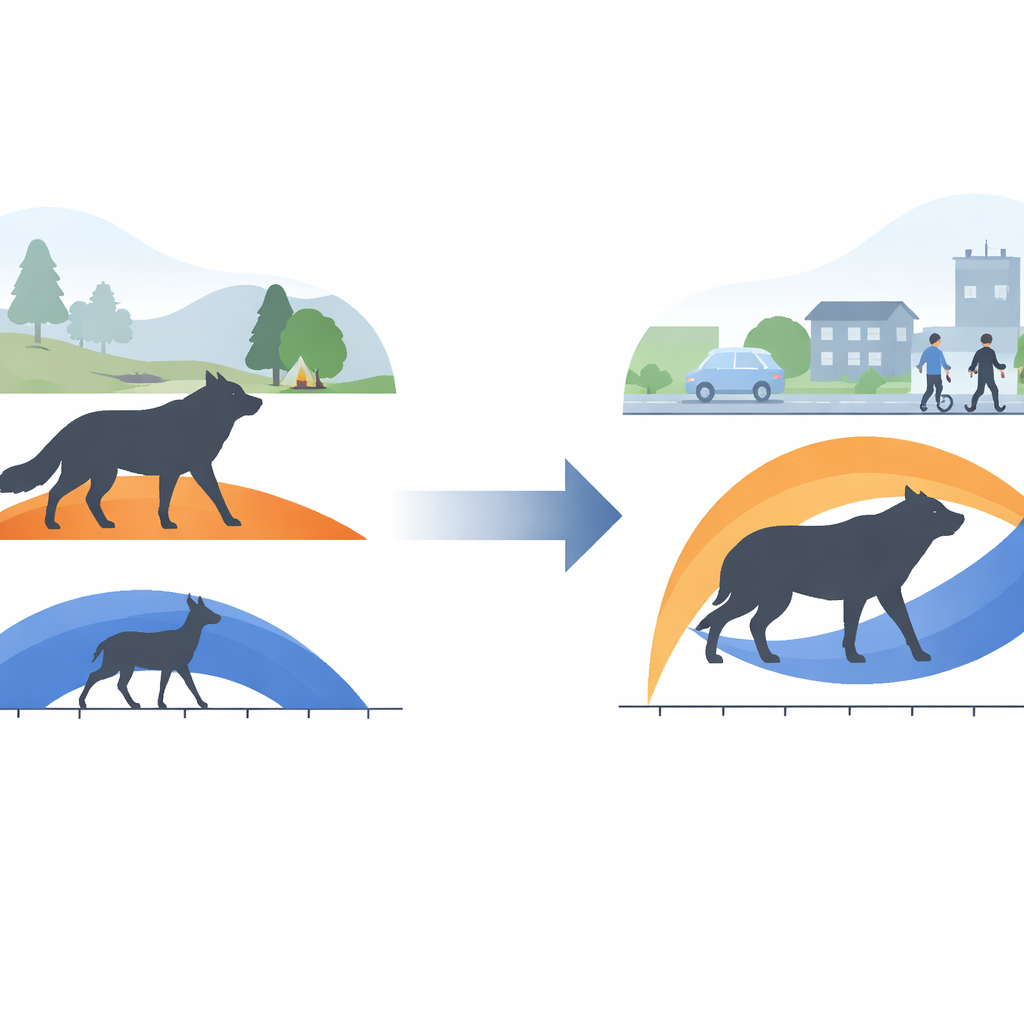
Predators and prey do not just avoid each other in space; they also avoid each other in time. Many animals reduce risk by hunting or foraging at different hours than their enemies, a pattern called temporal niche partitioning. Human disturbance can upset this balance in two main ways. It can push species into the same active hours, increasing their overlap and the odds of encounters, or it can spread them further apart in time, reducing overlap. Earlier studies from individual sites showed both patterns, leaving researchers unsure whether human presence generally squeezes predator–prey schedules together or pulls them apart.
A global look at animal time under human pressure
The authors assembled a worldwide meta-analysis of 57 camera-trap studies covering 116 mammal species on six continents. They focused on “dominant” species that can kill another species and “subordinate” species that face that lethal risk—either classic predator–prey pairs, like big cats and deer, or larger predators that occasionally hunt smaller carnivores. For 480 such pairs, the team compared how much their daily activity overlapped in places or time periods with low versus high human disturbance, ranging from quiet protected areas to busy farmland, urban edges, hunting zones, and trails full of recreationists.
No single global rule, but a consistent size-based twist
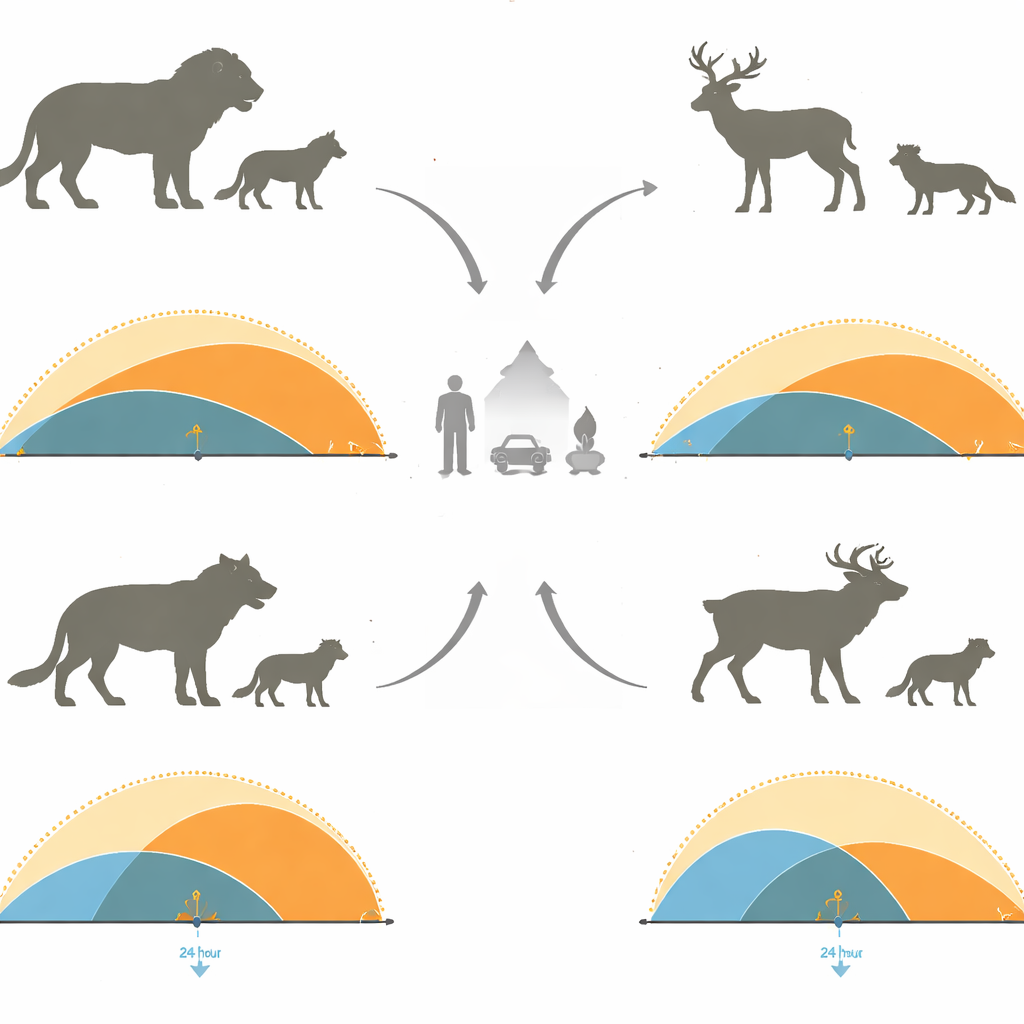
Across all species pairs combined, there was surprisingly little overall change in temporal overlap between low- and high-disturbance conditions. In other words, humans did not universally make predators and prey share more of the day, nor did they consistently push them further apart. The key pattern emerged only when the researchers considered body size. Where dominant predators were larger than their subordinates, increases in human disturbance tended to reduce overlap, suggesting that big carnivores shifted their schedules to avoid people and ended up seeing less of their prey. Where the subordinate species was larger, the opposite happened: human disturbance increased overlap, effectively squeezing predator and prey into the same hours.
How individual species change their clocks
To understand what lay behind these size-based patterns, the team examined a subset of studies that reported how each species’ activity changed across disturbance levels. On average, both dominant and subordinate mammals shifted about 15 percent of their activity when comparing quieter and busier conditions, confirming that many species noticeably adjust their timing in response to people. Larger dominant predators showed somewhat stronger shifts than smaller ones, implying that big carnivores are especially sensitive to human risk. Contrary to earlier work that suggested a widespread move toward the night, this analysis did not find a consistent global swing toward nocturnality for either predators or prey; some populations became more nocturnal, others more diurnal, depending on local context.
What these shifting schedules mean for wildlife and people
The study’s take-home message is that humans are not simply turning wildlife into creatures of the night. Instead, animals are reshuffling their daily routines in more complex, size-dependent ways. Larger mammals—whether predator or prey—often “lose” the temporal response race under human pressure: big predators wind up with less time overlapping their prey, and big prey with more risky overlap with their hunters. These shifts in schedules could alter encounter rates, energy budgets, and social behavior, rippling through food webs and changing which species thrive. As human footprints expand, understanding and managing when we use wild landscapes—for example, by limiting human presence during key activity windows—may become as important as deciding where we go.
Citation: Wooster, E.I.F., Lundgren, E.J., Nimmo, D.G. et al. Predator-prey temporal niche partitioning under human disturbance: a meta-analysis. Nat Commun 17, 2336 (2026). https://doi.org/10.1038/s41467-026-69113-9
Keywords: predator prey, human disturbance, animal behavior, temporal niche, body size