Clear Sky Science · en
Immune-mediated protection and enhancement of dengue drives patterns of infant cases in Brazil
Why tiny babies and dengue matter
Dengue, a mosquito-borne virus spreading across much of the world, is often framed as a problem for older children and adults. Yet infants, especially in their first year of life, can face some of the gravest consequences. This study focuses on babies in Brazil and asks a deceptively simple question with big public health implications: when a mother has dengue antibodies, does that shield her baby from danger, or can it sometimes make things worse? The answer turns out to be: both. Understanding this double-edged effect is crucial as dengue continues to expand and new vaccines are rolled out.
Rising dengue in Brazil’s youngest
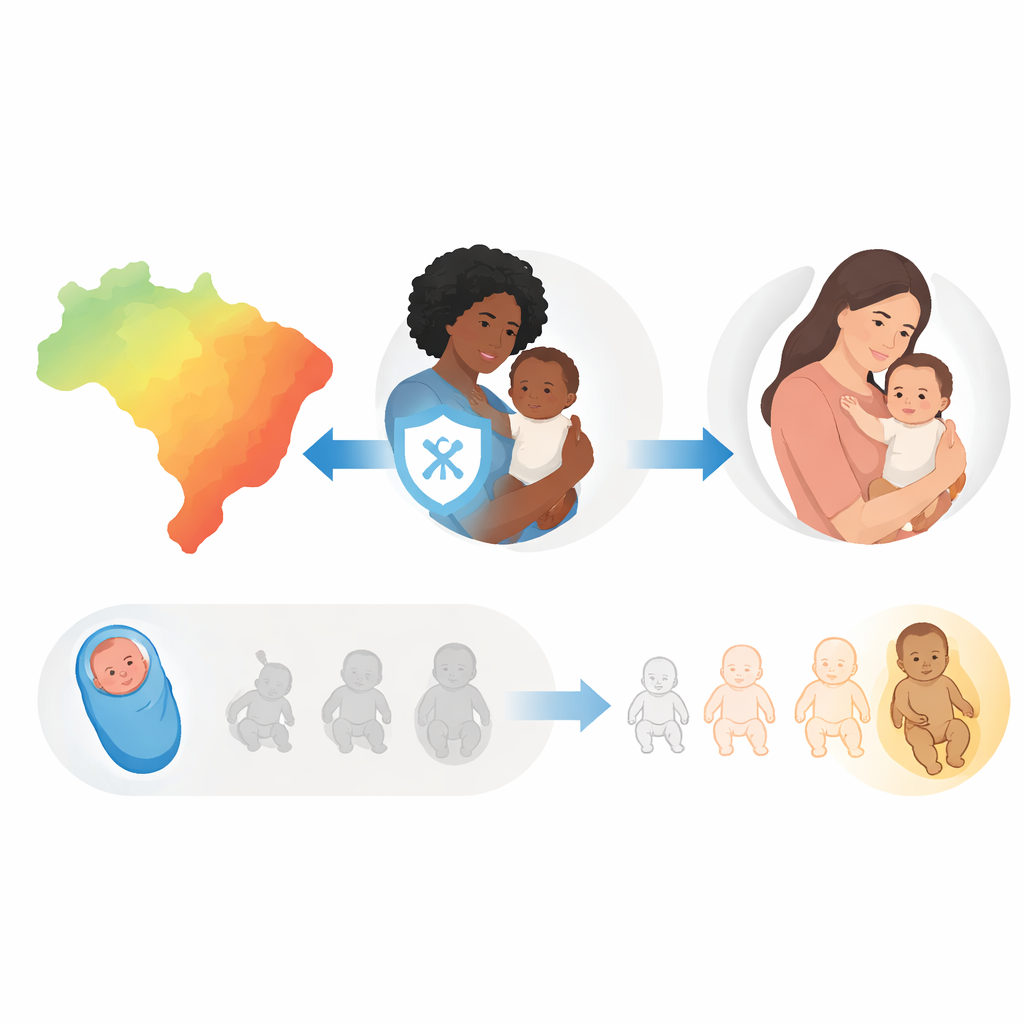
Using 25 years of nationwide surveillance data, the researchers examined more than 186,000 dengue cases and 3,100 severe cases in Brazilian infants under one year of age. They found that infant dengue has increased about eleven-fold since the early 2000s, mirroring the virus’s spread into new regions of the country. Severe cases were especially common in parts of Central-West and Southeast Brazil, which have seen rapid dengue expansion. Among all children, infants carried a disproportionate share of the most dangerous forms of dengue, underscoring how vulnerable this age group is when the virus circulates widely.
Two danger windows in the first year of life
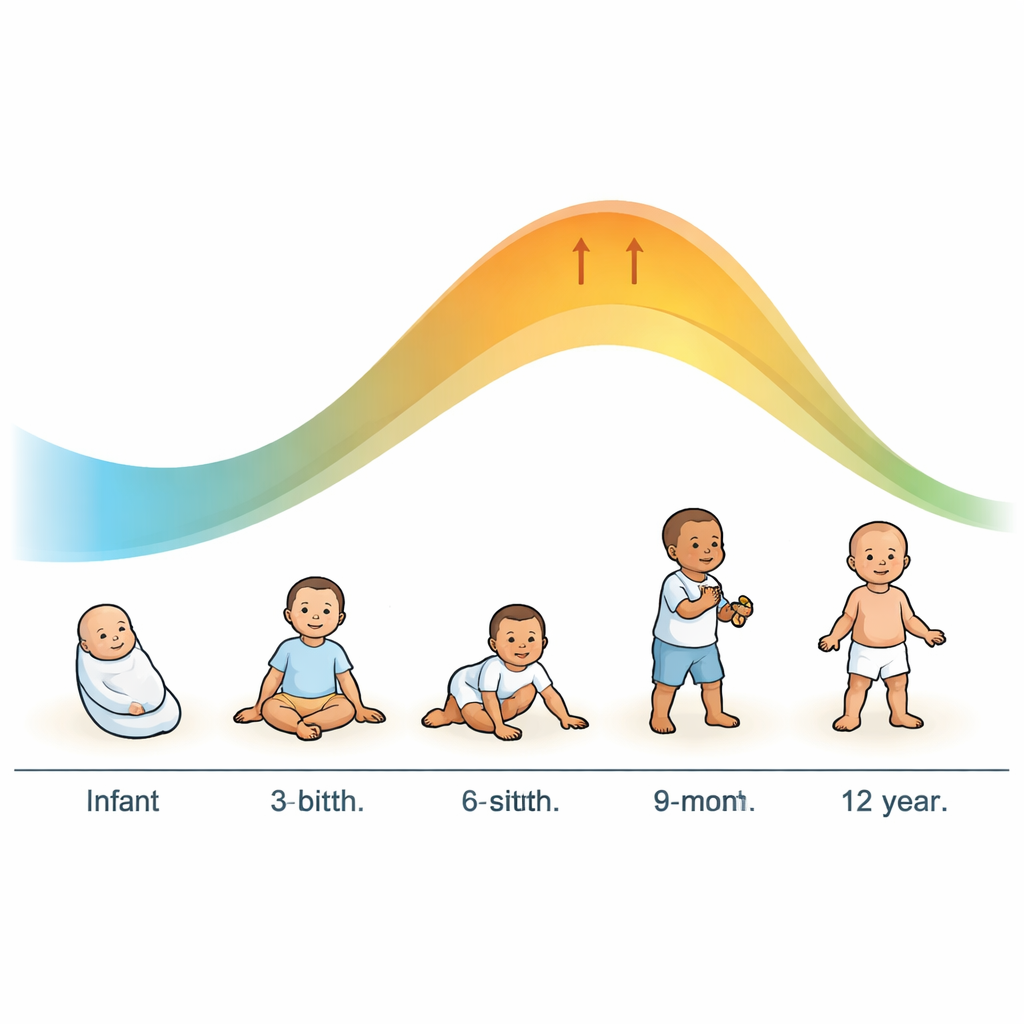
When the team looked at the ages of infants with severe dengue, a striking pattern emerged: there were two distinct peaks. The first spike occurred in newborns during the first month of life. A second, separate peak appeared at around seven to eight months of age. This pattern matches earlier hospital data from Thailand that hinted at a mid-infancy danger window but adds an important twist. In Brazil, unlike Thailand, there is also a marked peak in very young newborns. The authors argue that these two danger windows likely arise from different forces: the inherent fragility and infection risk of newborns, and a later period when maternal antibodies no longer protect and may instead amplify disease severity.
How mothers’ antibodies help and harm
During pregnancy, mothers pass dengue-fighting antibodies to their babies through the placenta, and further protection can come through breastfeeding. At first, these antibodies appear to shield infants from infection. To untangle this effect from other influences—like changing mosquito exposure, reporting practices, and general improvements in surveillance—the authors built detailed mathematical models that combined adult and infant case patterns for every Brazilian state. They estimated both how often dengue infections occurred in the general population (the "force of infection") and what fraction of mothers carried dengue antibodies. Then they linked these estimates with the age and severity of infant cases to reconstruct the risk profile over the first year of life for babies born to mothers with and without prior dengue exposure.
What the models reveal about risk
The modelling results point to a double role for maternal antibodies. Babies born to mothers with dengue antibodies had a lower chance of getting dengue at all in their first months, especially as newborns, compared with babies whose mothers had never been infected. This suggests real immune protection layered on top of behavioural factors such as reduced mosquito exposure in early infancy. However, for infants between about five and twelve months, the picture flips. As maternal antibodies wane to intermediate levels, they can promote a phenomenon known as antibody-dependent enhancement: instead of neutralising the virus, antibodies help it enter cells, raising the odds of severe disease. The authors estimate that, at its peak around six to eight months, this enhancement more than doubles the risk of severe dengue for babies born to dengue-immune mothers compared with those born to mothers without dengue antibodies.
What this means for vaccines and future babies
From a lay perspective, the study’s conclusion is sobering but informative: as dengue spreads and more women develop antibodies—either through infection or future vaccination—fewer infants may catch dengue overall, but those who are infected in mid-infancy could be more likely to become dangerously ill. In other words, maternal antibodies shift risk rather than simply erasing it. For doctors, parents, and policymakers, this means that protecting pregnant women and infants from mosquito bites remains essential, and that vaccine strategies for older children and adults must be designed with the next generation in mind. The work from Brazil provides a blueprint for anticipating how infant dengue patterns may evolve in other regions where the virus is on the rise.
Citation: Hitchings, M.D.T., Huang, A.T., Ranzani, O.T. et al. Immune-mediated protection and enhancement of dengue drives patterns of infant cases in Brazil. Nat Commun 17, 2517 (2026). https://doi.org/10.1038/s41467-026-69111-x
Keywords: dengue in infants, maternal antibodies, Brazil epidemiology, antibody-dependent enhancement, dengue vaccination