Clear Sky Science · en
Gut microbiota-derived butyrate primes systemic immunity in honey bees by mediating lipid metabolic reprogramming
Why Bee Guts Matter for Everyone
Honey bees do much more than make honey: they pollinate many of the crops and wild plants we depend on. Yet bees face a constant threat from infections. This study reveals that tiny helpers living in a bee’s gut can “train” the bee’s body-wide defenses, making it better prepared to survive disease. By uncovering a clear chain of events from gut bacteria to immune protection, the work hints at new ways to support bee health—and shows surprising parallels between insect and human biology.
Friendly Germs as Bodyguards
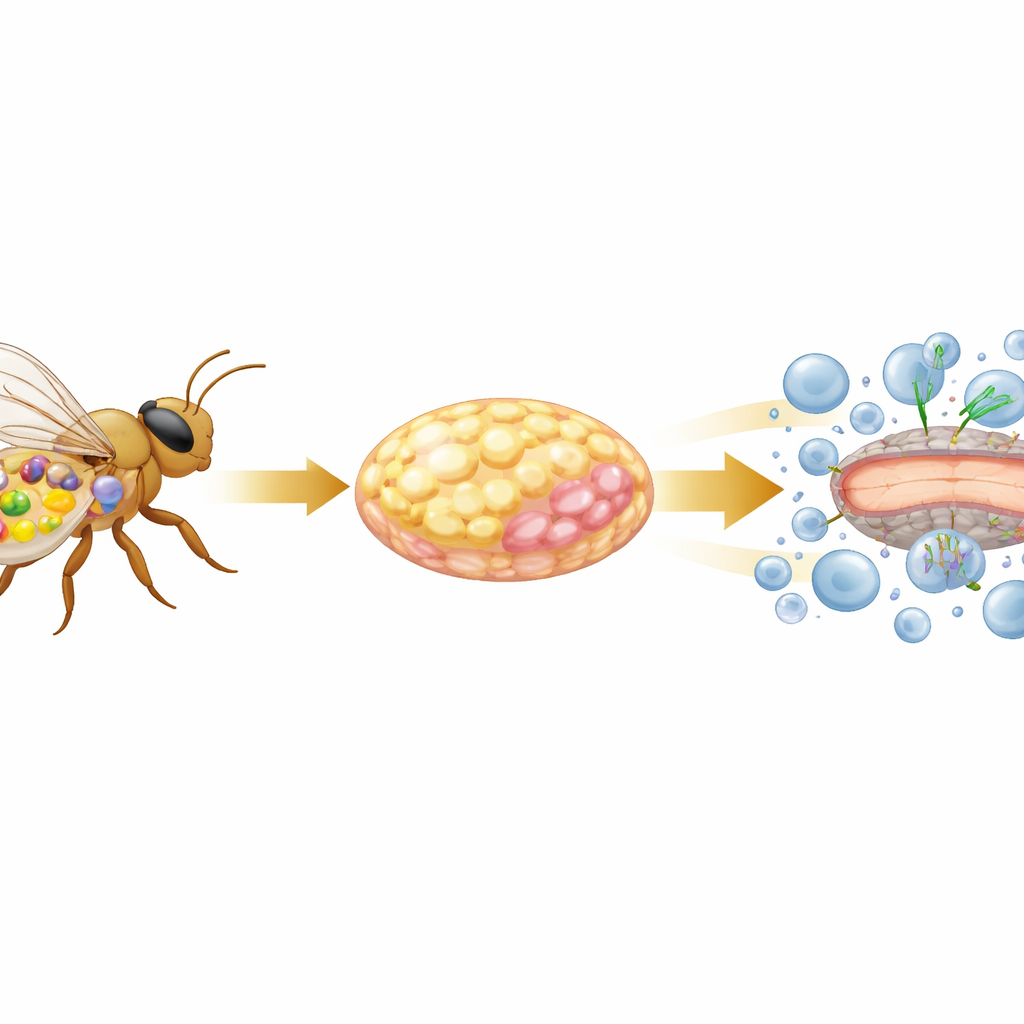
Adult worker honey bees carry a small, stable community of gut bacteria. The researchers compared three types of bees: those with normal gut microbes, those given only dead bacteria, and germ-free bees raised without any microbes. All were injected with a common bee pathogen that can enter the blood-like fluid and cause deadly infections. Bees with a living gut community survived much better than the other groups. They also showed stronger early immune reactions, including higher levels of natural antibiotic molecules in their fat body (a major metabolic and immune organ) and more immune cells clustering near the heart where blood flow is strongest. This showed that live gut microbes somehow prepare, or “prime,” defenses far from the intestine.
A Key Chemical Messenger from the Gut
To find out how gut microbes send signals to the rest of the bee, the team focused on short-chain fatty acids—small molecules produced when bacteria break down food. They discovered that one of these, butyrate, was especially abundant in bees with normal microbiota and in their body fluid. Giving germ-free bees butyrate by mouth made them more likely to survive infection and boosted their immune responses, almost mimicking the benefit of having the full gut community. Another common molecule, acetate, did not provide this protection. Different gut bacteria varied in how much butyrate they produced, but a mixed community of core species raised levels the most, tying this protective effect directly to microbial activity.
Rewiring Bee Fat to Feed the Immune System
Butyrate did more than flip a single “on” switch: it rewired how bees handle fats. In bees given butyrate, hundreds of genes in the fat body changed their activity, especially those involved in breaking down stored fats. The fat body’s neutral fat droplets became smaller, and total stored fat went down, suggesting an active shift from storage to use. These changes funneled fat breakdown products into the production of arachidonic acid, a building block for a powerful family of signaling molecules called prostaglandins. One in particular, prostaglandin E2, rose sharply in the abdomen, hindgut, and body fluid of bees with healthy microbes or butyrate supplements.
From Fat Signals to Fighting Infection
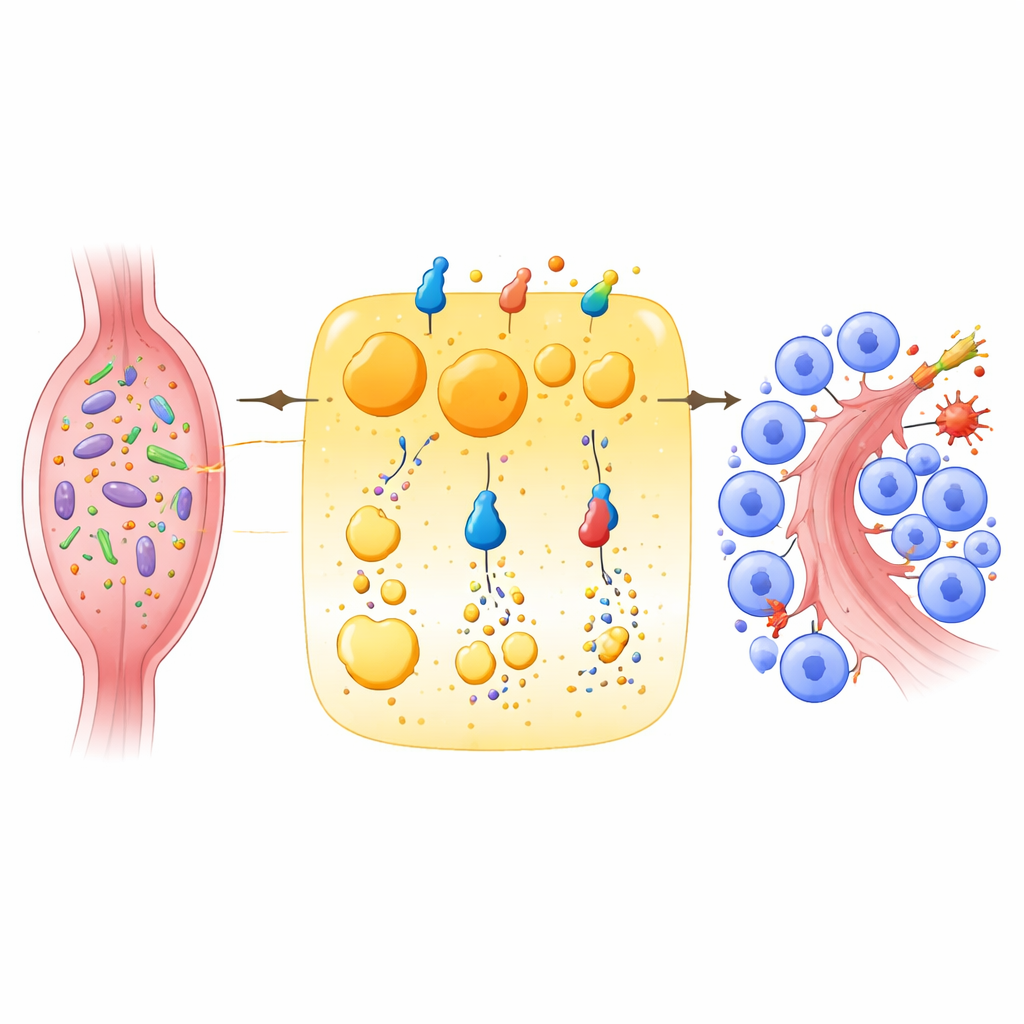
The researchers then showed that prostaglandin E2 is the key link between metabolism and immunity. When they blocked an enzyme needed to release arachidonic acid from fats, prostaglandin E2 levels dropped and the butyrate-driven boost disappeared. Injecting prostaglandin E2 into germ-free bees increased their survival after infection and raised their natural antibiotic levels and immune cell clustering, just like butyrate or live gut bacteria. Blocking prostaglandin production in bees with normal microbes reversed these benefits and made them even more vulnerable than germ-free bees, underscoring how central this molecule is to systemic immune priming.
How One Molecule Talks to Bee Genes
To understand how butyrate reshapes gene activity, the team looked at known sensing routes. They found that butyrate acts through a receptor on bee cells related to mammalian GPR41, and also by inhibiting enzymes that normally remove chemical “tags” from DNA-packaging proteins. Both routes increased activating marks on specific regions of the genome linked to fat breakdown and prostaglandin production, and both sped up the shrinkage of fat droplets. In other words, a gut-derived chemical works through surface receptors and epigenetic changes to tilt the fat body away from storing energy and toward generating immune-boosting signals.
What This Means for Bees and Beyond
This work sketches a complete pathway: gut bacteria in honey bees make butyrate; butyrate enters the fat body and changes gene activity; this pushes stored fats toward prostaglandin E2 production; and prostaglandin E2, in turn, heightens natural antibiotics and immune cell behavior across the body, helping bees survive infections. For a lay reader, the takeaway is that a bee’s “good germs” and its fat reserves cooperate to keep it healthy. Because similar molecules and principles operate in mammals, including humans, the study also illustrates how deeply shared the language of gut–immune communication may be across very different animals.
Citation: Liu, J., Wu, Y., Li, Z. et al. Gut microbiota-derived butyrate primes systemic immunity in honey bees by mediating lipid metabolic reprogramming. Nat Commun 17, 2924 (2026). https://doi.org/10.1038/s41467-026-69073-0
Keywords: honey bee immunity, gut microbiota, butyrate, lipid metabolism, prostaglandin E2