Clear Sky Science · en
A montmorillonite-based oral fermentation system enables long-lasting in-situ biosynthesis to restore intestinal homeostasis
Why Your Gut’s Balance Matters
Many common illnesses, from stomach infections to diabetes and even some cancers, are linked to a troubled gut. When the community of microbes in our intestines, the immune defenses, and the gut’s protective lining fall out of balance, trouble follows. This study introduces a clever, pill‑like system designed to travel through the digestive tract, set up a tiny “factory” inside the gut, and steadily produce health‑supporting substances that help bring this delicate ecosystem back into balance.
A Clay Scaffold for Helpful Microbes
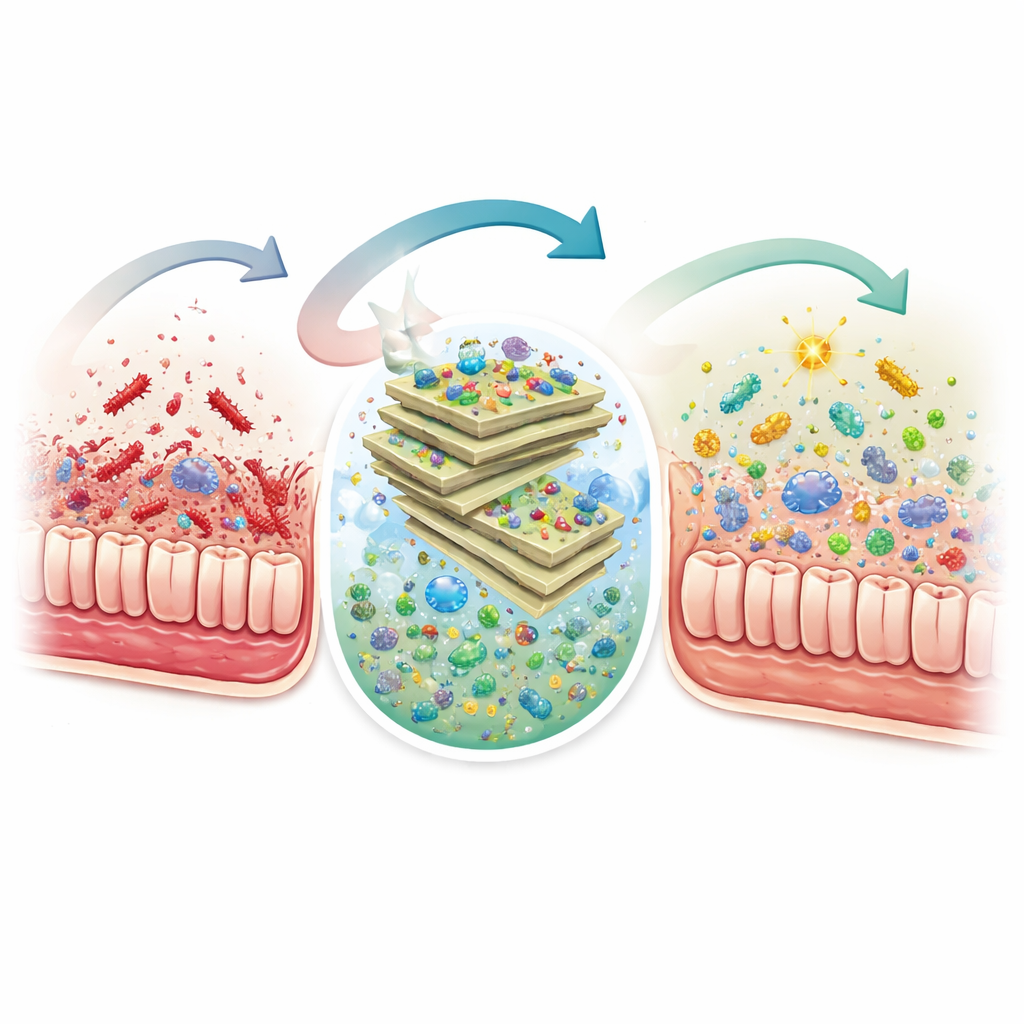
The researchers built their system around montmorillonite, a naturally occurring medicinal clay already used in some anti‑diarrheal products. This clay is made of thin, layered sheets that can trap positively charged molecules between them. The team loaded these layers with two food‑like ingredients, tryptophan and lactulose, and then attached a friendly bacterium, Enterococcus faecalis, to the clay’s surface. Thanks to its water‑resistant and sticky properties, the clay protects the bacteria as they pass through harsh stomach acid and helps them cling to the mucus that coats the intestine, giving them time to work instead of being quickly washed away.
Turning the Gut into a Tiny Fermentation Tank
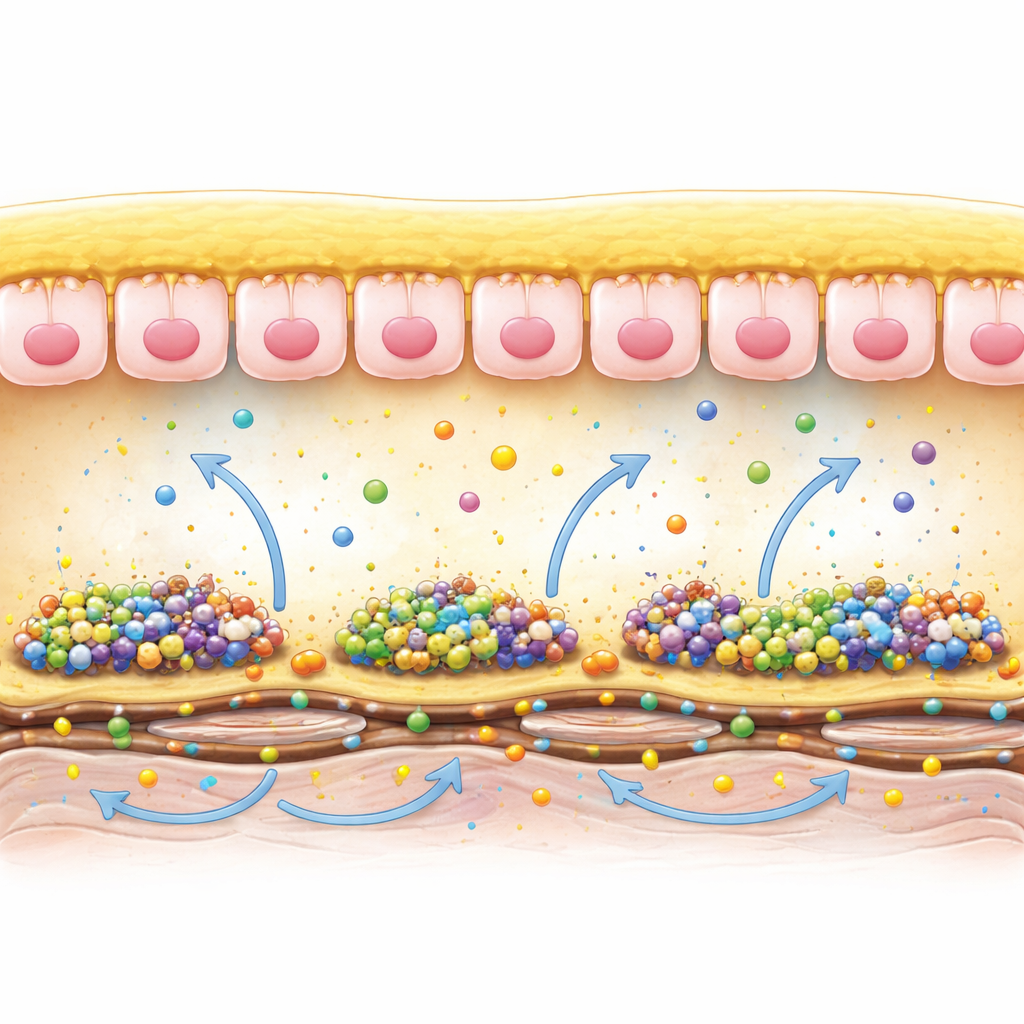
Once anchored to the gut lining, the clay‑bacteria combo begins to behave like a miniature fermentation system. The clay slowly releases tryptophan and lactulose, which the attached bacteria convert into two key products: indole and lactic acid. Indole helps strengthen the seals between intestinal cells and tunes immune responses, while lactic acid serves as fuel for intestinal cells and creates an environment that discourages harmful germs. Because the bacteria form dense biofilms on the clay and mucus—structured communities that boost their energy and metabolism—this system produces higher and longer‑lasting levels of these helpful substances than giving bacteria or ingredients alone.
Helping Friendly Microbes and Taming Harmful Ones
In mouse experiments, this oral “factory” shifted gut microbes toward a healthier mix. It encouraged the growth of beneficial bacteria, including strains known to release natural antibiotics or produce butyrate, a molecule that supports gut health. At the same time, the system strongly slowed down dangerous microbes such as Salmonella and the fungus Candida albicans, both of which can worsen gut inflammation. Compared with free bacteria or clay without the extra ingredients, the full system was far better at preventing these invaders from multiplying, crossing into organs such as the kidney and spleen, and damaging tissues.
Calming Inflammation and Repairing the Gut Wall
Beyond reshaping microbial communities, the system also soothed the body’s immune reactions. In cell cultures and in mice, it nudged immune cells called macrophages toward a more healing, less destructive state and helped immune cells that produce IgA antibodies, which patrol the gut surface. It improved the amount and quality of mucus made by special cells in the gut lining and restored important “tight junction” proteins that hold neighboring intestinal cells together. In mouse models of infection‑driven enteritis and colitis linked to Candida overgrowth, treated animals showed longer, healthier colons, fewer invading microbes, less tissue damage, and lower inflammation than animals given standard treatments, including a common anti‑inflammatory drug.
What This Could Mean for Future Gut Treatments
Put simply, this work shows that a clay‑based carrier loaded with both friendly bacteria and their favorite food can turn the intestine into a self‑sustaining source of protective molecules. Instead of delivering a drug that disappears quickly, the system sets up a resilient, long‑acting production line that shields the gut wall, cools inflammation, and encourages a healthier community of microbes. While safety, dosing, and long‑term effects still need to be checked carefully in future studies, this approach points toward a new kind of oral therapy—one that restores gut balance not by targeting a single pathway, but by supporting the gut’s own ability to heal and protect itself.
Citation: Zhang, Y., Fu, Z., Chen, Y. et al. A montmorillonite-based oral fermentation system enables long-lasting in-situ biosynthesis to restore intestinal homeostasis. Nat Commun 17, 2418 (2026). https://doi.org/10.1038/s41467-026-69071-2
Keywords: gut microbiome, intestinal inflammation, probiotics, oral drug delivery, biofilm fermentation