Clear Sky Science · en
Bubble dynamics matters at high-rate water electrolysis
Why bubbles can slow clean hydrogen
Turning water into hydrogen fuel sounds simple: add electricity and collect the gas. But inside real industrial devices, tiny gas bubbles can quietly rob us of efficiency. This study shows that in a promising type of water-splitting reactor, it is not just the chemical “activity” of the electrode that matters. How bubbles form, move, and leave the surface can make or break performance at the high rates needed for affordable green hydrogen.
From quiet lab tests to industrial power levels
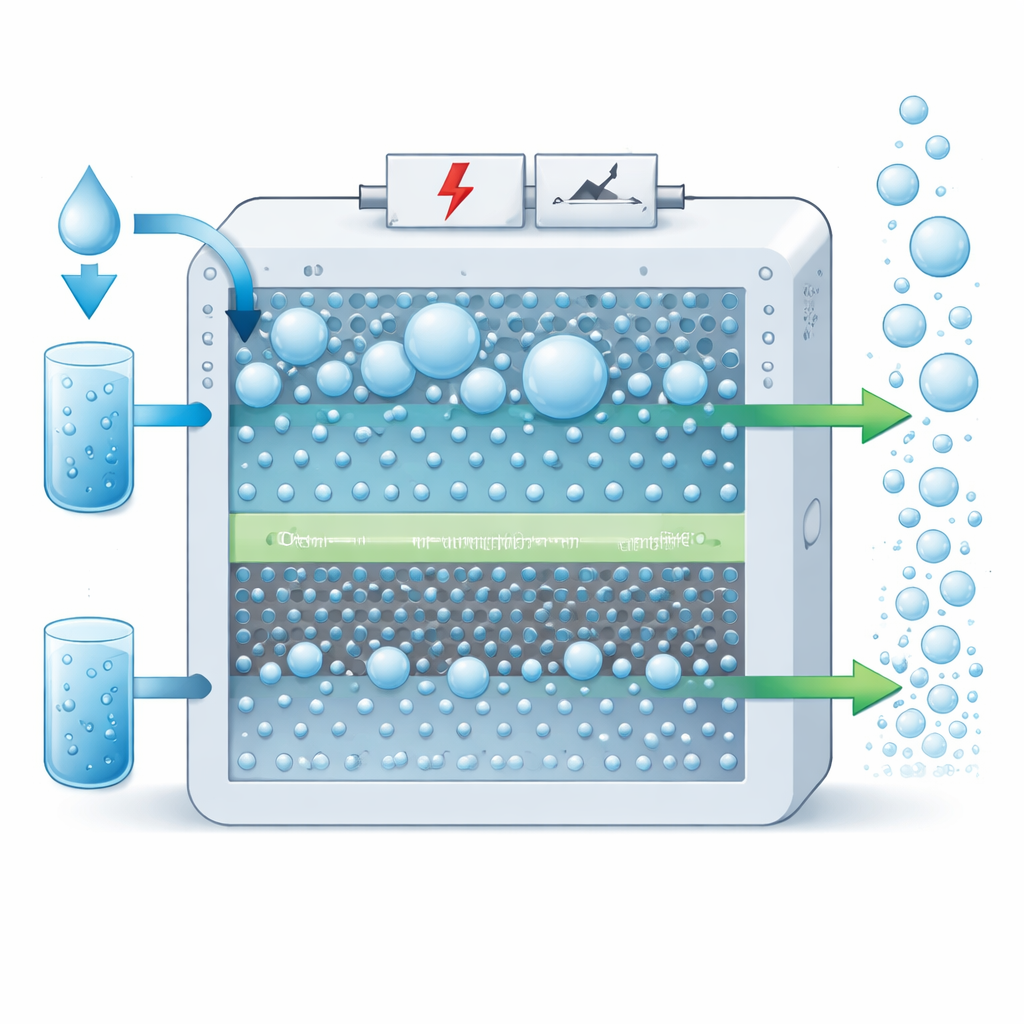
At low power, water-splitting cells mostly care about how many reaction sites are available on the electrode surface, a quantity engineers call the active area. Many past designs focused on roughening or coating electrodes to maximize this area. The team studied anion exchange membrane water electrolyzers, a technology that can use cheaper metals and run at high current. They found that once current densities rise above about one ampere per square centimeter—the range required for industry—gas bubbles produced at the oxygen-making side begin to dominate behavior, masking the benefits of extra active area.
How trapped bubbles choke a water splitter
Using stainless steel as the oxygen-producing electrode, the researchers showed that bubbles hurt performance in three connected ways. First, bubbles sit on the surface and cover reaction sites, forcing the cell to higher voltages to keep the same current. Second, the bubble layer blocks liquid water from crossing the membrane, increasing resistance inside the cell. Third, because water flows from the oxygen side to the hydrogen side, blocked transport literally dries out the hydrogen-producing electrode, starving it of reactant. Together, these effects raise energy use and reduce stability when the device is pushed to high output.
Probing pores, surfaces, and water flow
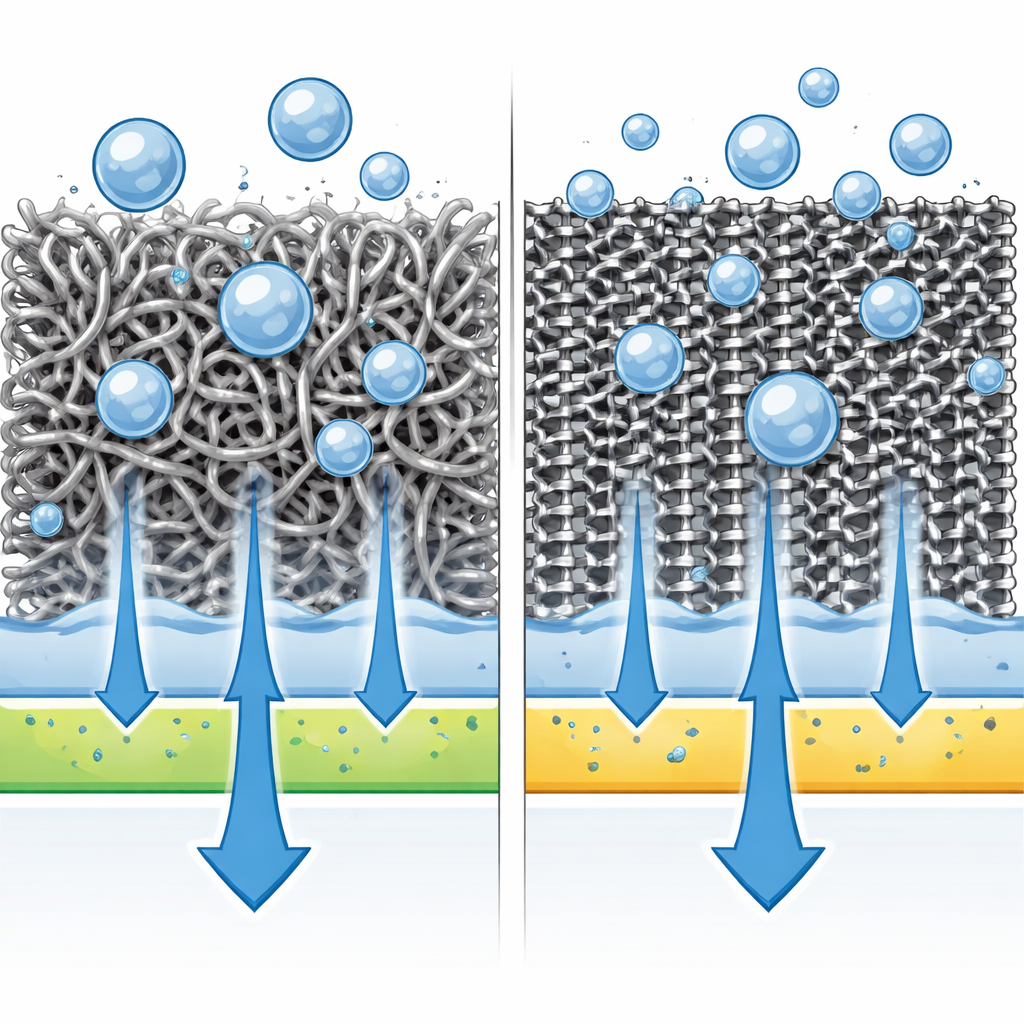
To untangle chemistry from bubble behavior, the team systematically varied the pore size and surface wetting of stainless steel felts, then combined electrical measurements with high-speed visualization. Smaller pores improved contact and reduced basic electrical losses, but if bubbles could not detach quickly, they built up and raised resistance. Making the steel surface more water-loving with acid treatment actually reduced the formal active area yet improved performance at high current, because it produced many smaller bubbles that detached rapidly and allowed more water to pass through. Specialized analysis separated the contributions of oxygen and hydrogen reactions and of water and ion transport, confirming that, at high rates, bubble-related transport limits dominate over pure catalyst activity.
A simple mesh that tames bubbles
Guided by these insights, the authors designed a new “gradient” stainless steel mesh electrode. It stacks a more open outer layer with a finer inner layer near the membrane, shaping how bubbles grow and escape and how water threads through. Even though this mesh has less active surface than conventional stainless steel felt, it removes bubbles more than twice as effectively and produces smaller ones. In full cells, it lowered the operating voltage by 0.14 volts at five amperes per square centimeter and ran stably for 400 hours, all while using common 316L stainless steel that costs orders of magnitude less than precious-metal-based electrodes.
What this means for future hydrogen plants
The study’s core message is that for high-rate green hydrogen production, engineers must treat gas and liquid flow inside electrodes as seriously as they treat catalyst chemistry. Managing where bubbles form, how big they grow, and how quickly they leave can unlock better efficiency, durability, and lower cost without exotic materials. Simple design rules—ensuring enough active area while promoting fast bubble detachment and good water supply—point toward practical, scalable electrodes. If adopted widely, such bubble-smart designs could help water electrolysis deliver large amounts of clean hydrogen more cheaply, supporting the broader shift to a low-carbon energy system.
Citation: Wu, L., Wang, Q., Yuan, S. et al. Bubble dynamics matters at high-rate water electrolysis. Nat Commun 17, 2305 (2026). https://doi.org/10.1038/s41467-026-69052-5
Keywords: green hydrogen, water electrolysis, gas bubbles, electrode design, anion exchange membrane