Clear Sky Science · en
The Lolal-dpp axis mediates the regulation of host reproduction by gut symbionts in insects
How Tiny Gut Partners Shape Insect Fertility
For many insects, the ability to lay large numbers of healthy eggs determines whether their populations boom or crash. This study reveals that a hidden partner—the microbes living in the gut—can make or break that reproductive success. By tracing a chain of events from bacterial vitamins to energy production and protein recycling, the researchers show how gut symbionts help a major fruit crop pest, the oriental fruit fly, remain so prolific. The findings also hint at new, microbe-based strategies to curb insect pests without heavy reliance on pesticides.
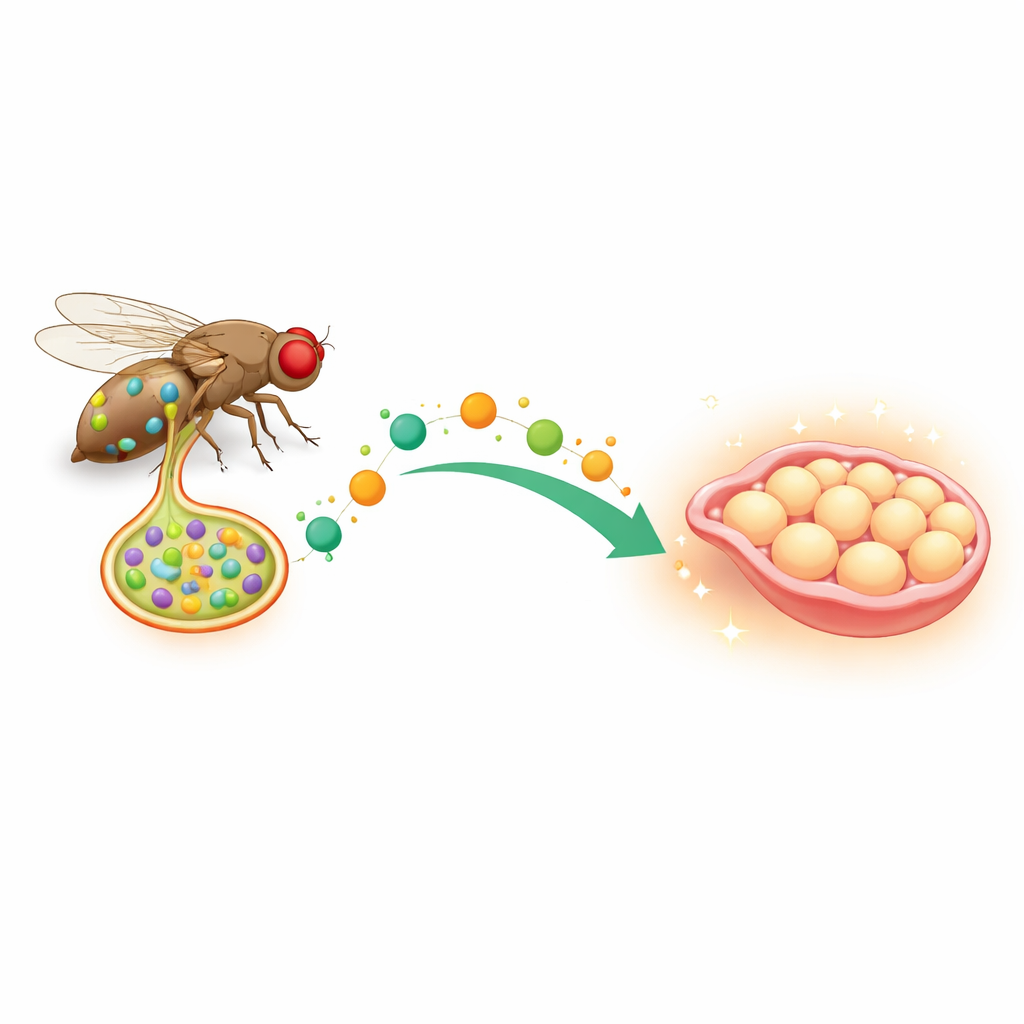
Helpful Bacteria in the Insect Belly
The oriental fruit fly carries a bustling community of bacteria in its digestive tract, especially members of the Enterobacter family. When the scientists wiped out these gut microbes with antibiotics, the female flies survived but their ovaries stalled: eggs developed poorly, and females laid far fewer, less viable offspring. Adding back cultured gut bacteria restored ovary growth and egg output, strongly suggesting that the microbes provide crucial factors the insect itself cannot make.
A Missing Vitamin and the Energy Pipeline
Using broad surveys of small molecules in the flies’ body fluid, the team discovered that one compound stood out when bacteria were removed: nicotinic acid, a form of vitamin B3. This vitamin is a building block for NAD, a key coenzyme that fuels energy production in mitochondria, the cell’s “power plants.” Without gut bacteria, levels of nicotinic acid, NAD, and cellular energy dropped sharply in the ovaries, which showed swollen and damaged mitochondria. Supplying nicotinic acid in the diet, or reintroducing a single gut bacterium, Enterobacter hormaechei, that specializes in making this vitamin, partially restored NAD levels, ATP energy production, mitochondrial health, and egg formation.
Protein Recycling as a Control Switch
The researchers then asked how an energy shortfall in the ovary leads to fewer eggs. They found that a major protein recycling pathway, the ubiquitin–proteasome system, slowed down when gut bacteria or nicotinic acid were missing. This system tags unwanted or overabundant proteins for breakdown, a process that requires plenty of ATP energy. When energy was low, overall protein tagging dropped. Blocking a key enzyme in this pathway in otherwise normal flies mimicked the reproductive problems seen in microbe-free females, underscoring that efficient protein turnover is vital for egg production.
A Delicate Balance of a Master Regulator
Diving deeper, the team mapped thousands of tagged proteins and identified one especially important player: a regulatory protein called Lolal. Under normal conditions, active protein recycling keeps Lolal at moderate levels. In females lacking gut bacteria, Lolal was tagged less and degraded more slowly, so it built up in the ovary. This excess Lolal turned up the activity of a developmental signal called dpp, which, when overly strong, disrupts the progression of egg cells and blocks the formation of mature eggs. Reducing Lolal or dpp levels in microbe-free flies rescued much of their reproductive capacity, while artificially boosting Lolal in healthy females damaged their fertility, confirming that too much of this regulator is harmful.
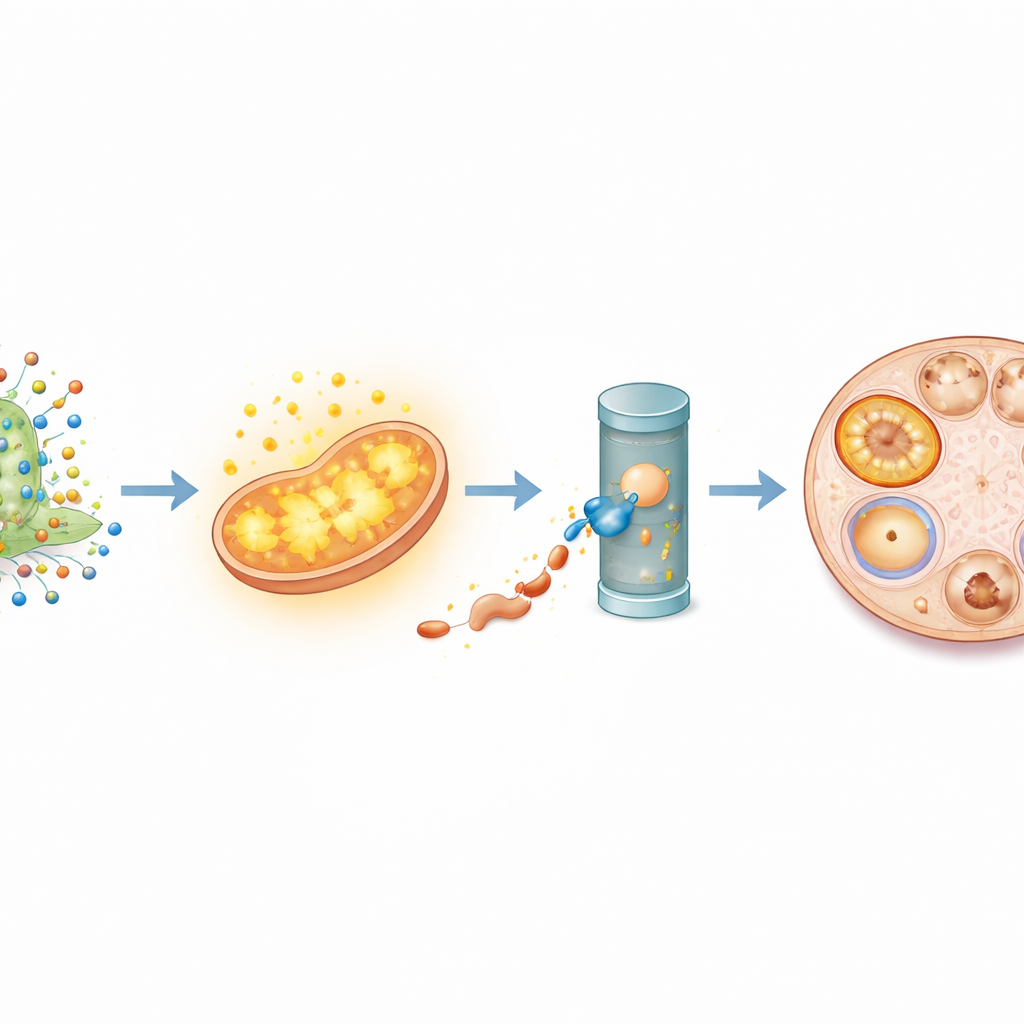
From Microbial Vitamins to Pest Control Ideas
Together, the results outline a clear chain of events: gut bacteria manufacture nicotinic acid; this vitamin feeds the fly’s energy metabolism; abundant energy powers the protein-recycling machinery that keeps Lolal in check; and properly tuned Lolal–dpp signaling allows ovaries to produce healthy eggs. When any early step in this chain is broken—by losing bacteria, losing nicotinic acid, or cutting energy—Lolal accumulates, dpp is overdriven, and reproduction falters. Beyond explaining how tiny symbionts quietly steer insect fertility, this work suggests that disturbing these microbial vitamin pipelines could offer targeted, environmentally friendly ways to reduce the reproductive success of damaging insect pests.
Citation: Qiao, J., Li, Z., Zheng, W. et al. The Lolal-dpp axis mediates the regulation of host reproduction by gut symbionts in insects. Nat Commun 17, 2260 (2026). https://doi.org/10.1038/s41467-026-69021-y
Keywords: insect gut microbiome, symbiotic bacteria, vitamin B3 nicotinic acid, protein ubiquitination, insect reproduction