Clear Sky Science · en
Intradermal delivery of lipophilic siRNAs enables prolonged skin retention and sustained gene silencing in a porcine model
Why Skin Shots for Gene Silencing Matter
Many common skin diseases, from eczema and psoriasis to vitiligo and alopecia areata, are driven by overactive immune signals inside skin cells. Today’s treatments often suppress the whole immune system or require frequent dosing, bringing side effects and inconvenience. This paper explores a different idea: injecting tiny, programmable molecules directly into the skin so they stay there for weeks, quietly turning down harmful signals without affecting the rest of the body.
Turning Off Troublemaking Messages
The therapy at the heart of this work is based on small interfering RNAs, or siRNAs. These short strands of genetic material act like molecular erasers, binding to matching genetic messages inside cells and blocking the production of specific proteins. In this study, the researchers focused on JAK1, a key switch in many inflammatory skin pathways. By designing siRNAs that recognize JAK1’s message, they aimed to reduce inflammation at its source instead of just treating the visible symptoms on the skin’s surface.
Making siRNA Stick to the Skin
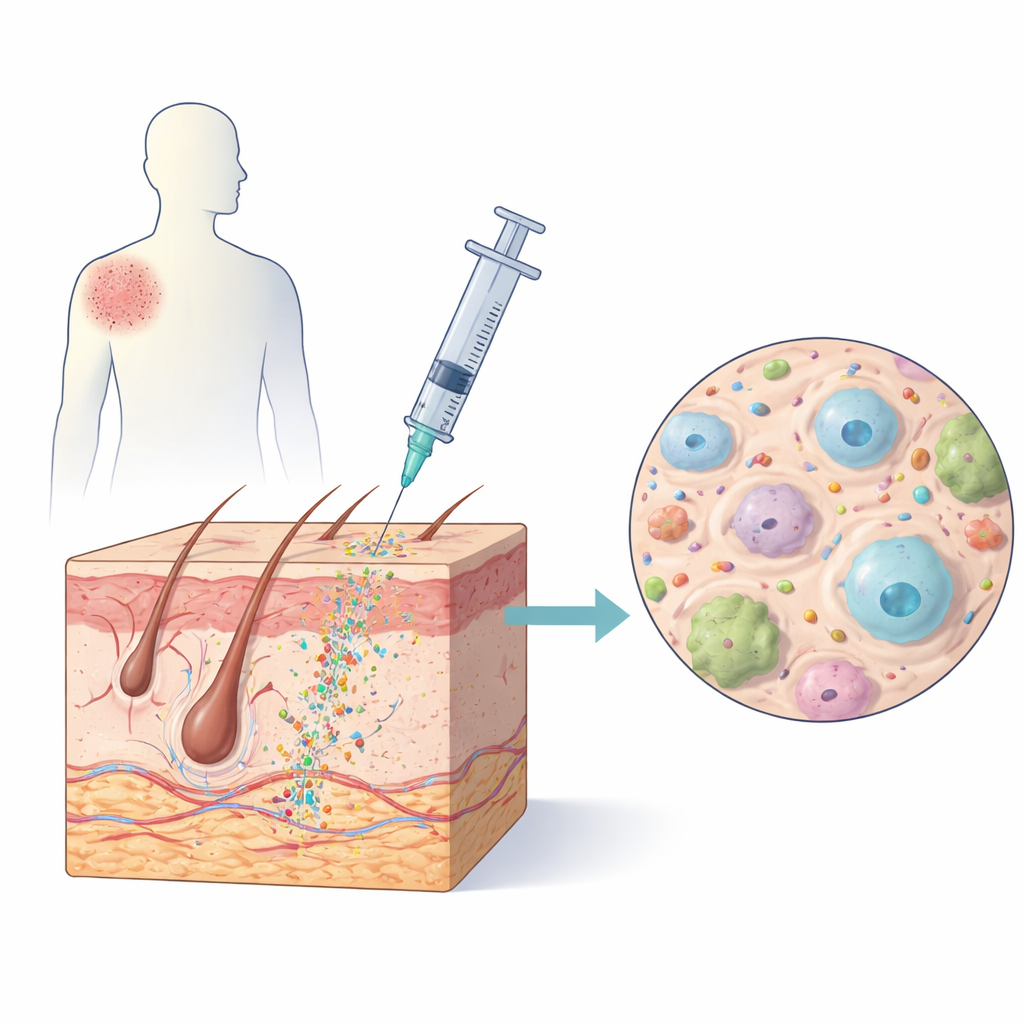
On their own, siRNAs do not easily enter cells or stay put in tissues. The team tackled this by attaching different fat-like (lipophilic) chemical groups to the siRNAs, with the goal of helping them slip into cells and lodge in the skin. They compared three versions: an unmodified siRNA, a moderately fatty “dendritic” form, and a strongly fatty version linked to a long-chain molecule called docosanoic acid (DCA). In freshly donated human skin kept alive in the lab, they injected these three types and found that the DCA-linked siRNA was taken up much more efficiently by many kinds of skin cells, including pigment cells and immune cells. It also shut down JAK1 more strongly in both the outer and deeper skin layers.
Quieting Inflammatory Signals
Lowering JAK1 is only useful if it actually calms the inflammatory storm that drives disease. To test this, the researchers first treated human skin samples with the different siRNAs, then stimulated them with a powerful immune signal known to trigger flare-ups. They measured three chemokines—molecules that call immune cells into the skin and are often elevated in inflammatory conditions. All three siRNA types reduced these chemokines, but the DCA-linked version gave the biggest drop, cutting their levels by roughly two-thirds. This showed that the chemistry of the siRNA’s “tail” was not just affecting how much of the drug reached the cells, but also how deeply it could dial down the disease-relevant pathways.
Testing Long-Lasting Effects in Pig Skin
Because pig skin closely resembles human skin, the team next moved into live pigs to see how long the DCA-siRNA would stay in the skin, how far it would spread through the body, and whether it would cause harm. After intradermal injections—shots placed just under the skin—they tracked siRNA levels in skin and major organs for weeks. The DCA-linked siRNA remained concentrated in the skin for at least eight weeks, while levels in the liver, kidney, heart, and spleen were 15 to 20 times lower. Standard blood tests, including markers of liver, kidney, and blood cell health, stayed normal, and inflammatory signals in the blood did not rise, indicating a favorable safety profile.
Staying Power and Lasting Benefit
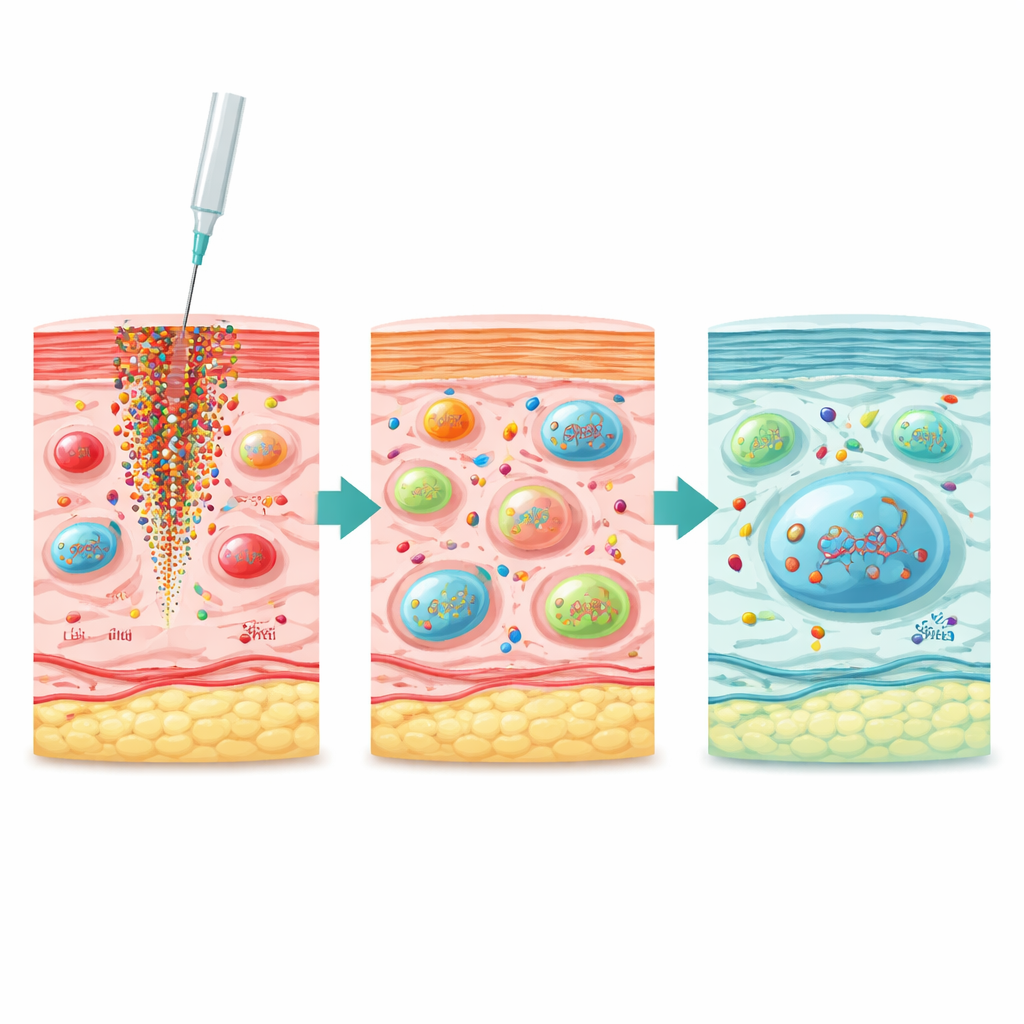
To find out how long the therapeutic effect would last, the researchers gave pigs a higher dose of DCA-linked siRNA that specifically targets pig JAK1. One month after a single set of injections, JAK1 levels in both the outer and deeper layers of skin were still cut by about half to three-quarters. When the skin was challenged with an inflammatory trigger, the same three chemokines measured in the human experiments remained strongly suppressed. Remarkably, the degree of gene silencing after a month was as strong as, or slightly stronger than, what had been seen after just one week, matching the lingering presence of siRNA in the skin.
What This Could Mean for Future Skin Treatments
Put simply, this work shows that cleverly designed, fat-tipped siRNAs can be injected into the skin, stay there for many weeks, and quietly turn down key immune switches without flooding the rest of the body. For patients, that could one day translate into treatments for chronic skin diseases that require only occasional local injections yet offer long-lasting relief, with fewer systemic side effects than current immune-suppressing drugs. While more clinical testing is needed, including ways to cover larger body areas more comfortably, these findings lay a practical foundation for a new class of targeted, long-acting gene-silencing therapies for the skin.
Citation: Fakih, H.H., Zain UI Abideen, M., Rachid, M.O. et al. Intradermal delivery of lipophilic siRNAs enables prolonged skin retention and sustained gene silencing in a porcine model. Nat Commun 17, 2292 (2026). https://doi.org/10.1038/s41467-026-68993-1
Keywords: siRNA skin therapy, intradermal injection, JAK1 inhibition, lipophilic conjugates, inflammatory skin disease