Clear Sky Science · en
Social connections are differentially related to subjective age and physiological age acceleration amongst older adults
Why our social lives matter for how we age
Many people hope that staying socially active will help them stay young, but what does that actually mean inside the body? This study followed thousands of adults over 50 in England to ask a deceptively simple question: do our friendships, family ties and community links change how fast we age, both in how old we feel and how old our bodies behave? The answers reveal that our social world leaves clear fingerprints on our biology, even when we do not notice it ourselves.
Different kinds of social ties
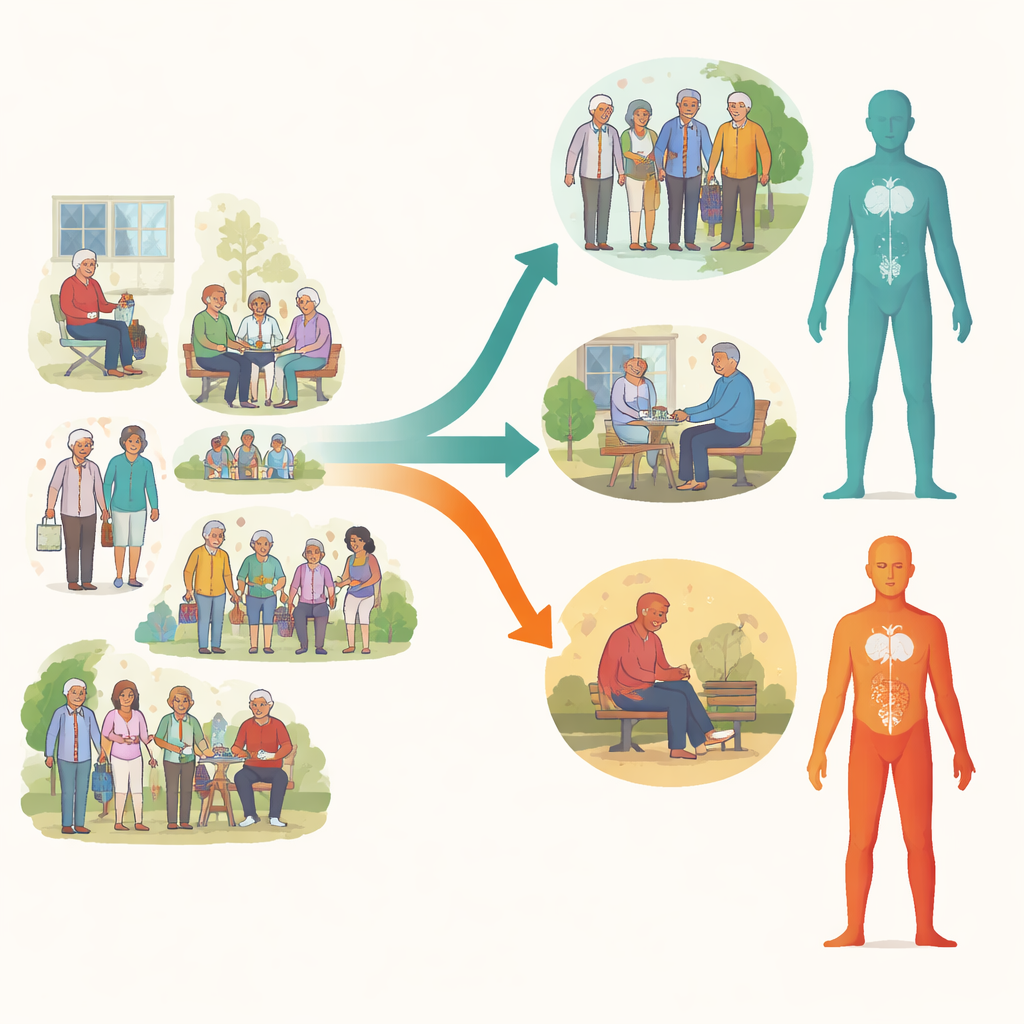
The researchers began by breaking down social life into three easy-to-grasp parts. First is structure: whether people live alone or with others, how many close contacts they have, how often they see or speak to them, and how involved they are in clubs, volunteering or cultural activities. Second is function: the extent to which people feel they can rely on others and how lonely they feel. Third is quality: how supportive or strained their relationships feel, including criticism and tension. Using detailed questionnaires from over 7000 older adults in the English Longitudinal Study of Ageing, the team showed that these aspects are related but not interchangeable; for example, someone living alone may still feel well supported, while another person with many contacts can feel lonely.
Feeling your age versus your body’s age
The study compared two very different views of ageing. One is subjective age: how old people say they feel compared with their actual years. Most participants felt as young or younger than their real age, and only about 8% felt older. The second is a physiological age index built from medical tests covering the heart and blood vessels, lungs, blood markers such as inflammation and fats, and measures like grip strength and waist size. This index estimates whether the body is functioning as though it belongs to someone older or younger than its chronological age. Surprisingly, there was almost no link between these two measures: people who felt young were not necessarily biologically young, and many whose bodies appeared older still felt youthful.
Living arrangements and hidden wear and tear
When the researchers looked at how social connections related to these two types of age, some striking patterns emerged. Older adults who lived alone or had low social integration tended to have a "faster" physiological age: their bodies behaved as if they were roughly two years older than their actual age, even after accounting for income, education, lifestyle and existing illnesses. Those with low levels of emotional support also showed accelerated physiological ageing. Yet these same people did not generally feel older, and those living alone actually reported feeling slightly younger than their years. Other measures such as loneliness, social strain and isolation showed weaker or inconsistent links, especially after stricter statistical checks.
Protective power of strong connections
The team also flipped the question to ask whether especially strong social connections might slow ageing. Here, living with others and being highly integrated in social and community activities stood out. People with these advantages had physiological ages about one to two years younger than their chronological age, suggesting slower wear and tear on the body. These effects were clearest among adults over 65 and were still visible when the researchers looked again four years later, hinting that the patterns are not just short-term coincidences. The findings fit with wider evidence that social activities often bundle in other health-promoting ingredients, such as movement, mental stimulation and a sense of purpose.
What this means for staying healthy as we grow older
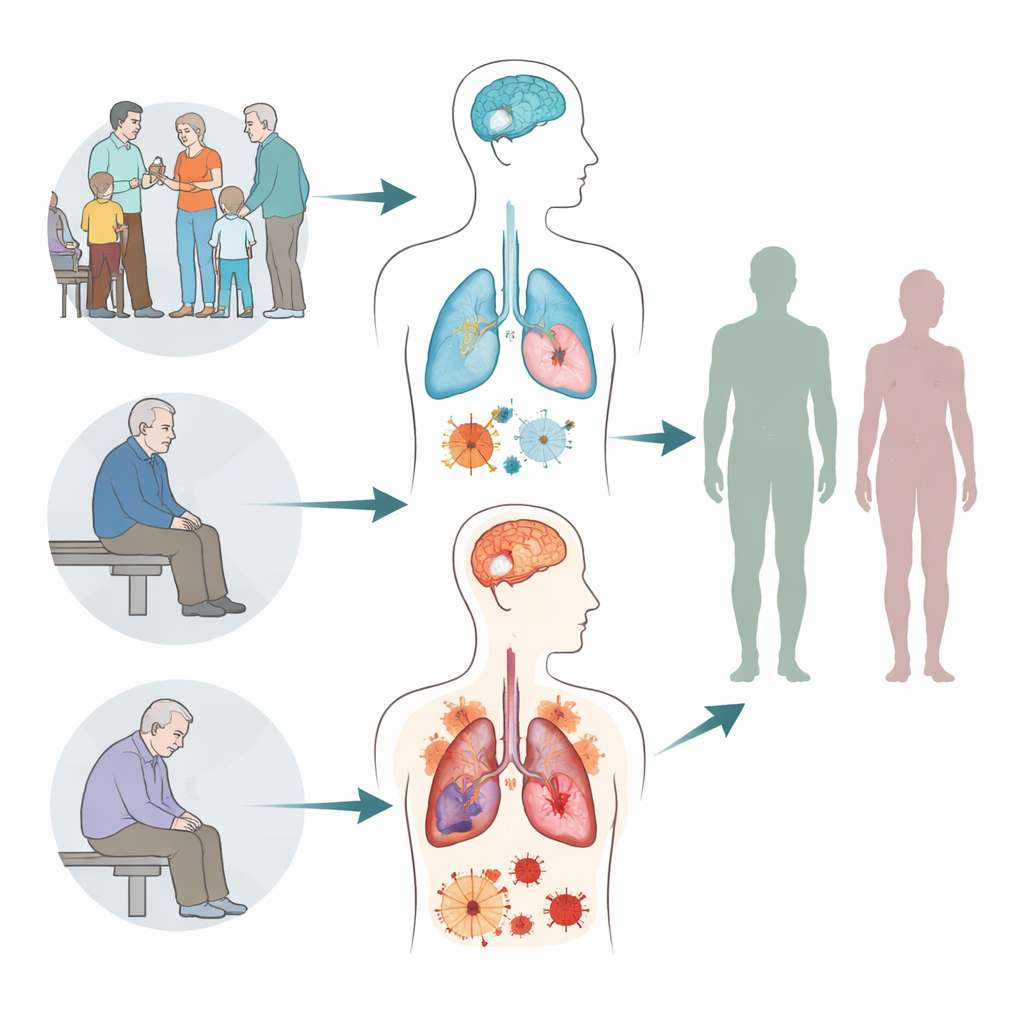
Overall, the study suggests that while having more friends or support does not necessarily make people feel younger, it is closely tied to how fast their bodies age. Weak structural connections—living alone, being rarely involved in social or community life, and lacking support—are linked to a body that ages more quickly, even when people insist they feel fine. Stronger connections, in contrast, are associated with slower biological ageing. This gap between how old we feel and how old our bodies act means many older adults may not realise that thinning social ties are quietly eroding their health. Building and maintaining everyday social connections may therefore be a practical way to help protect the body from age-related decline, alongside more familiar steps like exercise and diet.
Citation: Fancourt, D., Steptoe, A. & Bloomberg, M. Social connections are differentially related to subjective age and physiological age acceleration amongst older adults. Nat Commun 17, 2173 (2026). https://doi.org/10.1038/s41467-026-68977-1
Keywords: social connections, physiological ageing, older adults, loneliness and health, biological age