Clear Sky Science · en
Urinary clusterin as a biomarker of human kidney disease progression and response to the endothelin receptor antagonist atrasentan: An exploratory analysis from the SONAR trial
Why this research matters
Chronic kidney disease is a silent threat for many people with type 2 diabetes, often progressing for years before symptoms appear. Doctors have drugs that can slow the damage, but not everyone benefits equally, and it has been hard to know early on who is actually being protected. This study explores whether a protein called clusterin, measured in urine, can act like a real-time “status light” for the kidneys—signaling both how fast disease is progressing and whether a specific drug, atrasentan, is truly helping.
A new signal from the kidneys
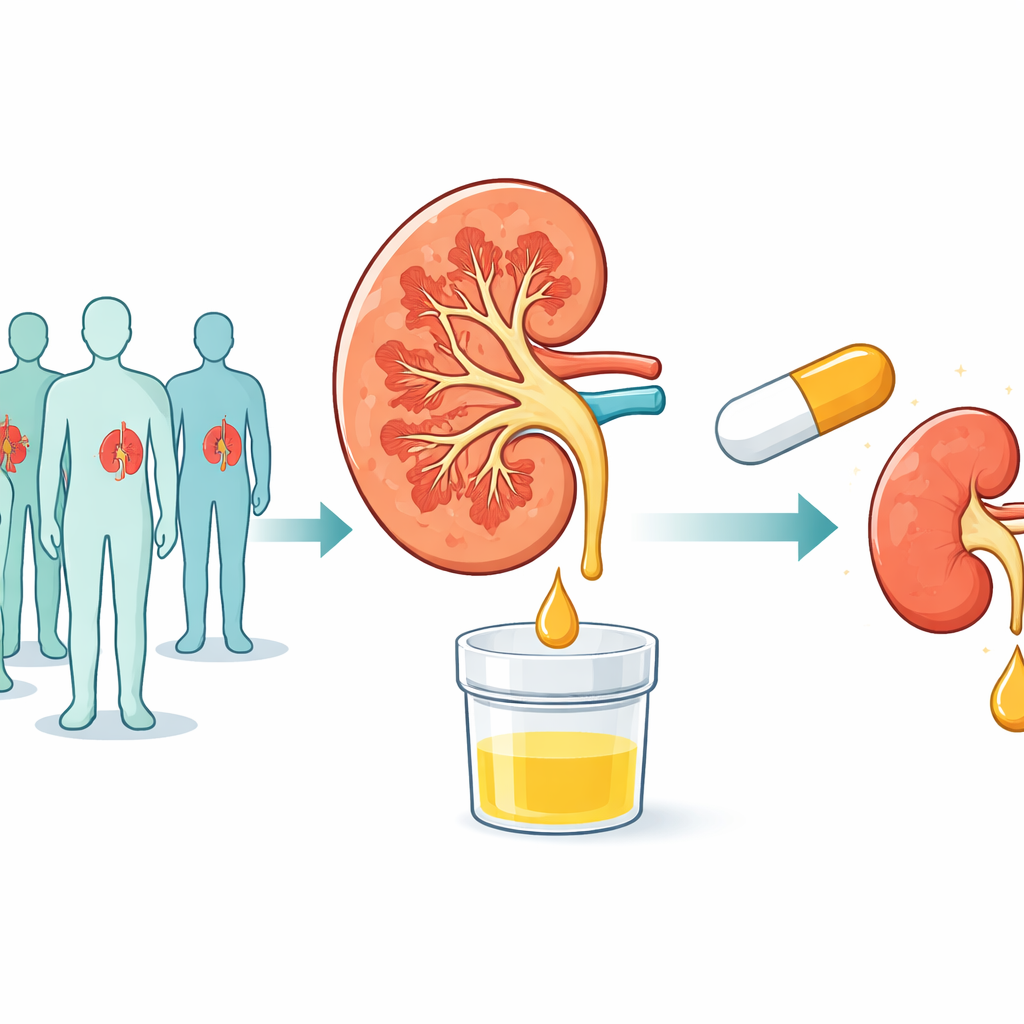
Today, kidney specialists typically rely on two main lab measurements: how much protein leaks into the urine and how well the kidneys filter the blood. These measures are useful, but they can swing up and down for reasons unrelated to treatment, and they do not tell us much about the underlying biology that drives disease. The researchers wanted something more precise—an indicator tied directly to processes inside the kidney and to the pathway targeted by atrasentan, a drug that blocks the action of a vessel‑tightening molecule called endothelin‑1. Using stored urine samples from the large SONAR trial of patients with type 2 diabetes and chronic kidney disease, they screened over a thousand proteins to see which ones changed with treatment and tracked long-term kidney outcomes.
Finding a standout urine protein
From this broad search, sixteen urine proteins changed with short-term atrasentan treatment and reversed when the drug was stopped. Four of them could be reliably measured with standard lab tests, but one—clusterin—stood out. Patients whose clusterin levels in urine fell during six weeks of atrasentan therapy were more likely to belong to a “responder” group, with stable kidney function over more than two years. In contrast, people whose clusterin levels rose were less likely to benefit. This suggested that urinary clusterin might be more than a passive byproduct of damage; it could be capturing how the kidney is reacting to endothelin‑1 blockade.
Linking the marker to kidney tissue
To check whether the urine signal truly reflected events inside the kidney, the team examined kidney tissue from both mice and humans. In a diabetic mouse model that develops severe kidney disease, atrasentan reversed the activity of more than a thousand genes, including many in the endothelin pathway. Within this pattern, the gene that produces clusterin showed a strong match to the level of endothelin pathway activation. Human kidney biopsy data told a similar story: clusterin gene activity was higher in diseased kidneys than in healthy donors, and people with the highest levels had worse kidney function and were more likely to reach kidney failure or major loss of function over time. Single-cell analyses further showed that clusterin was produced by several key kidney cell types, especially tubular and endothelial cells involved in scarring and blood vessel changes.
Testing clusterin in thousands of patients
The researchers then turned back to the full SONAR trial, which included over 3,000 participants with type 2 diabetes and chronic kidney disease. They measured urinary clusterin before starting atrasentan and again after six weeks of treatment. Higher starting levels of urinary clusterin were linked to a higher risk of reaching serious kidney outcomes, even after accounting for age, blood pressure, blood sugar, and usual kidney tests. Importantly, when atrasentan was given, average urinary clusterin dropped by about 40 percent, and each halving of clusterin during the first six weeks was associated with a meaningful reduction in later kidney complications. This relationship held even when changes in traditional urine protein levels were taken into account, suggesting that clusterin adds new information rather than simply echoing existing tests.
What this means for patients
For people living with diabetes and chronic kidney disease, these findings point toward a future in which treatment can be tailored more personally. Measuring urinary clusterin could help identify those at highest risk of kidney decline and, just as importantly, show within weeks whether a drug like atrasentan is truly helping to calm damaging processes in the kidneys. While more studies are needed before this test becomes part of routine care, the work suggests that a simple urine sample could one day guide precision therapy, sparing some patients from ineffective treatments and focusing protective drugs where they will do the most good.
Citation: Ju, W., Nair, V., Vart, P. et al. Urinary clusterin as a biomarker of human kidney disease progression and response to the endothelin receptor antagonist atrasentan: An exploratory analysis from the SONAR trial. Nat Commun 17, 2482 (2026). https://doi.org/10.1038/s41467-026-68973-5
Keywords: chronic kidney disease, type 2 diabetes, urinary biomarkers, endothelin receptor antagonists, precision medicine