Clear Sky Science · en
Prefrontal chandelier cells encode stimulus salience to influence learning in male mice
Why some sights and sounds grab our minds
In everyday life, our senses are bombarded with information, yet only a few sights, sounds, or smells truly grab our attention and shape what we learn. This “standing out” quality is called salience, and when it goes awry it is linked to conditions such as schizophrenia and autism. This study uncovers how a rare type of brain cell in the prefrontal cortex of mice helps detect which events are important, and shows that tuning these cells up or down can directly change how well animals learn from experience.
Special gatekeepers at the start of nerve signals
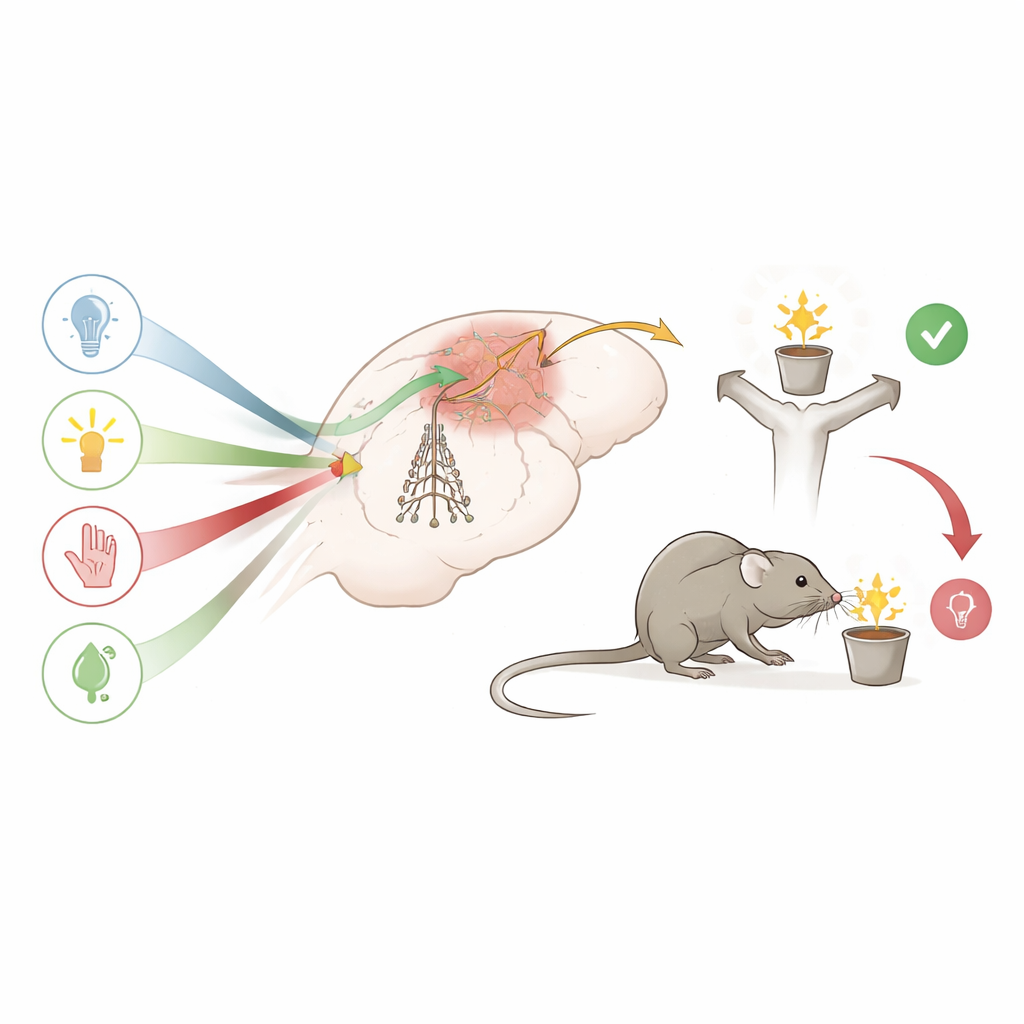
The researchers focused on chandelier cells, a distinctive class of inhibitory nerve cells in the medial prefrontal cortex, a region crucial for decision-making and learning. Unlike most inhibitory cells, chandelier cells connect to a very specific spot on other neurons—the axon initial segment, where outgoing electrical signals are born. This strategic position lets a single chandelier cell influence the firing of hundreds of neighboring output neurons at once, acting as a powerful gatekeeper over prefrontal activity.
How the brain reacts when something stands out
To track chandelier cell activity in living animals, the team used genetic tools to make these cells glow in response to calcium, a signal of activity, and recorded the light through tiny optical fibers in mice as they encountered different events. They found that chandelier cells responded strongly to many kinds of stimuli—tones, shocks, water, odors, flashes of light, and new objects—regardless of whether they were pleasant or unpleasant. What mattered most was how striking the event was. The first time a stimulus appeared, chandelier cells lit up, but their responses faded quickly with repetition, even when other nearby inhibitory cell types did not adapt. This pattern revealed that chandelier cells are tuned to novelty: they react when something is new and gradually fall silent as it becomes familiar.
From new and surprising to strong and intense
Salience is not just about being new; intensity also matters. The scientists tested this by giving head-fixed mice water rewards of different sizes in a random order across many trials. Early on, chandelier cells fired strongly to almost any drop size, driven mainly by the fact that the situation was still fresh. After extended exposure, their responses changed character: the cells now fired more for larger drops and less for smaller ones, reflecting the physical strength of the event rather than its novelty. Other inhibitory neuron types did not show this flexible switch. Thus, chandelier cells appear to encode salience in two phases—first by signaling that something is new, then by grading their activity according to how strong or significant the repeated event is.
Input from remote hubs and the making of meaning
The prefrontal cortex does not work in isolation. It receives signals from distant hubs known to handle salience, including the anterior insular cortex and a midline thalamic region called the paraventricular thalamus. When the researchers disrupted communication from either of these areas using molecular tools that block synaptic release, chandelier cells could no longer properly distinguish new from familiar stimuli or strong from weak rewards. The team then moved from passive sensing to active learning. In a trace fear-conditioning task, mice learned to associate a tone with a later shock. Initially, chandelier cells had stopped responding to the familiar tone, but as the tone became predictive of the shock, their responses to both the cue and the shock grew again—now reflecting learned importance rather than simple novelty.
Turning the salience dial changes learning
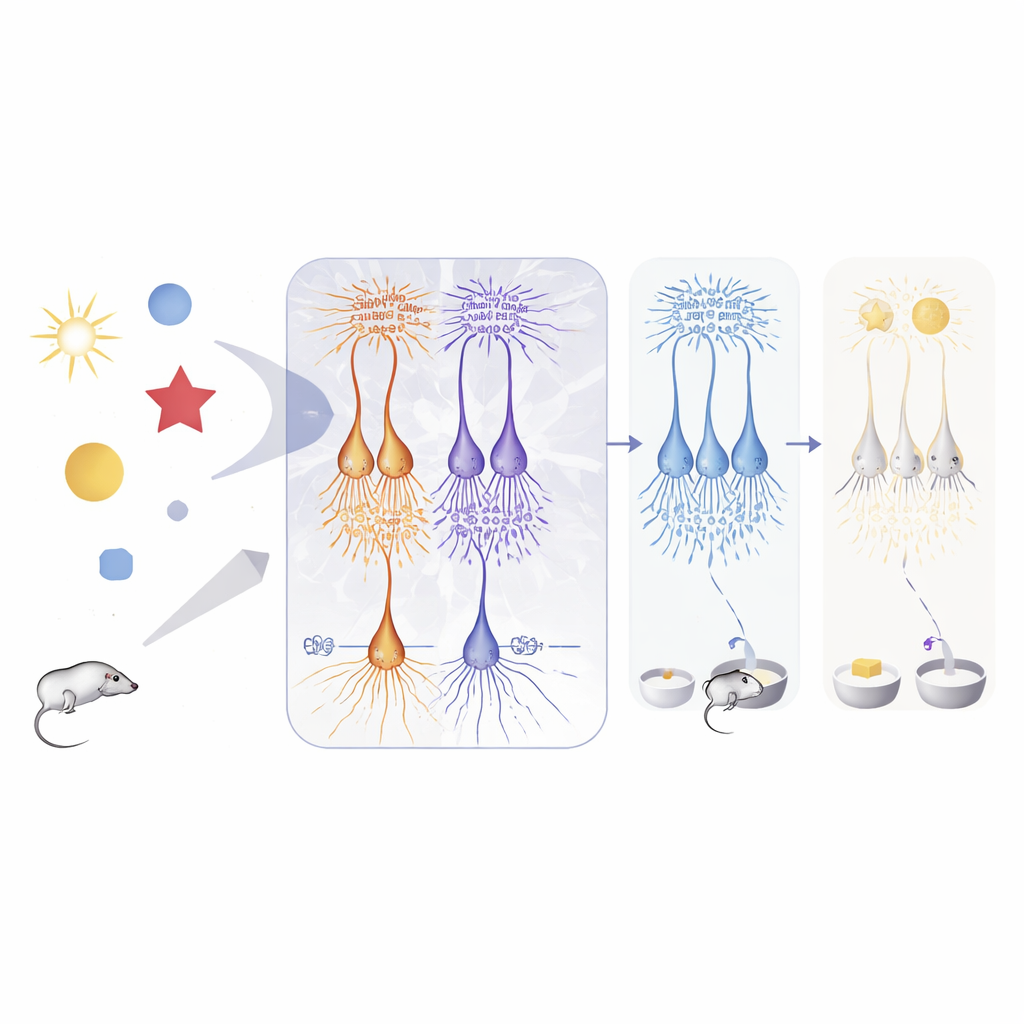
To test whether chandelier cells merely mirror salience or actually help create it, the researchers used light- and drug-based tools to silence or boost these cells during learning. When chandelier cells or their key inputs were turned down while the animals were forming associations, mice froze less to the warning tone later and also showed poorer learning in a reward-based task that paired a tone with sugar water. Conversely, gently reducing chandelier cells’ baseline excitability so that their responses to tones became relatively stronger led to better learning, while chronic activation that blunted their stimulus responses impaired learning. These bidirectional manipulations show that chandelier cell activity is not just a readout of importance; it helps determine which experiences are tagged as worth remembering.
What this means for brain health
Overall, the work reveals chandelier cells in the prefrontal cortex as central players in deciding which events matter, by combining information about novelty, strength, and learned predictions. Because these cells are altered in disorders such as schizophrenia and autism, understanding how they assign salience offers a concrete cellular foothold on symptoms like misplaced importance of irrelevant events or difficulty focusing on meaningful social cues. By mapping how a tiny population of specialized inhibitory cells shapes learning, the study opens a path toward targeted strategies for restoring more accurate salience signals in the brain.
Citation: Zhang, K., Shao, M., Kong, Q. et al. Prefrontal chandelier cells encode stimulus salience to influence learning in male mice. Nat Commun 17, 2321 (2026). https://doi.org/10.1038/s41467-026-68959-3
Keywords: salience, prefrontal cortex, interneurons, associative learning, neuropsychiatric disorders