Clear Sky Science · en
Circadian fluctuation of soluble CD26 dictates the impact of the timing of cord blood transplantation on acute graft-versus-host disease
Why the Time of a Life-Saving Transplant Matters
For people with leukemia and other blood cancers, cord blood transplants can be life-saving—but they carry a dangerous risk: the new immune cells can attack the patient’s own tissues, a complication called acute graft-versus-host disease (aGVHD). This study asks a surprisingly practical question with huge implications: does the time of day when doctors infuse cord blood meaningfully change that risk, and if so, why? The answer turns out to involve our body’s internal clock and a little-known immune molecule called soluble CD26.
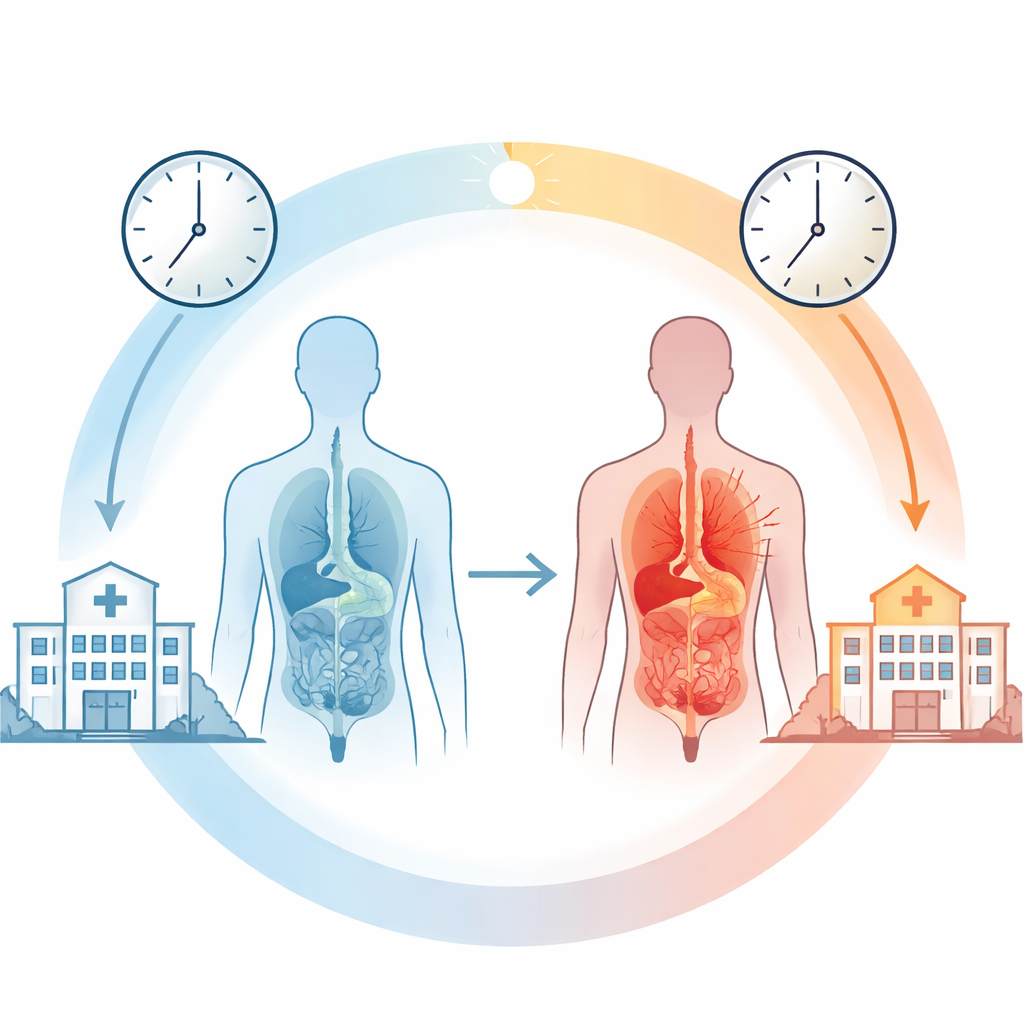
Morning Versus Late Morning: A Small Shift, Big Impact
The researchers examined medical records from 434 patients with acute leukemia who received a single unit of unrelated, frozen cord blood between 2014 and 2020. All patients were in remission before transplant and received similar drugs to prevent rejection. Because cord blood units are thawed and given mainly in the morning, the team compared people who were infused before 9:40 a.m. with those infused after 9:40 a.m., but still before noon. Apart from age, the two groups looked very similar in terms of disease and transplant factors, allowing a fair comparison focused on timing.
Earlier Infusions, Fewer Severe Complications
While both groups had comparable rates of mild to moderate aGVHD, severe aGVHD—grades III to IV, which can be life-threatening—was markedly less common in the earlier infusion group. Patients treated before 9:40 a.m. had a substantially lower chance of developing these serious complications compared with those treated later in the morning. This difference in timing also translated into better long-term outcomes. Over three years, people infused earlier had lower transplant-related death and higher overall, disease-free, and “GVHD-free, relapse-free” survival. Importantly, giving the transplant earlier did not increase the risk of the cancer coming back, suggesting a genuine safety gain without sacrificing effectiveness.
The Body Clock and a Hidden Immune Switch
To understand why a few hours could matter so much, the team looked at blood samples from patients after their intensive chemotherapy but before infusion of cord blood. They measured nearly 50 immune-signaling molecules at different times of day. One stood out: soluble CD26, also known as DPPIV. Levels of this molecule were clearly lower around 7:00 a.m. and higher by late morning and afternoon, following a daily rhythm. Higher soluble CD26 was linked to a more “inflamed” immune environment—higher levels of several pro-inflammatory signals and lower levels of IL-18, a molecule that can help maintain balance in the gut’s immune system. Additional experiments in mice and human tissue showed that cells lining the intestine and skin, governed by their own circadian clocks, help drive this daily rise and fall of CD26 in the bloodstream.
From Molecule to Organ Damage—and How to Block It
The researchers then zoomed in on how soluble CD26 might tip the scales toward aGVHD. In lab dishes, when this molecule was added to mixtures of human immune cells, it boosted the activity of monocytes—the immune cells that present antigens—and made them display more “go” signals to T cells. In this setting, T cells proliferated more, switched into aggressive states, and produced more inflammatory substances. In contrast, Sitagliptin—a diabetes drug that blocks CD26’s enzyme activity—dampened T-cell activation and encouraged a more restrained, less inflammatory profile. In mouse transplant models, brief Sitagliptin treatment right before infusion dramatically reduced aGVHD severity and improved survival, especially when transplants occurred at times of day with naturally higher CD26 activity. Notably, these benefits were not due to faster blood-forming cell recovery, pointing squarely toward immune modulation as the key effect.
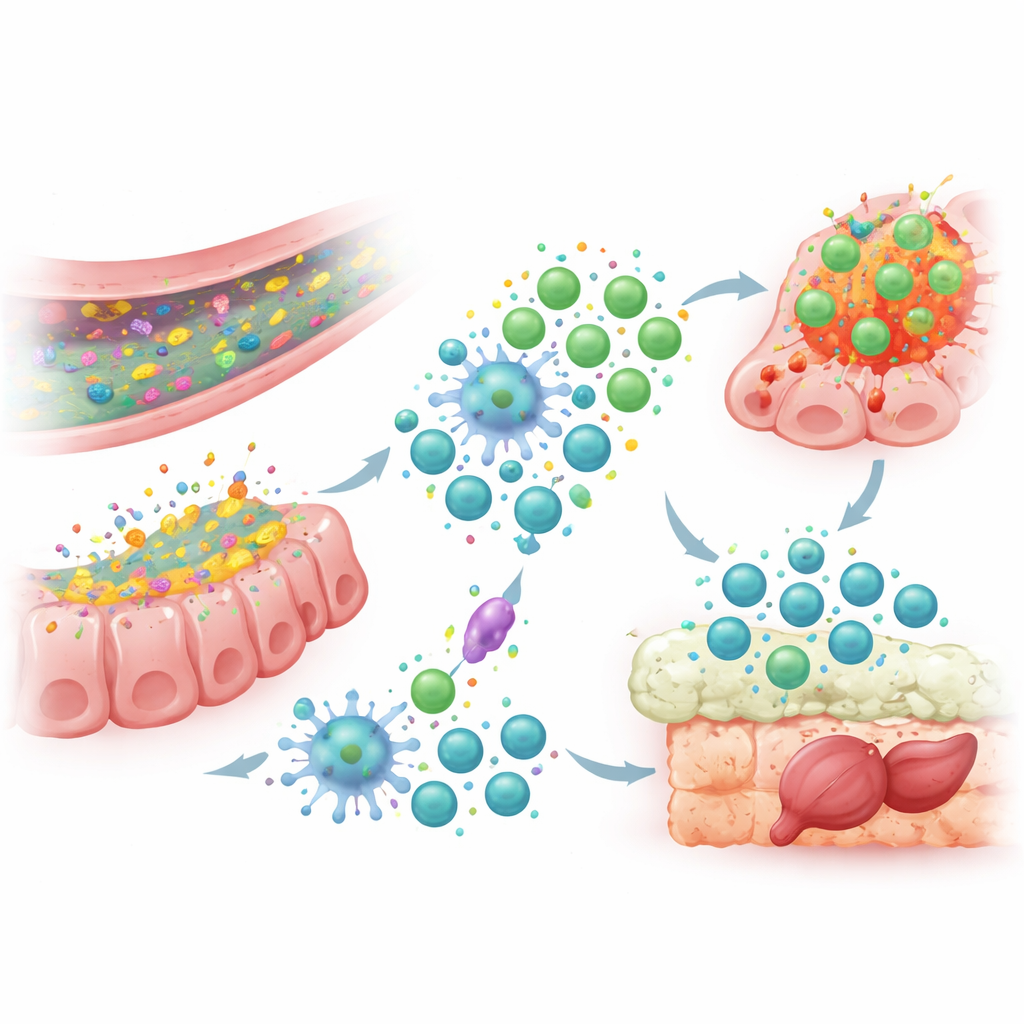
Turning Timing and Targeted Drugs Into Practical Tools
Taken together, this work shows that the body’s circadian clock helps set the “mood” of the immune system at the moment of transplant, with soluble CD26 acting as an important switch. When cord blood is infused early in the morning, this switch is set lower, and patients face less severe aGVHD and better survival. For centers that can adjust their schedules, planning cord blood transplantation for the early morning could become a simple, cost-free way to improve outcomes. For patients whose procedures cannot be timed optimally, short-term use of a CD26-blocking drug like Sitagliptin may offer a second line of defense. The study highlights how paying attention to the clock—and to a single, druggable molecule—can make a high-stakes treatment both safer and more effective.
Citation: Wu, Y., Hou, Y., Wang, D. et al. Circadian fluctuation of soluble CD26 dictates the impact of the timing of cord blood transplantation on acute graft-versus-host disease. Nat Commun 17, 2176 (2026). https://doi.org/10.1038/s41467-026-68958-4
Keywords: cord blood transplantation, circadian rhythm, graft-versus-host disease, soluble CD26, Sitagliptin