Clear Sky Science · en
Ocean heat forced West Antarctic Ice Sheet retreat after the Last Glacial Maximum
Why this ancient ice story matters today
The West Antarctic Ice Sheet holds enough frozen water to raise global sea levels by several meters, and parts of it are already thinning and retreating. This study looks back 18,000 years to ask a pressing question: when the ice last shrank dramatically, what was really to blame—warmer air above, or warmer ocean water below? By reading chemical clues locked in seafloor mud, the researchers show that heat delivered by the ocean, not the atmosphere, was the main force that pulled the ice back after the last ice age. Their findings help us understand how today’s changing oceans may shape future sea-level rise.
Digging climate clues from the ocean floor
Because we only have direct measurements of West Antarctic ocean temperatures for the past few decades, the team turned to natural recorders buried in the seabed of the Amundsen Sea. Tiny bottom-dwelling organisms called foraminifera build shells that incorporate magnesium and carbon in ways that depend on the water they live in. By measuring magnesium-to-calcium ratios and carbon isotopes in these shells from six carefully dated sediment cores, the scientists reconstructed changes in deep water conditions over the last 18,000 years. They focused on the presence of relatively warm, salty Circumpolar Deep Water versus colder, fresher Antarctic surface-derived waters on the continental shelf.
Warm deep water and a great ice retreat
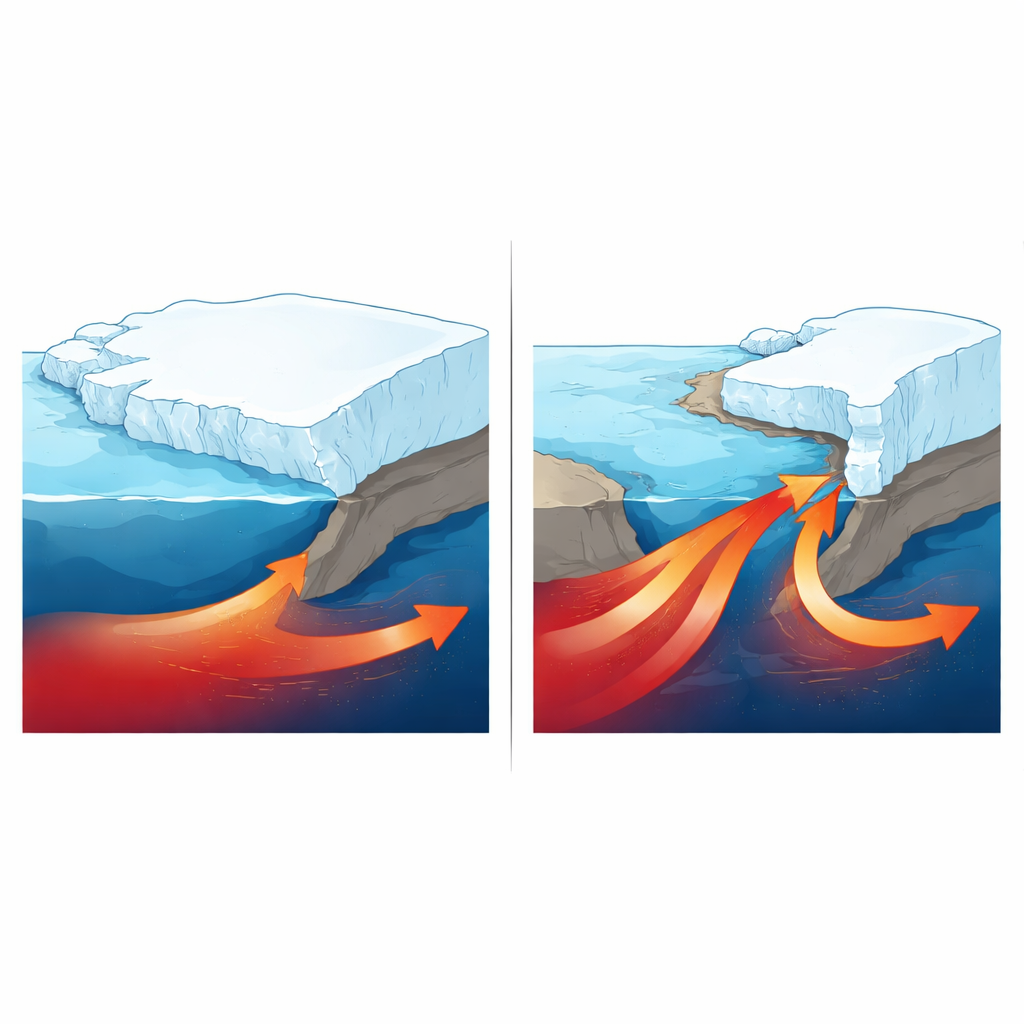
The chemical records show that from about 18,000 to 10,000 years before present, the continental shelf of the Amundsen Sea was bathed in warm deep water. During this same period, geological evidence indicates that the West Antarctic Ice Sheet’s grounding line—the point where ice lifts off the seabed and begins to float—retreated rapidly from near the edge of the continental shelf to close to its modern position along the Marie Byrd Land coast. The close timing between persistent warm deep water on the shelf and large-scale ice retreat strongly suggests a cause-and-effect link: ocean heat undermined the floating ice shelves, reducing their buttressing effect and allowing inland ice to flow faster into the sea.
When the ocean cooled, the ice steadied
Around 10,000 years ago, the deep waters on the shelf became cooler and took on more of a surface-water character, indicating that the supply of warm Circumpolar Deep Water weakened. After this transition, there is no evidence for major additional landward movement of the grounding lines in this sector, even though surface air temperatures over West Antarctica continued to rise and reached a mid-Holocene warm period between about 6,000 and 3,000 years ago. Glaciers like Thwaites and Pine Island, now among the fastest-changing on Earth, appear not to have been substantially smaller than they are today during this warmer interval. This mismatch—warming air but relatively stable ice margins—points to ocean conditions, rather than air temperature alone, as the key control on ice-sheet behavior here.
Winds, currents, and a switch in ocean states
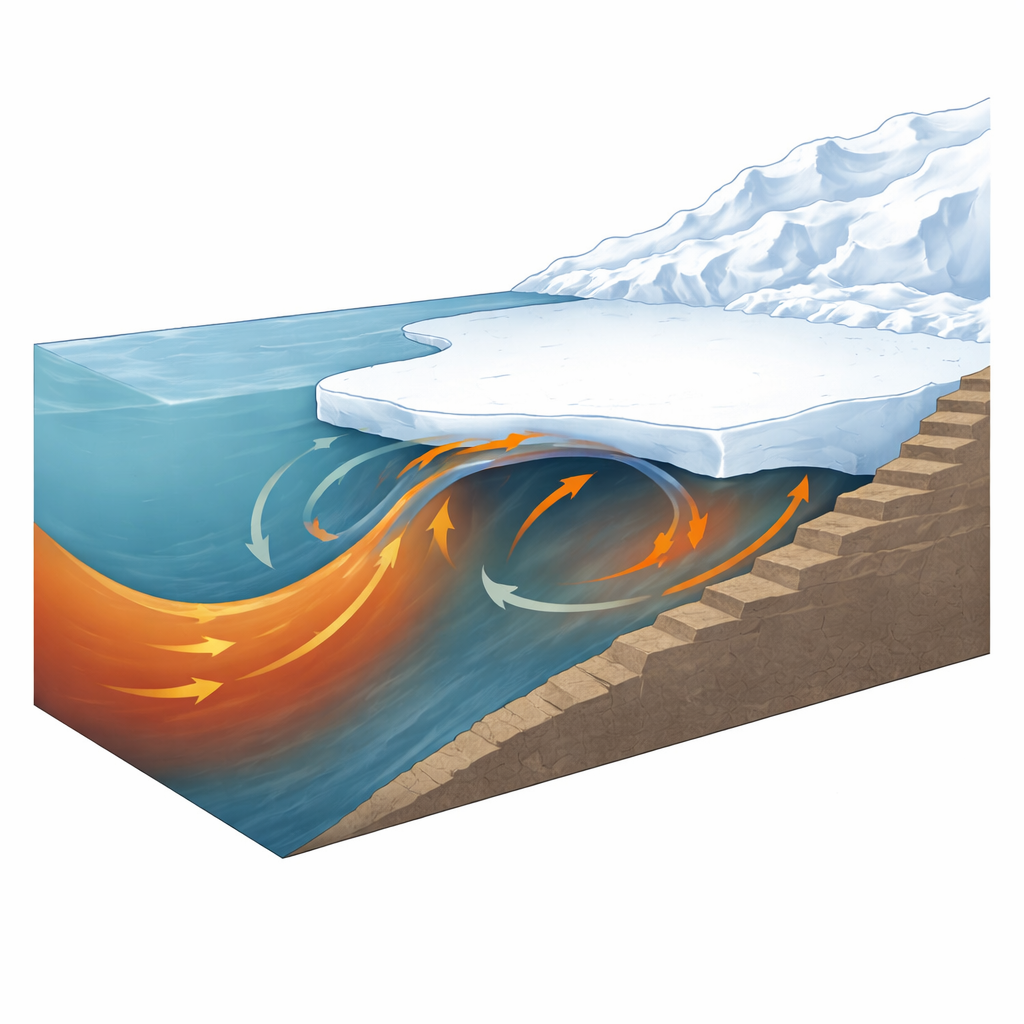
The study links these ocean changes to shifts in the belt of strong westerly winds that circle the Southern Ocean and help steer the Antarctic Circumpolar Current. During and just after the last ice age, a poleward shift of these winds likely brought the warm current closer to the Antarctic continental slope, making it easier for deep warm water to flow into troughs that cut across the seabed toward the ice front. Later, as the winds shifted equatorward, the inflow of warm deep water onto the shelf diminished and the boundary between warm and cold waters sank deeper. That deeper “thermocline” reduced contact between warm water and the underside of ice shelves, allowing them and the inland ice they support to stabilize despite continued atmospheric warming.
What this means for our future seas
By showing that past episodes of major ice retreat in West Antarctica lined up with times when warm deep ocean water flooded onto the continental shelf, while periods of cooler deep water coincided with stability, this work underscores how sensitive the ice sheet is to ocean heat. Climate models project that, under ongoing greenhouse gas emissions, Southern Hemisphere westerly winds and the Antarctic Circumpolar Current will continue to shift poleward and strengthen, favoring renewed and persistent delivery of warm deep water to the ice sheet’s underbelly. Given that key West Antarctic glaciers sit on beds that deepen inland, this ocean-driven melting could trigger further rapid and possibly irreversible retreat, locking in long-term sea-level rise that coastal communities around the world will need to plan for.
Citation: Mawbey, E.M., Smith, J.A., Hillenbrand, CD. et al. Ocean heat forced West Antarctic Ice Sheet retreat after the Last Glacial Maximum. Nat Commun 17, 2079 (2026). https://doi.org/10.1038/s41467-026-68949-5
Keywords: West Antarctic Ice Sheet, ocean heat, sea-level rise, Circumpolar Deep Water, paleoclimate