Clear Sky Science · en
Molecular signatures of resilience to Alzheimer’s disease in neocortical layer 4 neurons
Why Some Brain Cells Beat Alzheimer’s
Alzheimer’s disease is famous for stealing memory and thinking, but the damage it causes is not spread evenly across the brain. Some nerve cells die early, while others stay surprisingly healthy even in advanced disease. This study asks a hopeful question: what makes those tougher cells different, and can their survival tricks be turned into new treatments?
A Tale of Three Brain Regions
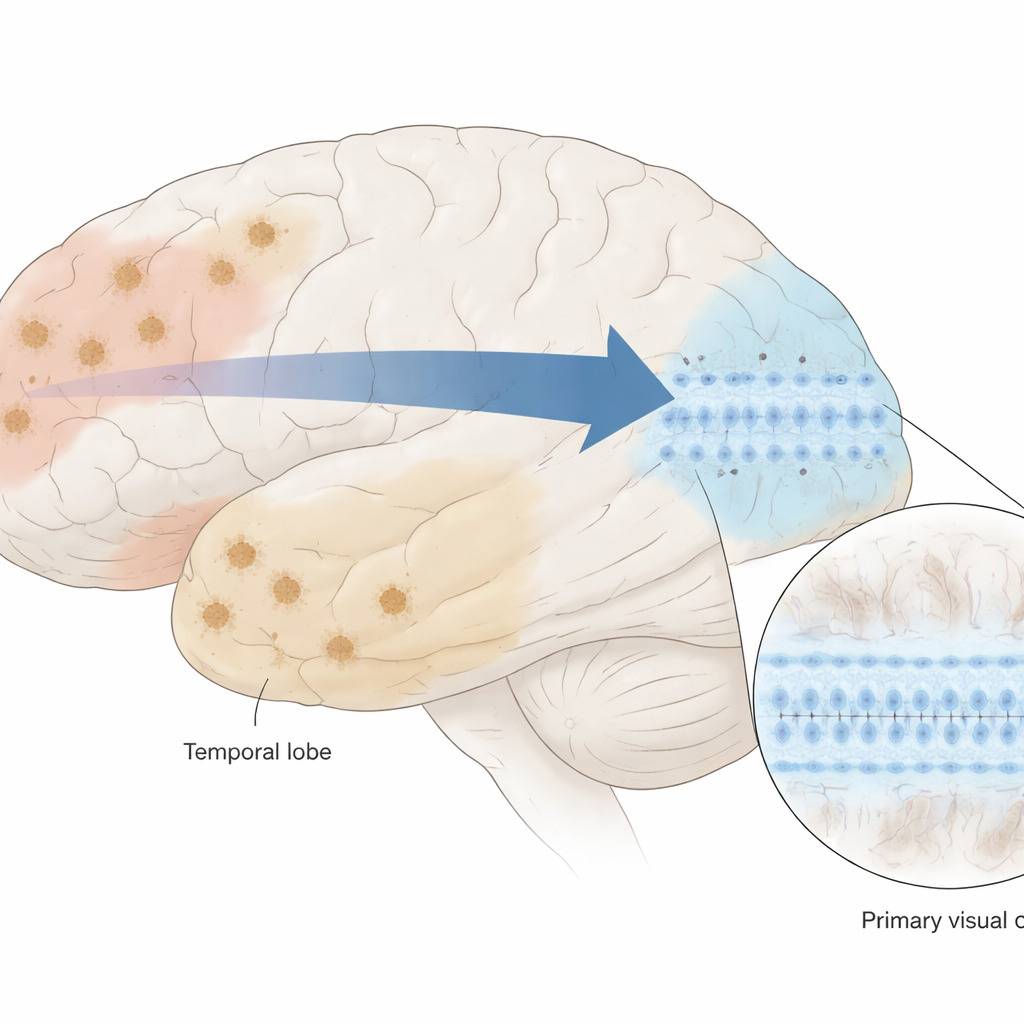
The researchers focused on three areas of the human cortex: two that are hit early in Alzheimer’s (prefrontal cortex and precuneus, important for planning and memory) and one that is hit late (the primary visual cortex, which processes sight). Using more than 400,000 isolated cell nuclei from 46 donated brains, they read out which genes were active in individual cells (single-nucleus RNA sequencing) and then mapped where those cells sit in real tissue slices (spatial transcriptomics). This combination let them see not just which cell types exist, but exactly where vulnerable and resilient cells live across the layered structure of the cortex.
The Hidden Strength of Layer 4 Neurons
Within the visual cortex, they homed in on layer 4, a dense band of small neurons that receive incoming sensory signals. This layer has long been noticed as relatively spared in Alzheimer’s, even when sticky amyloid plaques are present. The team discovered a specific group of excitatory neurons in layer 4—called Ex5 in their analysis—that is especially abundant in the primary visual cortex but also present, though more sparsely, in other cortical regions. As Alzheimer’s pathology worsened, many other neuron types declined, but these Ex5 cells held their ground and even made up a larger share of the remaining neurons, a strong sign of cellular resilience.
Protective Gene Programs Turned On Early
To understand why Ex5 neurons endure, the scientists compared gene activity in these resilient cells to that in more fragile neighbors, especially a vulnerable group of upper-layer neurons involved in thinking and memory. Across disease stages and brain regions, Ex5 neurons switched on sets of genes linked to keeping synapses intact, fine-tuning electrical signals, and tightly managing calcium inside cells. Many of these genes are already known from genetics studies to influence Alzheimer’s risk. The pattern suggests that resilient neurons actively engage a defense program early in disease, rather than simply avoiding harm by chance.
A Potassium Channel Partner in the Spotlight
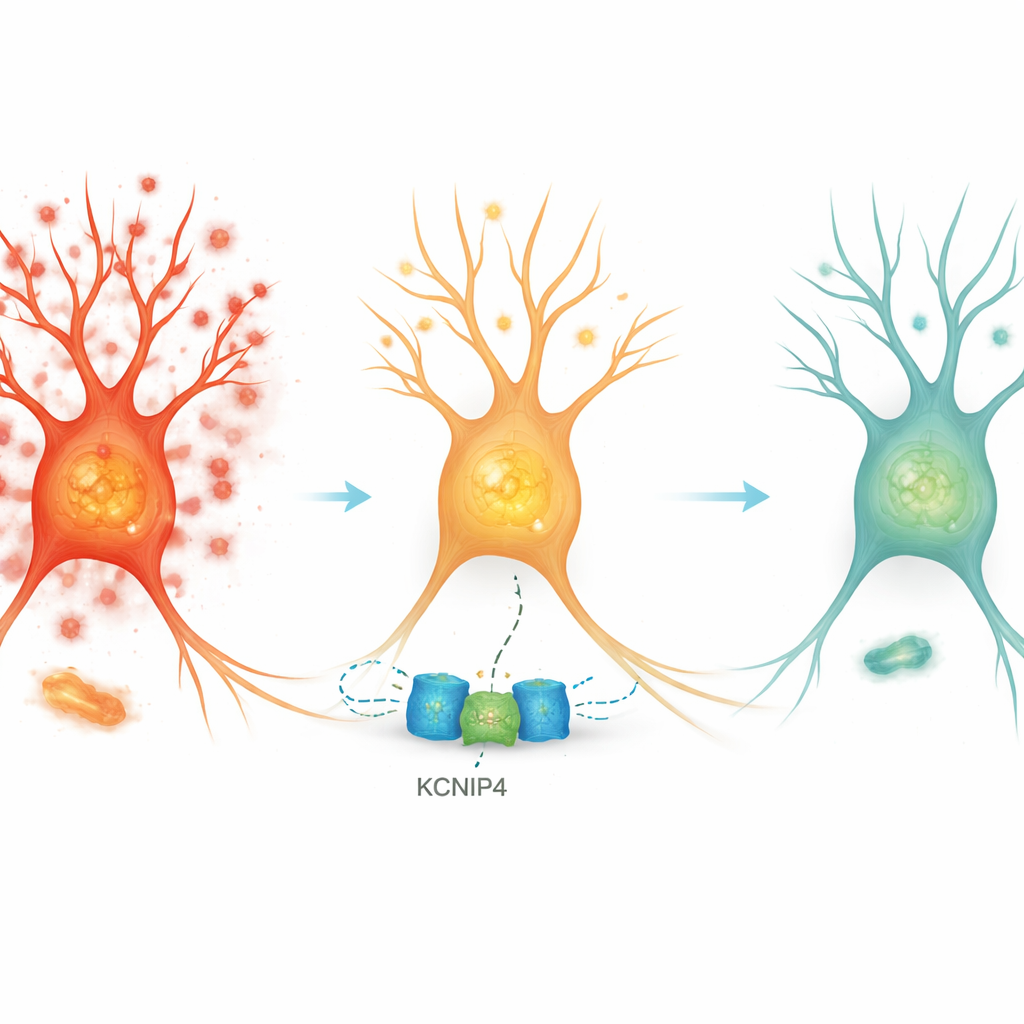
One gene, KCNIP4, emerged as a particularly strong candidate for driving resilience. It encodes a protein that binds to potassium channels on neurons and helps control how easily they fire. In human brain samples, KCNIP4 levels rose specifically in resilient layer 4 neurons as Alzheimer’s pathology increased, while declining in more vulnerable neuron types later in disease. The team then tested its effects directly: using a viral vector, they boosted the mouse version of this gene (Kcnip4) in cultured mouse cortical neurons and in a mouse model genetically engineered to develop Alzheimer-like changes. In dishes, neurons with extra Kcnip4 showed fewer bursts of calcium activity, even when exposed to toxic amyloid fragments. In mice, overexpressing Kcnip4 dampened markers of neuronal overactivity in the cortex, without worsening amyloid build-up and with a modest reduction in inflammatory microglia.
From Resilient Cells to Future Therapies
Taken together, the findings paint a picture in which certain visual cortex neurons survive Alzheimer’s by dialing up a protective network of genes that keep their connections stable and their electrical activity in check. KCNIP4 sits at the center of this network, acting like a built-in brake on hyperactive neurons, a state increasingly recognized as an early driver of damage in Alzheimer’s and other brain diseases. While much work remains before these insights translate into treatments, this study provides a detailed map of resilient cortical cell types and the molecular tools they use to stay alive. Those same tools—especially ways to safely fine-tune neuronal excitability—may one day help shield more vulnerable brain regions from the ravages of Alzheimer’s.
Citation: Dharshini, S.A.P., Sanz-Ros, J., Pan, J. et al. Molecular signatures of resilience to Alzheimer’s disease in neocortical layer 4 neurons. Nat Commun 17, 2223 (2026). https://doi.org/10.1038/s41467-026-68920-4
Keywords: Alzheimer’s disease resilience, cortical layer 4 neurons, single-cell transcriptomics, neuronal hyperexcitability, KCNIP4