Clear Sky Science · en
Global crop-specific energy demand for irrigation
Why watering our crops takes more power than you think
Feeding a growing, increasingly affluent world depends not only on land and water, but also on energy. This study tackles a deceptively simple question with big implications: how much energy does it take to move water to the world’s crops, and what would it cost in energy terms to expand irrigation where it could sustainably boost food production? By mapping these needs crop by crop across the globe, the authors reveal where irrigation already soaks up the most power, where new irrigation could safely grow, and how limited access to electricity, rather than water itself, can stand in the way of higher harvests and food security.
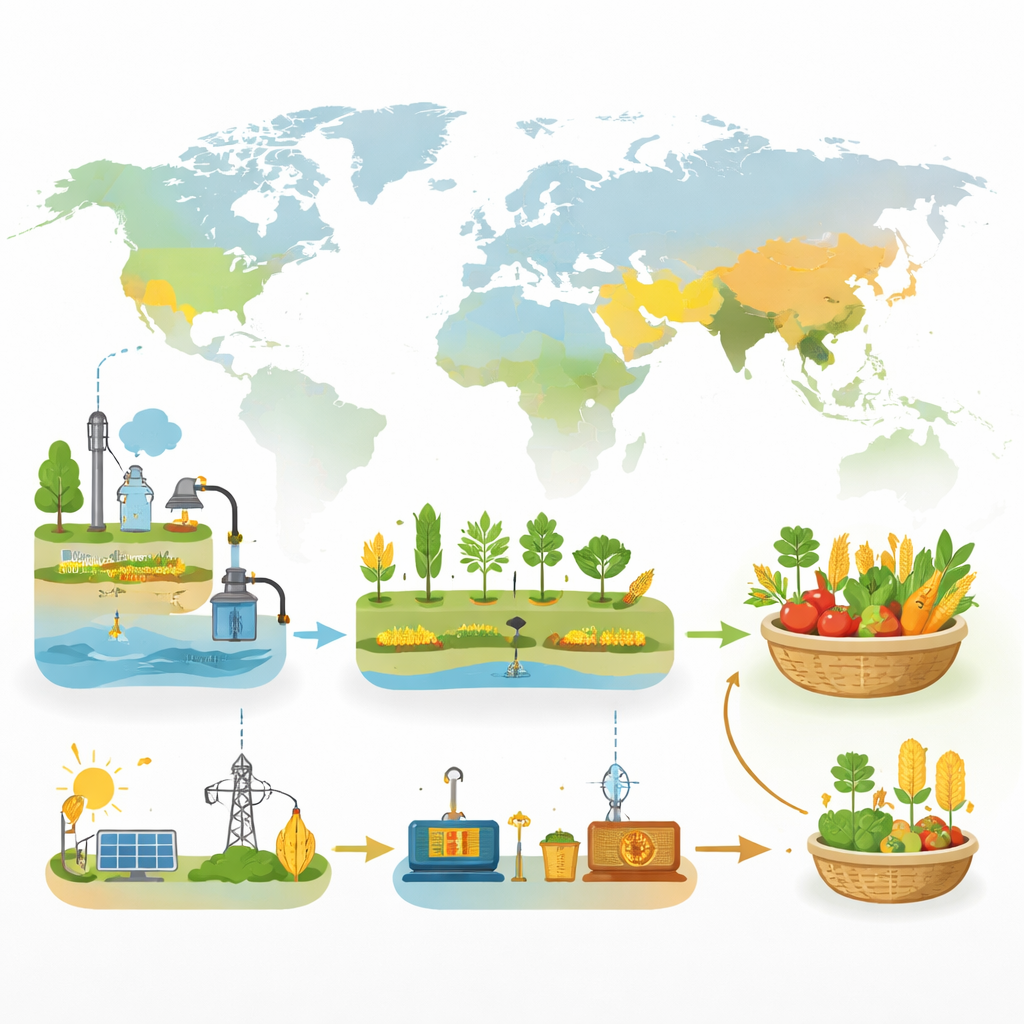
How water, land, and power shape our food
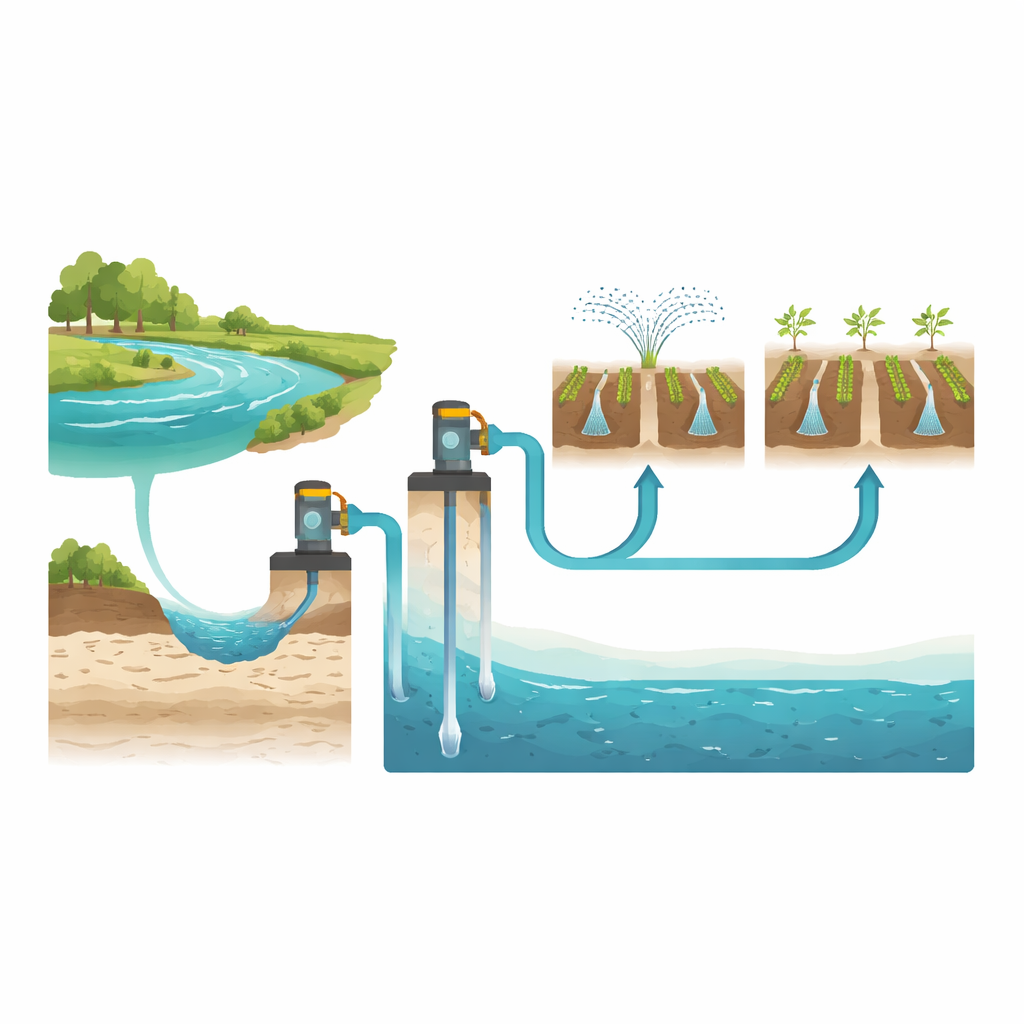
Agricultural production has more than tripled since 1960, but the area of cultivated land has increased only modestly. Much of this jump in harvests has come from intensifying farming with fertilizers, machines, and especially irrigation. Today, irrigated fields occupy only about one-fifth of global cropland yet supply more than 40% of the world’s food calories. Irrigation lets farmers smooth out the whims of weather, making water supply more reliable and reducing heat stress on plants. But turning dry land green is energy-intensive: pumps lift water from rivers, canals, and aquifers; pressurized systems spray or drip it across fields; and the choice of technology, water source, and crop all affect the energy bill.
Measuring the hidden energy in irrigation
The researchers built a global, physically based model that operates on a grid of roughly 10 kilometers, combining climate, soils, topography, field size, irrigation methods, and detailed crop maps. For each cell and crop, they estimated how much irrigation water is needed over a typical year, then calculated the energy to withdraw, lift, and apply that water using surface, sprinkler, or drip systems supplied by surface water or groundwater. They also accounted for the efficiency of diesel and electric pumps. The result is a crop-by-crop atlas of irrigation energy demand under today’s conditions and under a scenario where irrigation is expanded only where freshwater is available without draining rivers or aquifers beyond sustainable limits.
Where irrigation energy use is highest today
Globally, current irrigation consumes about 1.38 × 10⁹ gigajoules of energy each year—only a small slice of total human energy use, but a notable share of farm energy demand. Most of this power supports surface irrigation systems, which cover the vast majority of irrigated area; the rest feeds pressurized sprinkler and drip systems that typically use more energy per hectare because they require high operating pressures. Irrigation energy use is strongly concentrated in the Indo‑Pakistani belt, the U.S. “corn belt,” and the Middle East and North Africa. Six crops—wheat, rice, maize, cotton, sugarcane, and vegetables—cover about 60% of irrigated land and account for a similar share of irrigation energy. Some crops, such as sugarcane and tropical fruit, demand much more energy per hectare because they are thirsty and often irrigated with energy‑hungry systems or deep groundwater.
What happens if we expand irrigation sustainably
The team then asked where irrigation could be added on currently rainfed cropland without violating environmental flow needs or depleting groundwater, and what that would mean for energy use and food supply. They identified about 110 million hectares of land—mainly in Africa, Eastern Europe, and Asian Russia—where blue water is available to support new irrigation. Bringing water to these fields would require roughly 600 cubic kilometers of extra water per year and increase irrigation energy use by about 17%. Wheat, maize, and rice dominate this potential expansion. The extra food produced could be particularly transformative in Sub‑Saharan Africa, where calorie output from irrigated land could rise by around 60%, helping to address malnutrition. Yet many of the places with the highest potential gains also face energy poverty: large fractions of the additional irrigation energy demand would fall in areas lacking reliable access to electricity, meaning that new infrastructure, microgrids, or off‑grid solar would be needed to realize these benefits without defaulting to diesel.
Energy access as the new bottleneck
By overlaying their irrigation energy maps with data on power grids and nighttime lights, the authors show that just over half of current irrigation energy use occurs in areas with clear evidence of electrification, and this share is even lower for the prospective expansion zones. They also find that groundwater pumping often dominates the energy bill, especially in arid regions where water tables are deep. Technologies matter: switching from surface to sprinkler systems can save water but raise energy use; drip systems can be both water‑efficient and relatively less energy‑intensive, though they currently cover only a tiny fraction of global irrigated land and are not suitable everywhere. The study underscores that simply making water and energy cheaper or more accessible can trigger rebound effects, increasing total withdrawals unless strong safeguards are in place.
What this means for our future food and climate
In everyday terms, the study shows that much of the world’s future food security hinges on whether farmers in water‑rich but energy‑poor regions can get affordable, low‑carbon power to run pumps. Expanding irrigation where water is available could greatly boost harvests and resilience to climate shocks, particularly in the Global South, but doing so with diesel would raise emissions and costs. Planning irrigation and energy systems together—choosing the right crops, irrigation methods, and power sources for each place—can turn this hidden energy demand from a barrier into an opportunity. The authors argue that their crop‑level maps offer a practical guide for governments, donors, and utilities to target investments where sustainable irrigation can deliver the biggest gains in food, livelihoods, and climate resilience per unit of energy used.
Citation: Chiarelli, D.D., D’Odorico, P., Fiori, A. et al. Global crop-specific energy demand for irrigation. Nat Commun 17, 2396 (2026). https://doi.org/10.1038/s41467-026-68902-6
Keywords: irrigation energy, sustainable agriculture, water scarcity, food–energy–water nexus, climate-resilient farming