Clear Sky Science · en
The Drosophila proventriculus lacks stem cells but compensates for age-related cell loss via endoreplication-mediated cell growth
A Tiny Gut Valve with a Big Job
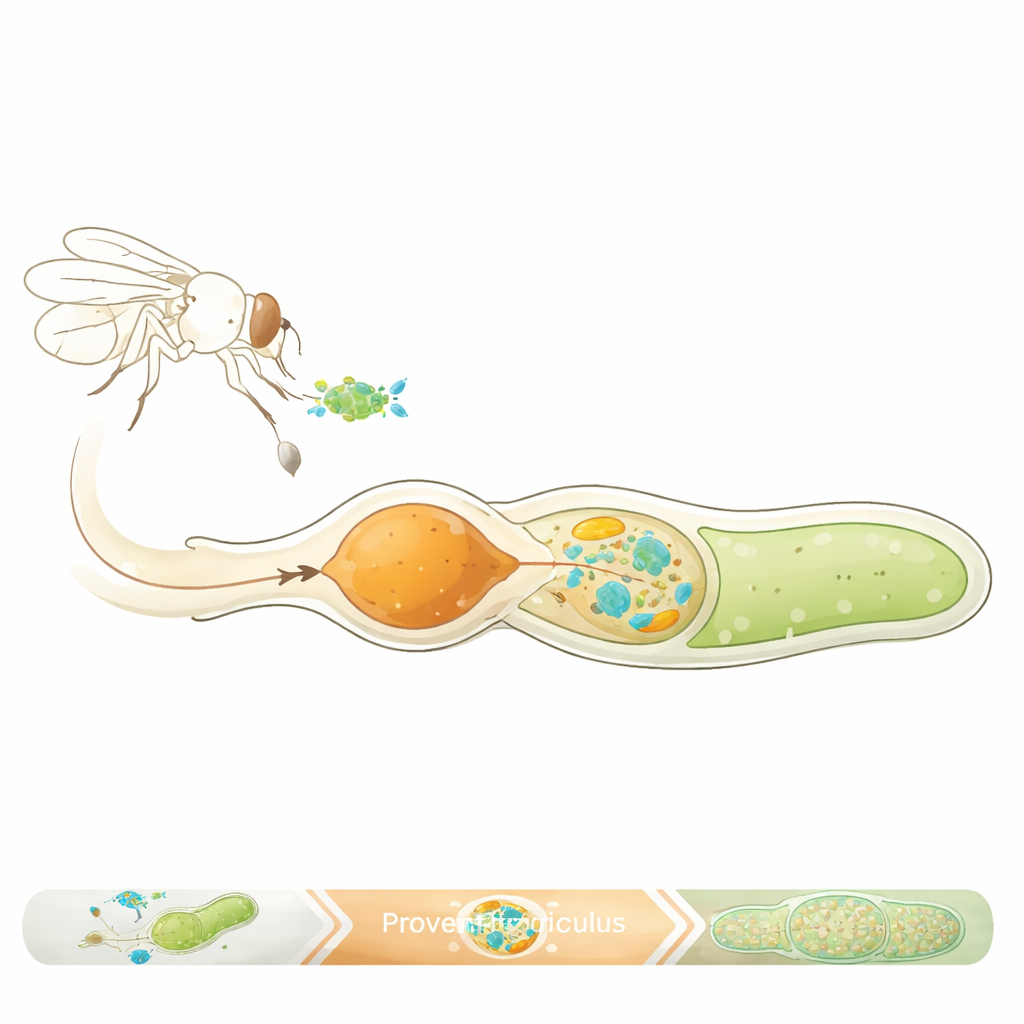
Deep inside the fruit fly’s digestive tract lies a small, bulb-shaped valve called the proventriculus. Though obscure, this structure helps control what passes from the front of the gut into the intestine and builds a protective sleeve that shields the gut from food-borne germs. This study reveals that, unlike many other tissues, this valve does not rely on stem cells to stay functional as the animal ages. Instead, its cells grow larger and pack in more DNA, using a clever growth strategy to keep the tissue working even as cells are gradually lost over time.
How the Fly Gut Protects Itself
The fruit fly gut is divided into regions that each handle different tasks, from moving food along to digesting nutrients and defending against microbes. At the junction between the foregut and the midgut sits the proventriculus, a muscular bulb that acts as a valve and a factory. Its cells secrete the building blocks of the peritrophic membrane, a chitin- and mucus-rich sleeve that lines the intestine like an internal raincoat. This barrier helps keep rough food particles and harmful bacteria away from the sensitive absorptive surface of the gut while still allowing nutrients to pass through.
Not Stem Cells After All
Earlier work suggested that a ring of cells in one region of the proventriculus might be stem cells that divide to replace damaged neighbors. The new study re-examines these cells using several independent methods. The authors track DNA synthesis, search for markers of cell division, and perform lineage tracing, which follows the descendants of marked cells over time. They find that these cells copy their DNA but never enter true cell division, do not form expanding clones, and do not respond with extra divisions when nearby tissues are injured. A detailed single-nucleus RNA atlas also shows no signature of stem-cell-like gene activity. Together, these results overturn the stem cell model for this tissue.
Growing Bigger Instead of Making More
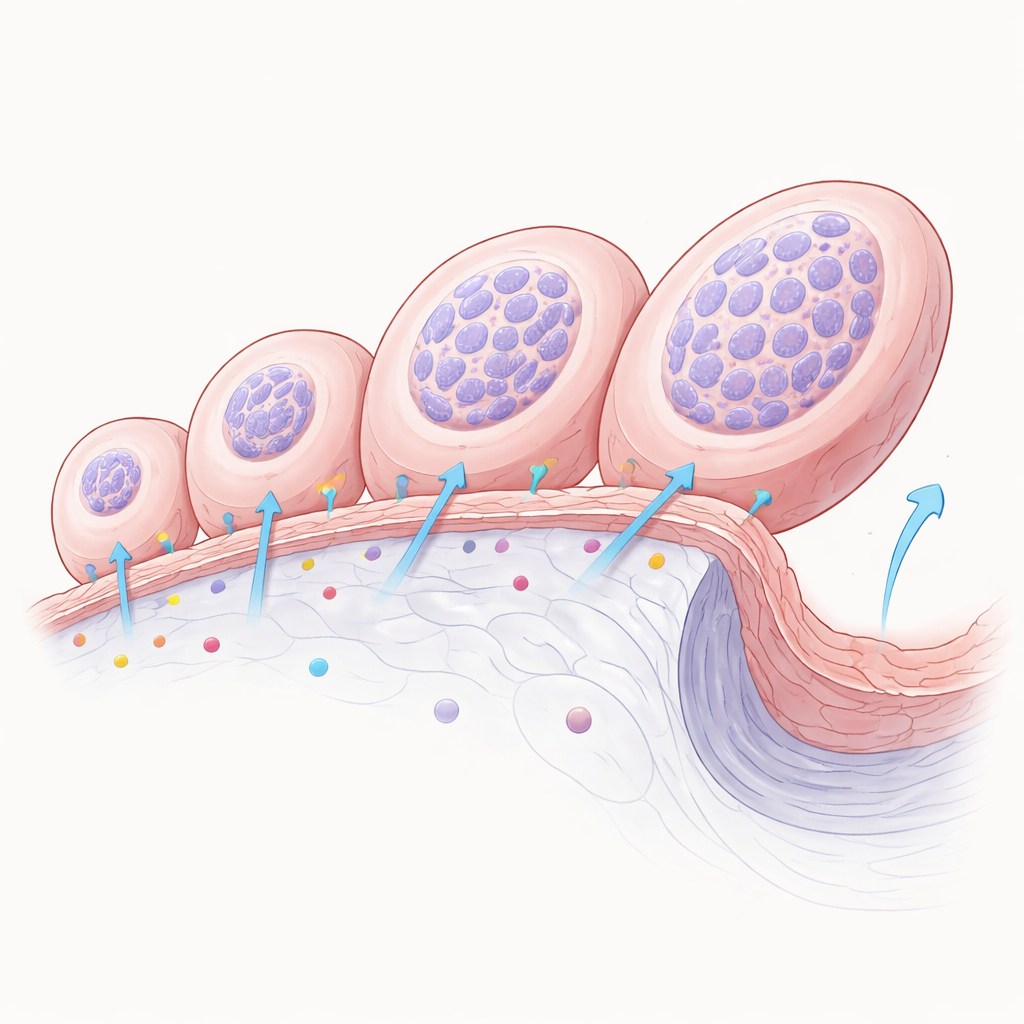
If the proventriculus has no stem cells, how does it cope with wear and tear? The answer is that its key secretory cells follow a different growth path called endoreplication: they repeatedly copy their DNA without splitting into two cells. Over the fly’s adult life, the DNA content and nuclear size of these cells steadily increase, especially when food is rich in yeast, a major nutrient source. At the same time, some of these cells are physically shed into the gut lumen as the animal ages. When the researchers artificially kill cells in this region, the remaining cells respond by further boosting their DNA content and size, suggesting that they sense local cell loss and grow to compensate, preserving overall tissue coverage and function.
Linking Cell Growth to a Protective Barrier
The study goes on to show that this unusual growth strategy is tightly tied to the tissue’s job as a barrier builder. When the authors genetically push the proventriculus cells to endoreplicate even more, the tissue enlarges and produces extra peritrophic membrane material rich in chitin and sugars. Conversely, when they dampen insulin signaling—a key nutrient-sensing pathway—and thereby block endoreplication, the cells stay smaller, the proventriculus shrinks, and less membrane material is produced. Under standard laboratory conditions, these flies still appear to maintain a basic gut barrier, but when challenged with a pathogenic bacterium, they succumb more readily to infection, implying that the usual high-output state provides a safety margin against hostile microbes.
What This Means for Aging Tissues
To a non-specialist, the main message is that tissues do not always rely on stem cells to stay healthy with age. In the fruit fly proventriculus, the same long-lived cells enlarge and increase their DNA content throughout life to maintain production of a protective gut sleeve even as some cells are lost. This “grow bigger, not more” strategy allows the tissue to adjust to nutrition and damage while preserving a vital defense against ingested pathogens. The work adds to a broader picture across animals in which polyploid, DNA-rich cells help organs retain function and resilience without constant stem cell-driven renewal.
Citation: Ewen-Campen, B., Chen, W., Tattikota, S.G. et al. The Drosophila proventriculus lacks stem cells but compensates for age-related cell loss via endoreplication-mediated cell growth. Nat Commun 17, 2086 (2026). https://doi.org/10.1038/s41467-026-68876-5
Keywords: Drosophila gut, endoreplication, polyploid cells, peritrophic membrane, epithelial homeostasis