Clear Sky Science · en
Global metagenomics reveals plastid diversity and unexplored algal lineages
Hidden engines of Earth’s oxygen
Every breath you take owes a quiet debt to tiny green machines inside cells. These structures, called plastids, power photosynthesis in plants and algae, helping to fill the air with oxygen and build the sugars that fuel food webs. This study uses DNA collected from oceans, lakes, soils, and other habitats around the world to uncover a surprising variety of plastids and algae that have never been seen in the lab, reshaping our picture of how photosynthesis spread across life on Earth.
How cells borrowed sunlight power
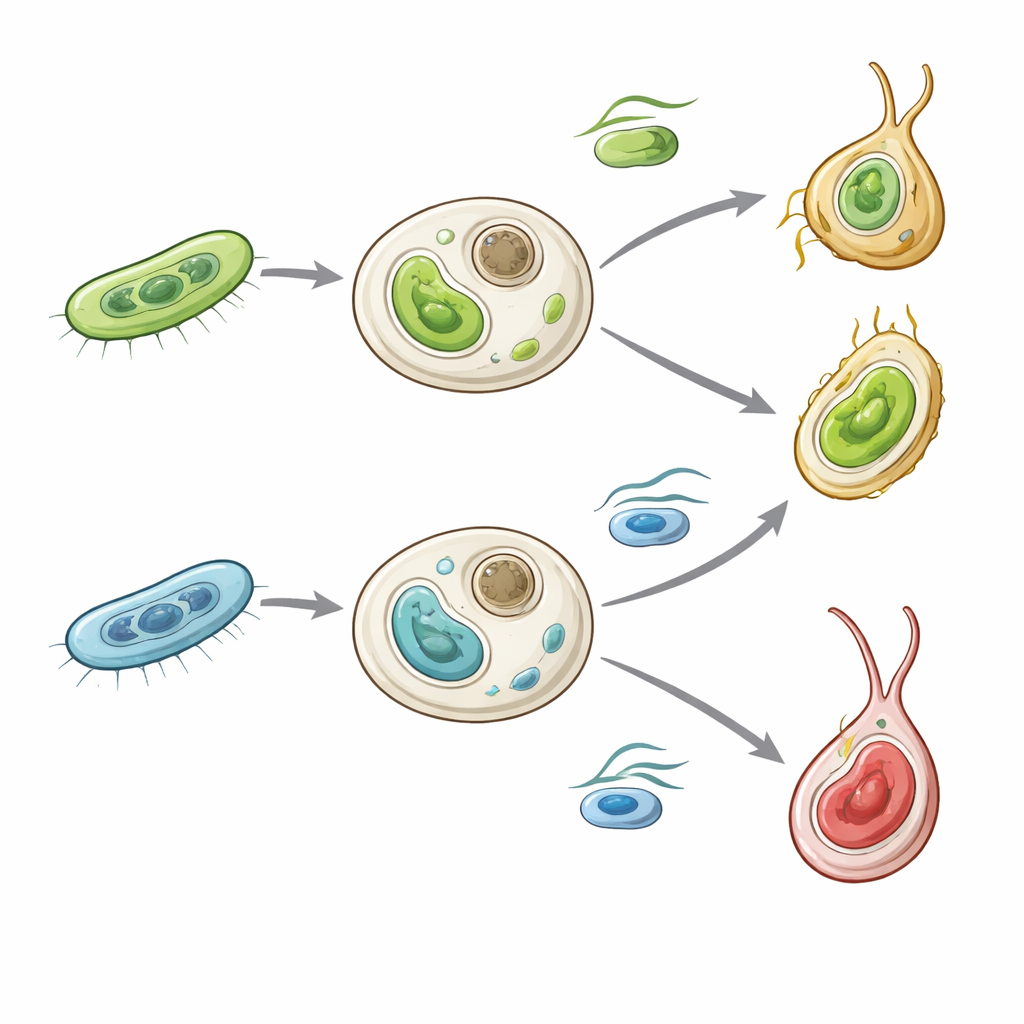
Plastids began as free-living bacteria that were swallowed by larger cells more than a billion years ago. Instead of being digested, some of these bacteria set up shop as permanent partners, turning sunlight, water, and carbon dioxide into energy for their hosts. This first partnership, called primary endosymbiosis, created plastids in the ancestors of today’s plants and many algae. Later, other predators in the microscopic world swallowed these already light-powered algae, giving rise to “secondary” plastids tucked inside yet another layer of cells. Over time, this nesting of cells within cells produced a dizzying variety of photosynthetic organisms that dominate both land and sea.
Reading Earth’s microbes like a global DNA book
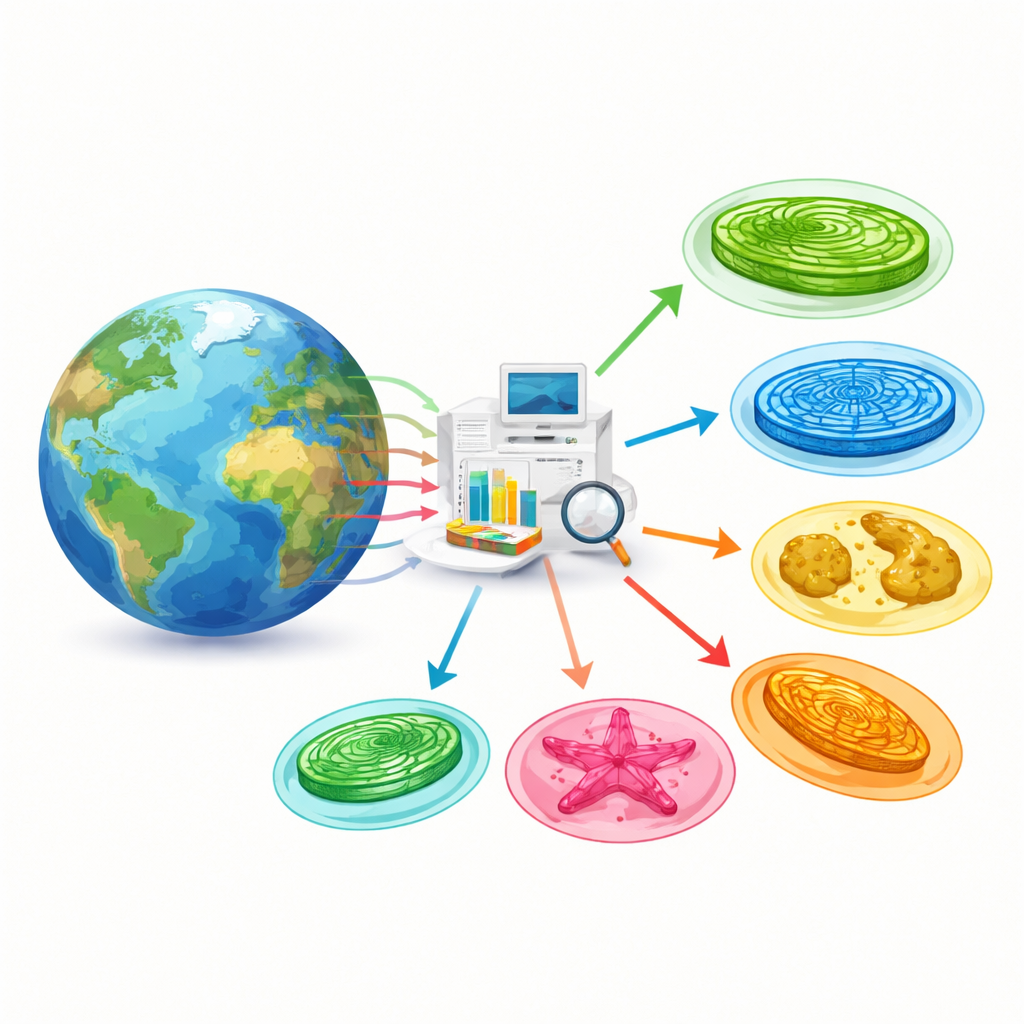
Until now, most of what scientists knew about plastids came from species that could be grown in the lab, leaving much of nature uncharted. In this work, researchers turned to global metagenomics—sequencing all DNA in environmental samples—to find plastid genomes directly from nature. By scanning more than 25,000 metagenomes and carefully piecing together fragments, they recovered 1,027 plastid sequences, including 300 that have no close match in existing databases. These “metagenome-assembled genomes” preserve enough genes to place the plastids on evolutionary trees and to infer the lifestyles of their unseen algal hosts.
Reconstructing the family tree of plastids
Using hundreds of genes shared across plastids and their bacterial relatives, the team refined where plastids sit on the tree of life. They confirmed that plastids in plants and most algae trace back to a very ancient cyanobacterial group closely related to modern Gloeomargaritales, while the plastids of the amoeba Paulinella represent a separate, more recent origin from a different cyanobacterial branch. The new data greatly expand known plastid diversity in many major algal groups, especially diatoms and other brownish algae (Ochrophyta), green algae (Chlorophyta), and lesser-studied lineages such as cryptophytes and haptophytes. Several clusters of plastid genomes appear to belong to entirely undescribed algae, hinting at a hidden wealth of photosynthetic life in oceans, lakes, and even deep subsurface environments.
Rethinking how red algae shared their plastids
One of the most debated questions in biology is how plastids derived from red algae spread into diverse plankton groups known collectively as the CASH lineages (cryptophytes, alveolates, stramenopiles, and haptophytes). Earlier models suggested a single handoff of a red-algal plastid, followed by many losses and reshufflings. By comparing plastid genomes across these groups, this study instead finds strong signals for at least two separate episodes in which red-algal plastids were acquired and then passed on through further cell-within-cell events. The authors also report a newly discovered plastid lineage from Arctic waters that branches between cryptophytes and haptophytes, matching an enigmatic group called leptophytes. This lineage may represent a missing link that helps explain how red-algal plastids first moved into these important marine algae.
What this means for life and climate
At a glance, plastids might seem like specialist parts inside obscure microbes, but they are in fact central players in Earth’s climate and food supply. By revealing new branches of the plastid family tree and providing evidence that red-algal plastids arose more than once, this work shows that photosynthesis has been reinvented and redistributed multiple times through intimate partnerships between cells. The many new plastid genomes uncovered from the environment point to vast numbers of still-unknown algae contributing to global oxygen production and carbon capture. As researchers continue to mine metagenomic data from more places and depths, our understanding of who is doing the planet’s photosynthetic work—and how those abilities evolved—will become sharper, improving models of Earth’s past and future ecosystems.
Citation: Shrestha, B., Romero, M.F., Villada, J.C. et al. Global metagenomics reveals plastid diversity and unexplored algal lineages. Nat Commun 17, 2194 (2026). https://doi.org/10.1038/s41467-026-68871-w
Keywords: plastids, algae evolution, metagenomics, endosymbiosis, photosynthesis