Clear Sky Science · en
Genomic consequences of residual recombination in a hybrid apomictic hickory complex
Why these nut trees matter
Many crops and wild plants face a trade-off between the genetic shuffling of sex and the stability of cloning. This study follows four closely related hickory tree species in southern China, prized for their edible nuts, to ask a basic question with big implications: can mostly clonal trees avoid the slow genetic decay that theory predicts, and even turn a little bit of sex to their advantage?
Trees that copy themselves
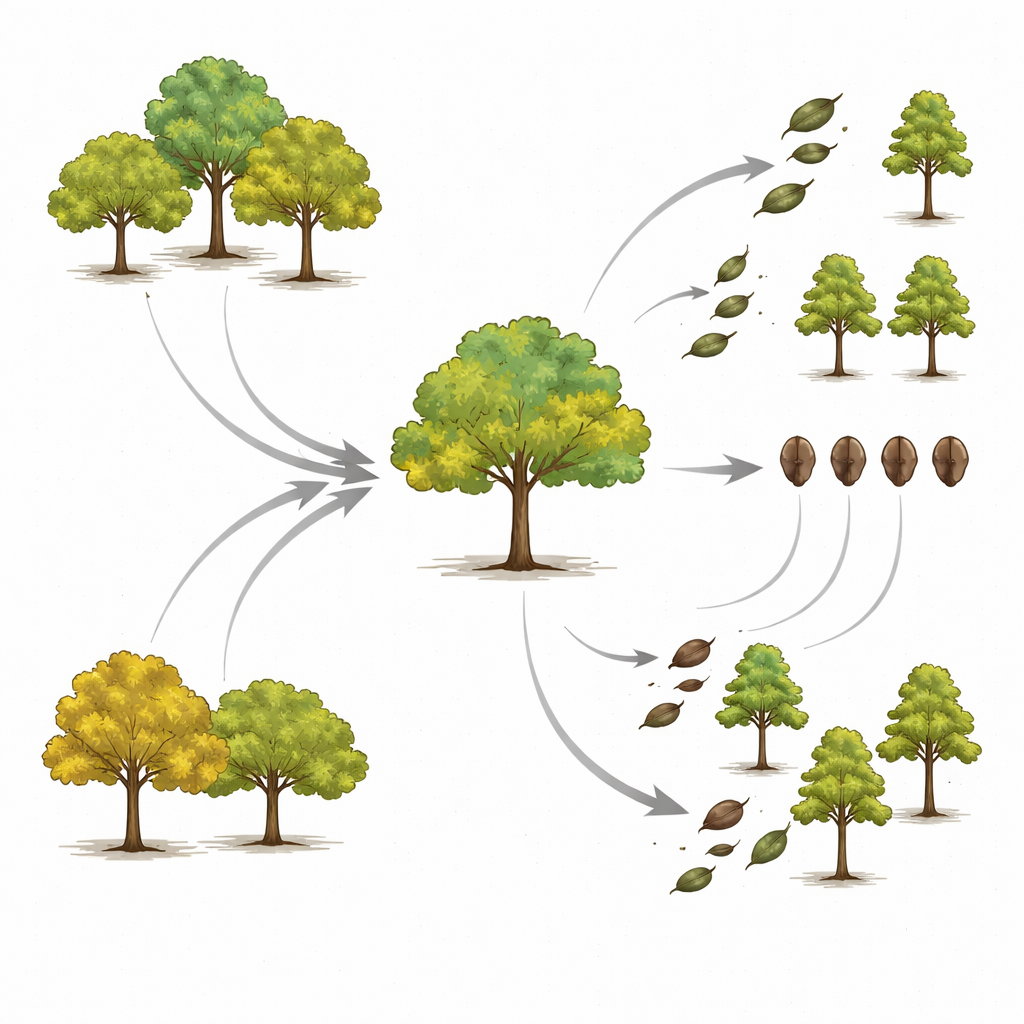
Three of the hickory species studied reproduce mainly through apomixis, a kind of asexual seed production where embryos arise without the usual reshuffling of genes. The researchers confirmed this by germinating seeds and often finding multiple seedlings from a single nut, a hallmark of clonal seed formation. Large genomic surveys of nearly 200 adult trees revealed strong signatures of clonality: many individuals within a species shared almost identical genetic profiles, and their genomes carried long stretches where both chromosome copies were the same, a pattern expected when the same genotype is copied again and again.
A hidden history of mixed parentage
One species, Carya hunanensis, turned out to be a natural hybrid, carrying one set of chromosomes from a sexually reproducing hickory and the other from apomictic relatives. Using a newly built, chromosome-by-chromosome genome for this tree, the team showed that the two parental contributions are still clearly visible. Population analyses placed C. hunanensis genetically between the other three species, and chloroplast DNA, inherited from the mother, traced its origin to an apomictic ancestor. This hybrid origin helps explain why C. hunanensis carries unusually high genetic diversity compared with its relatives.
A little sex in a mostly clonal life
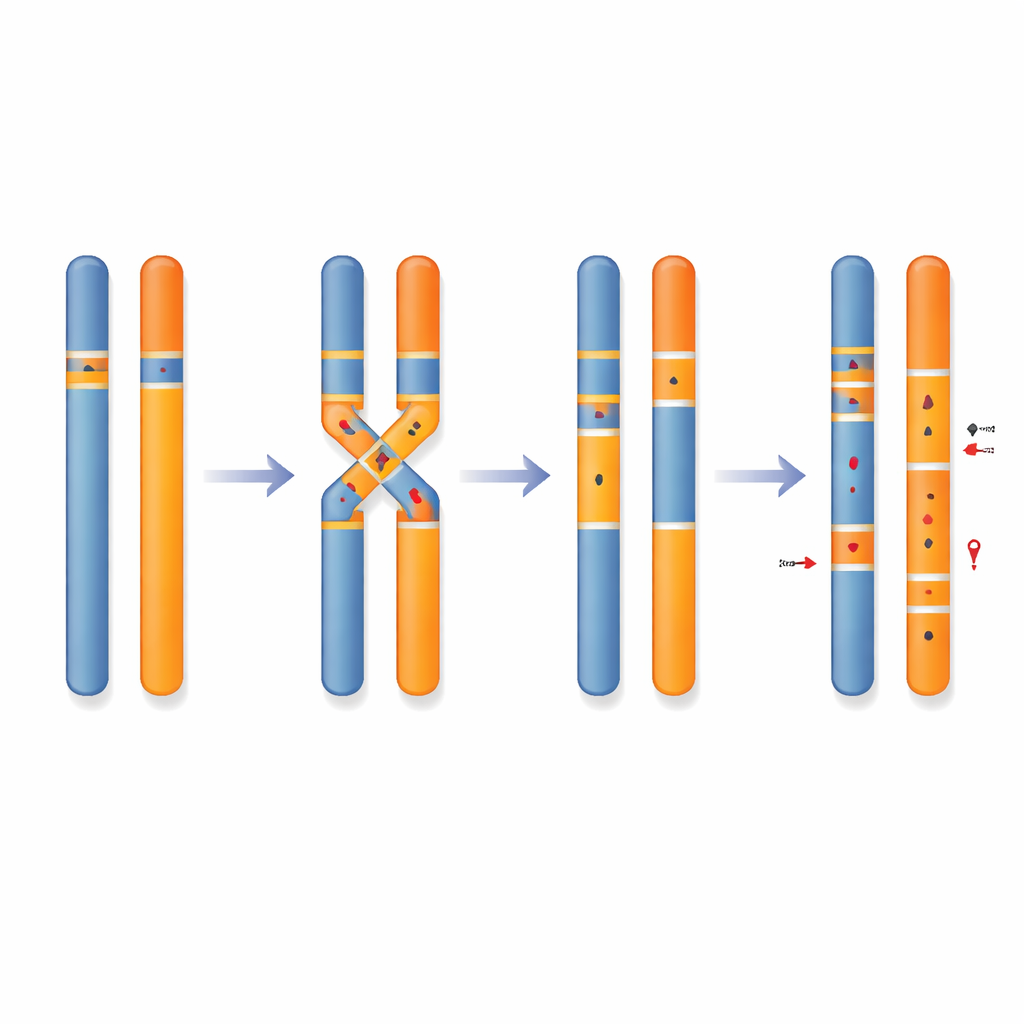
Even though these trees largely clone themselves, they have not completely abandoned sex. By sequencing 180 mature embryos from apomictic mothers, the authors found that most embryos were perfect genetic copies of their parent—but a small fraction were not. These rare embryos showed new long genetic segments where diversity had been lost, a pattern best explained by occasional recombination during meiosis followed by selfing or mating among closely related clones. Such events are infrequent, yet they create new combinations of existing mutations and can generate distinct new clonal lineages that then spread asexually.
Managing harmful mutations
The central worry for long-lived asexual lineages is that harmful mutations will quietly pile up until fitness collapses. Surprisingly, the apomictic hickories show the opposite pattern when compared with their sexual relative. Although they harbor many potentially damaging changes in a safely masked, heterozygous state, the number of sites where two harmful copies coincide—the “realized” genetic load—is lower in apomictic trees. In the hybrid C. hunanensis, the genome inherited from apomictic parents carries especially many hidden harmful variants, yet these rarely occur in double dose. When the team zoomed in on regions where heterozygosity had been lost, they saw that some lineages show clear signs of purging: strongly damaging changes are missing from many such regions, implying that lineages carrying heavy genetic burdens are being removed over time.
Balancing risk and resilience
To a non-specialist, the message is that these nut trees appear to have found a workable compromise between clonal safety and sexual risk. By mostly cloning, they preserve successful genotypes and ensure seed production even when mates or pollinators are scarce. By allowing just enough recombination, they occasionally expose harmful mutations so that natural selection can eliminate the worst combinations and occasionally create new, potentially advantageous clones. The study shows that, at least in this hickory complex, residual sex and a hybrid origin together help prevent the slow genetic breakdown traditionally expected in asexual lineages, allowing clonal trees to persist and adapt over long evolutionary timescales.
Citation: Zhang, WP., Glémin, S., Pang, XX. et al. Genomic consequences of residual recombination in a hybrid apomictic hickory complex. Nat Commun 17, 2376 (2026). https://doi.org/10.1038/s41467-026-68867-6
Keywords: apomixis, hickory, asexual reproduction, hybridization, genetic load