Clear Sky Science · en
Viral mimicry acts as a tumor suppressor in colitis
Hidden DNA that fights cancer
Deep inside our DNA lie vast stretches once dismissed as “junk.” This study reveals that some of this hidden material can actually help protect people with chronic gut inflammation from developing colon cancer. By acting like a fake viral infection inside cells, these DNA elements trigger an internal alarm system that reins in dangerous, cancer‑starting stem cells.
Sleeping DNA that can wake up
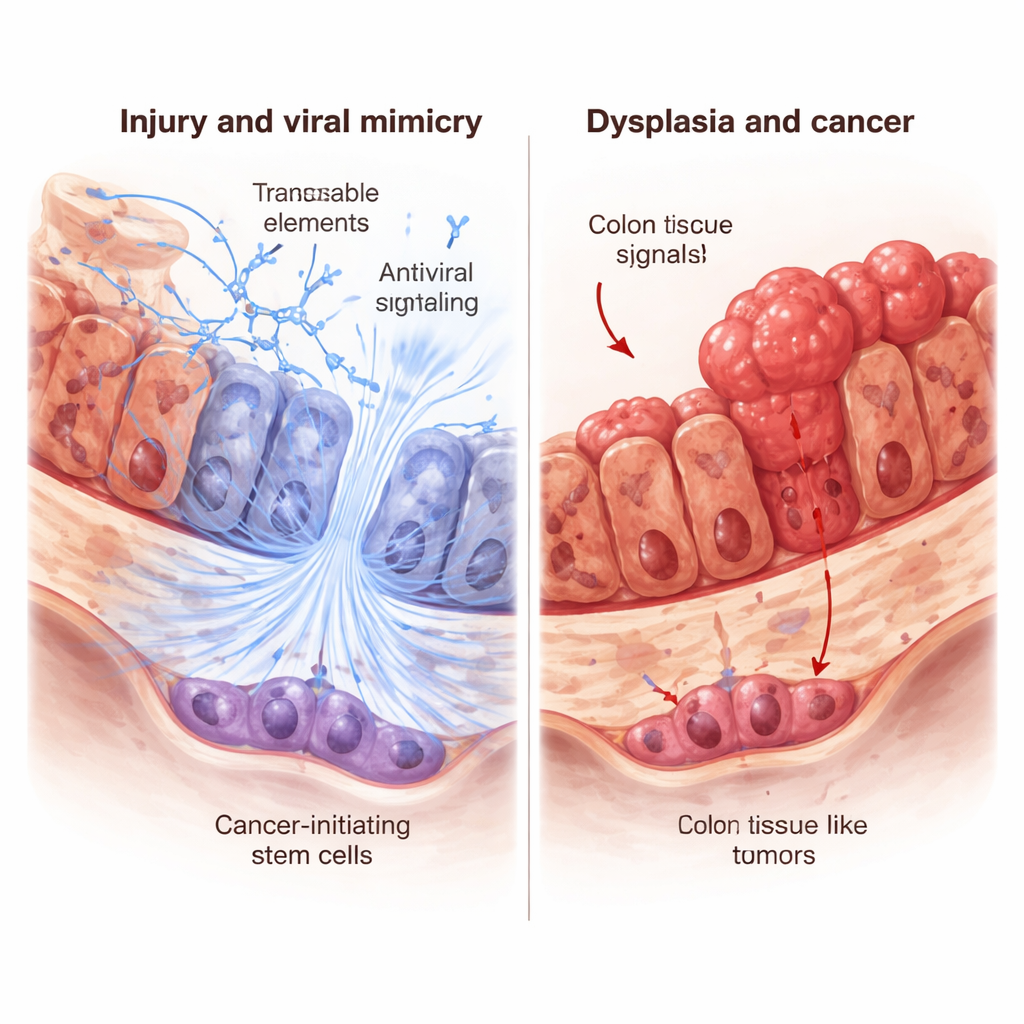
Nearly half of our genome is made of repetitive sequences called transposable elements—stretches of DNA that can copy and move around. In healthy cells these elements are tightly locked down by chemical tags such as DNA methylation so they stay quiet. But in certain diseases and after treatment with some anti‑cancer drugs, these elements can be switched back on. When that happens, they produce unusual double‑stranded RNA that looks, to the cell, very much like genetic material from a virus.
A fake viral alarm in inflamed guts
The researchers examined colon tissue from people with inflammatory bowel disease (IBD) and from mice with experimentally induced colitis. In both humans and mice, active inflammation was linked to higher activity of transposable elements and stronger activation of interferon genes, which are part of the body’s antiviral alarm system—a phenomenon known as viral mimicry. However, when they looked at patients whose long‑standing IBD had progressed to precancerous changes (dysplasia) or to colon cancer, they saw the opposite pattern: both transposable elements and interferon‑related genes were dialed down. This suggests that turning off the viral mimicry response may be a step on the road from chronic inflammation to cancer.
Lowering DNA methylation to block tumors
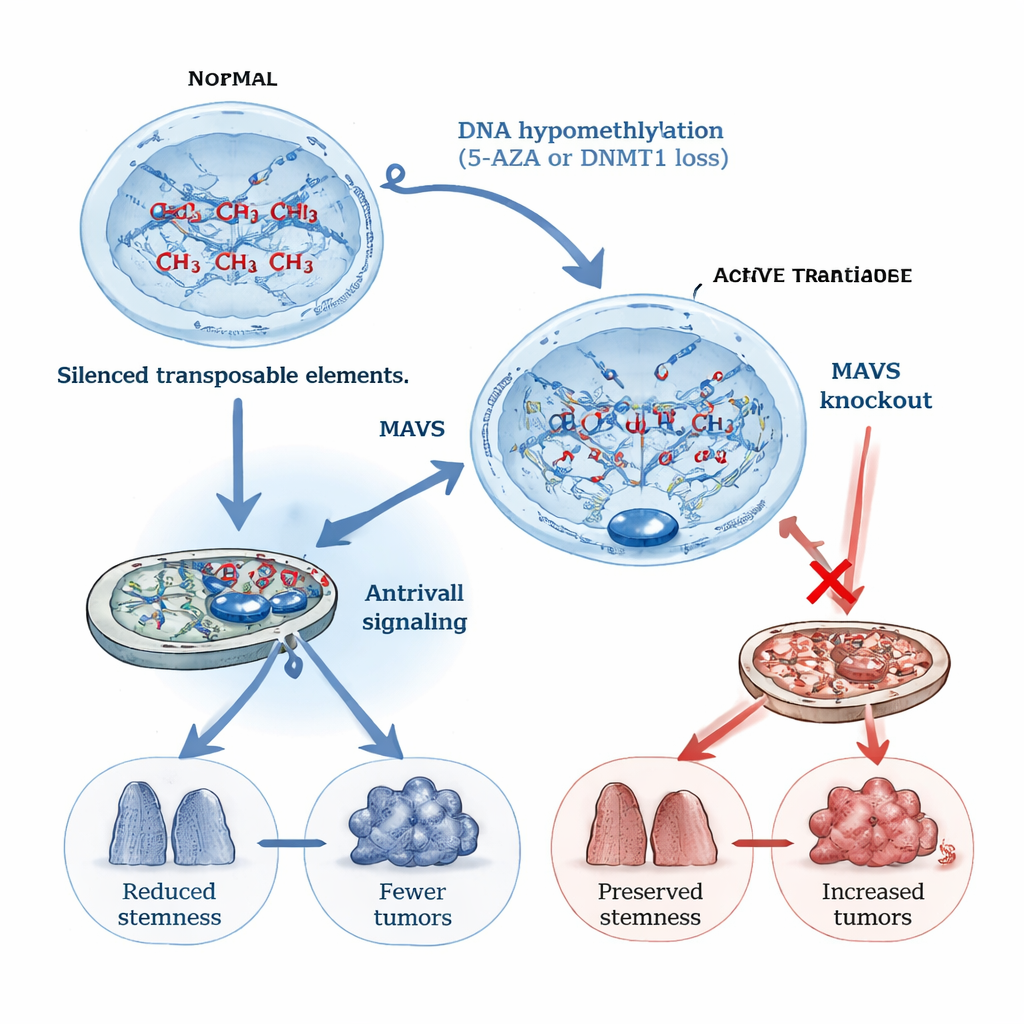
To test whether boosting this fake viral alarm could actually stop cancer from forming, the team used two approaches that reduce DNA methylation in the colon. One was the drug 5‑AZA, already used in some blood cancers; the other was genetically deleting DNMT1, a key enzyme that maintains DNA methylation, specifically in rare DCLK1‑positive cells that can act as cancer‑initiating stem cells. In mouse models where colon cancer is driven by a combination of chemical injury and inflammation, both 5‑AZA treatment and DNMT1 loss led to fewer tumors, and in some cases smaller ones. These changes were accompanied by widespread DNA hypomethylation, strong re‑activation of many classes of transposable elements, and heightened interferon and JAK/STAT signaling, confirming that viral mimicry had been triggered.
Disarming the alarm unleashes cancer‑starting cells
The antiviral protein MAVS sits on mitochondria and is essential for passing on signals from viral RNA sensors inside cells. The authors showed that knocking out MAVS in mice erased the tumor‑suppressive benefits of both 5‑AZA and DNMT1 loss: tumors became more numerous, and survival worsened. In miniature colon tissues grown in a dish (organoids), activating viral mimicry by DNA hypomethylation sharply reduced the ability of APC‑mutant DCLK1 cells to behave as stem cells and form new organoids. Removing MAVS reversed this block, restoring their stem‑like behavior and growth even when DNA was hypomethylated. These experiments revealed that viral mimicry curbs cancer‑initiating stemness in a cell‑autonomous way, without needing help from immune cells surrounding the tumor.
What this means for patients
For people living with chronic colitis, the fear of developing colon cancer is very real. This work suggests that part of the body’s natural defense is an internal “virus alarm” created by reawakened transposable elements. When that alarm is active, it limits the ability of damaged cells to become full‑blown cancer stem cells; when it is silenced, tumors can more easily arise. Therapies that carefully boost viral mimicry—by targeting DNA methylation or its regulators—might one day help prevent or treat colon cancers, particularly in high‑risk patients with long‑standing inflammatory disease.
Citation: Larsen, F., Jeong, W., Schep, D. et al. Viral mimicry acts as a tumor suppressor in colitis. Nat Commun 17, 1313 (2026). https://doi.org/10.1038/s41467-026-68850-1
Keywords: viral mimicry, colitis, colon cancer, transposable elements, DNA methylation