Clear Sky Science · en
Tomato antiviral ubiquitin-proteasome system recognizes viral 59 kDa protein to confer tomato chlorosis virus resistance
Why this matters for our food
Tomatoes are one of the world’s most important vegetables, yet viral diseases can wipe out most of a harvest. This study uncovers how tomato plants detect and fight a damaging virus called tomato chlorosis virus, and how the virus pushes back. Understanding this microscopic tug-of-war not only reveals a sophisticated plant “immune system,” it also points to new ways to breed tomato varieties that can better withstand infection without heavy pesticide use.
The hidden attacker in tomato fields
Tomato chlorosis virus is spread by whiteflies and has quietly become a major threat to tomato production worldwide. The virus carries its genetic material on two strands of RNA that encode a set of proteins for replication, packaging, movement between cells, and disabling plant defenses. Until now, one of these proteins, a 59‑kilodalton protein called p59, had an unknown role. By selectively deleting genes from the virus and infecting tomato plants, the researchers show that p59 is crucial: without it, viral particles are shorter, the disease is milder, and the virus struggles to move from cell to cell.
A viral key that unlocks plant cells
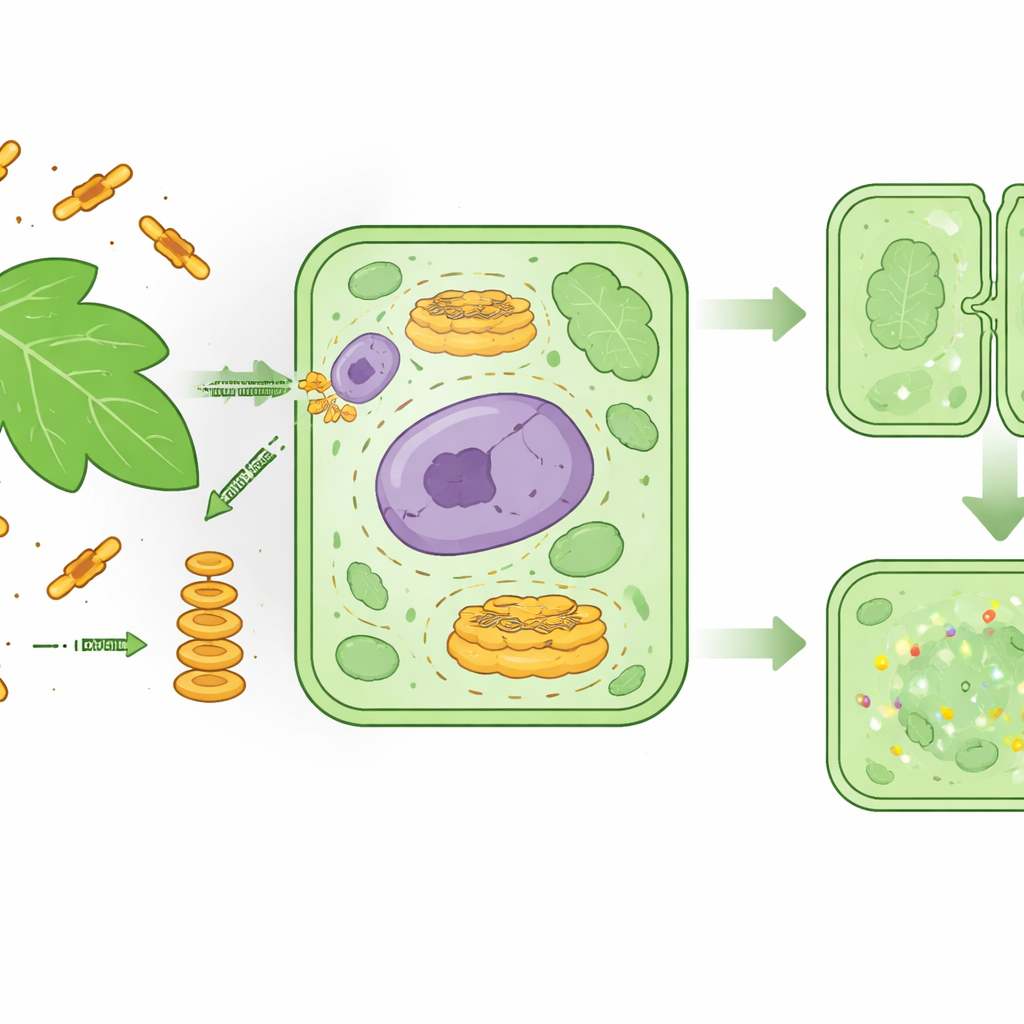
Plant cells are linked by narrow channels called plasmodesmata, which normally restrict what can pass from one cell to its neighbor. The team found that p59 accumulates at these channels and at the cell surface, where it acts like a movement protein. In infected leaves, p59 helps widen the channels by reducing deposits of a carbohydrate called callose that normally narrows them. When p59 is present, fluorescent marker proteins spread from one cell into several neighbors, mimicking viral spread; without p59, this movement is strongly limited. Thus p59 serves as both a structural helper for virus assembly and a molecular key that opens the gates between cells.
The plant’s protein shredder fights back
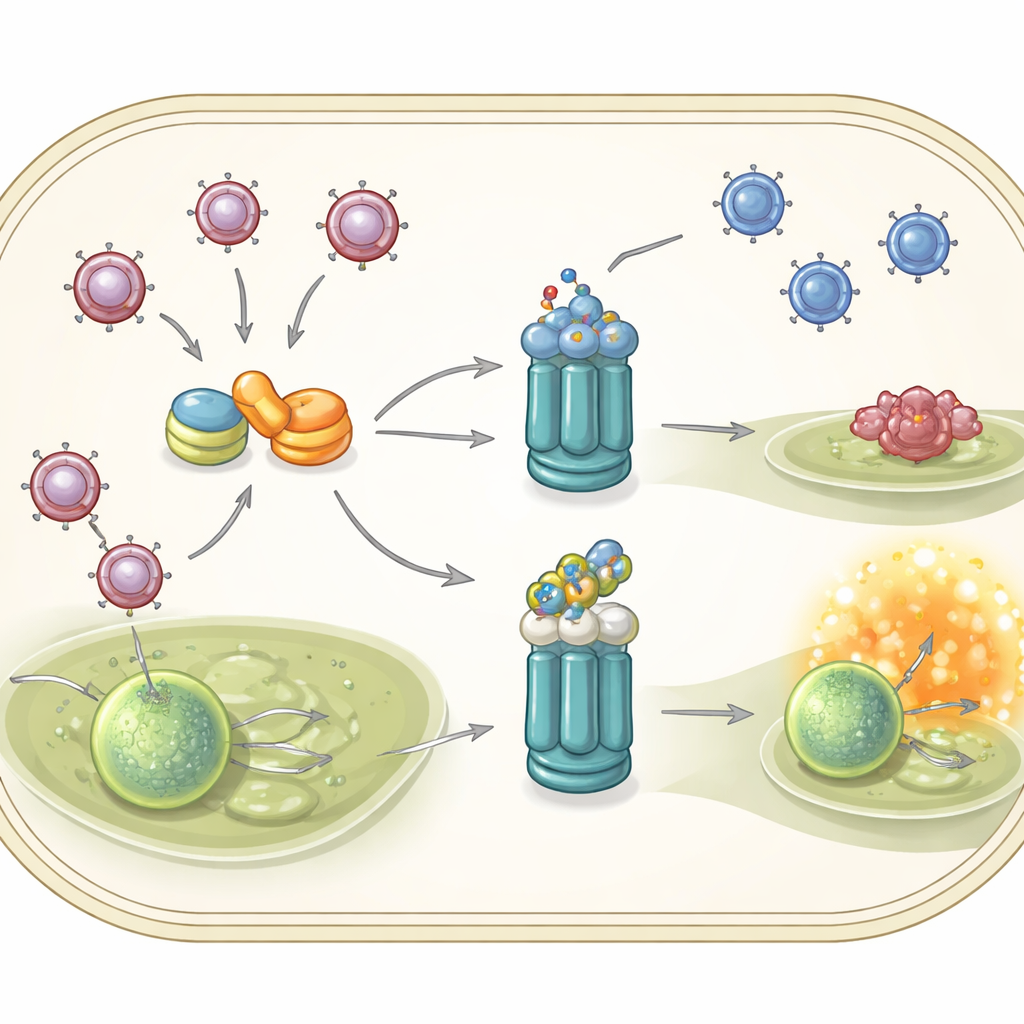
Tomato plants are not passive victims. They possess a protein recycling system, the ubiquitin–proteasome system, that can tag unwanted proteins and feed them into a cellular “shredder.” The authors discovered a dedicated antiviral pair within this system: an E2 enzyme (SlAVE2) and an E3 ligase (SlAVE3). SlAVE3 specifically recognizes a single amino acid on p59 and marks the viral protein for destruction, sharply limiting the virus’s ability to move and multiply. Plants engineered to produce more SlAVE3 become more resistant to infection, whereas plants lacking this gene suffer more severe disease, showing that this antiviral shredder meaningfully protects the plant.
A clever viral hijack of plant defenses
The story becomes more intricate when another plant protein, a catalase enzyme called SlCAT1, enters the stage. Catalase normally sits in peroxisomes—specialized compartments—and breaks down hydrogen peroxide, keeping harmful reactive oxygen levels in check. The researchers found that both p59 and SlAVE3 can bind SlCAT1. p59 drags SlCAT1 out of peroxisomes into the cytoplasm, where the antiviral SlAVE2–SlAVE3 pair now sees SlCAT1 as a convenient target and degrades it. With catalase levels reduced, hydrogen peroxide accumulates, tipping the cell into oxidative stress that actually favors viral disease. In other words, the virus repurposes the very defense machinery meant to destroy it, using it to dismantle a key antioxidant shield.
Feedback loops and evolutionary fine-tuning
The plant, in turn, adds another layer of control. A transcription factor called SlWRKY6 normally clamps down on the SlAVE3 gene, limiting how much antiviral E3 ligase is produced. SlAVE3 can tag SlWRKY6 for destruction, releasing this brake and creating a positive feedback loop: once the virus is detected, SlAVE3 levels ramp up quickly, boosting antiviral activity. Over evolutionary time, tomatoes have also tuned how this system behaves. A wild ancestor, Solanum pimpinellifolium, carries a version of the AVE3 gene (SpAVE3) that binds the viral p59 protein more strongly but the catalase enzyme more weakly. This wild variant therefore excels at destroying the viral helper protein while sparing the plant’s own antioxidant defenses, giving stronger resistance than the common cultivated version.
What this means for future tomatoes
Taken together, the work paints a dynamic picture of an arms race inside tomato cells. The virus uses p59 to assemble itself, slip between cells, and tilt the cell’s chemistry toward damaging oxidative stress. The plant counters with a tailored protein‑shredding system that recognizes p59, amplifies its own defenses through feedback on SlAVE3, and tries to keep reactive molecules under control. By revealing the precise players and contact points involved—and by identifying a naturally occurring, stronger antiviral AVE3 variant in wild tomatoes—this study provides a concrete roadmap for breeding or engineering tomatoes that can better resist tomato chlorosis virus while maintaining healthy cellular balance.
Citation: Zhao, D., Liu, X., Li, H. et al. Tomato antiviral ubiquitin-proteasome system recognizes viral 59 kDa protein to confer tomato chlorosis virus resistance. Nat Commun 17, 2229 (2026). https://doi.org/10.1038/s41467-026-68832-3
Keywords: tomato virus, plant immunity, ubiquitin proteasome, oxidative stress, crop breeding