Clear Sky Science · en
Rare coding variants in CHRNB3 associate with reduced daily cigarette smoking across ancestries
Why some people naturally smoke less
Cigarette smoking remains one of the biggest preventable killers worldwide, yet finding new medicines to help people quit has been slow. This study asks a striking question: what if some people are born with rare gene changes that make cigarettes less compelling? By studying these natural "experiments" in large populations, scientists can identify brain pathways that might be targeted by future anti-smoking drugs.
Hunting for protective gene changes
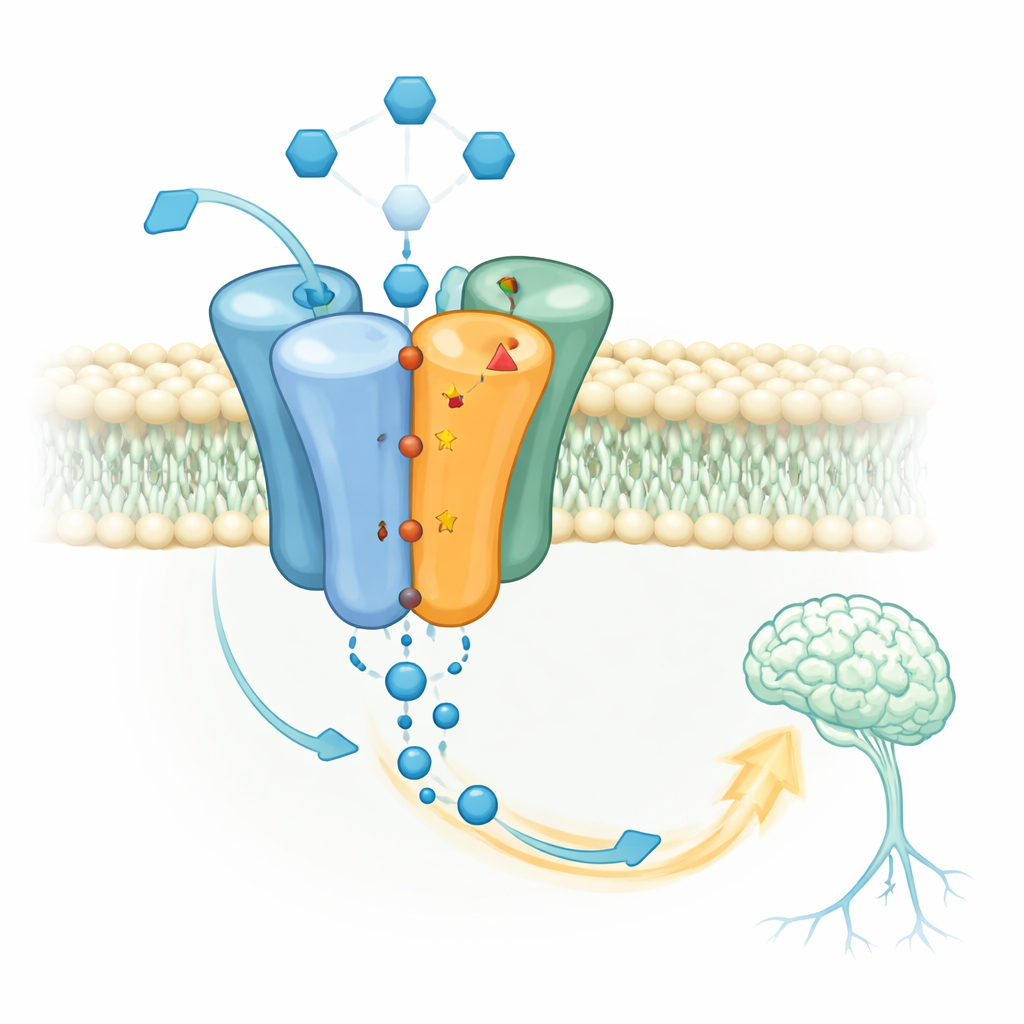
The researchers focused on a gene called CHRNB3, which helps build a type of nicotine receptor in the brain. These receptors sit on nerve cells and respond when nicotine arrives, helping drive the satisfaction and habit of smoking. The team examined detailed DNA data and smoking histories from nearly 38,000 current smokers in the Mexico City Prospective Study, along with large biobanks from the United Kingdom and Japan. Rather than looking only at common genetic markers, they searched the protein-coding portions of genes for rare changes that are more likely to alter how proteins work.

A rare variant linked to fewer cigarettes
In people with Indigenous Mexican ancestry, the scientists discovered a rare protein-altering change in CHRNB3 called p.Glu284Gly. Carriers of this variant smoked noticeably less than non-carriers: on average, heterozygous carriers (with one copy) smoked about one fewer cigarette per day, while the very few people with two copies smoked almost four fewer cigarettes per day. Statistical analyses showed that this change, and a broader group of damaging variants in the same gene, were strongly associated with lower daily cigarette consumption. Importantly, these effects remained after accounting for age, sex, ancestry, and nearby common genetic signals, suggesting that disruption of this receptor subunit itself is key.
Similar genetic protection in other populations
To see whether this pattern was unique to Indigenous Mexicans, the team looked in other large datasets. In a Japanese biobank, they found a different rare variant in CHRNB3 that likely disrupts the gene’s function entirely. This variant was more common in East Asian ancestry and, again, people carrying it smoked fewer cigarettes per day by an amount very similar to the Mexican variant. In the UK Biobank, which mainly includes people of European ancestry, collections of rare damaging changes in CHRNB3—including predicted loss-of-function variants—also pointed in the same direction: carriers tended to smoke less. Together, these findings across three ancestries show a consistent pattern: when CHRNB3 function is reduced, people smoke fewer cigarettes.
What this tells us about the biology of smoking
The study also compared CHRNB3 to another nicotine-receptor gene, CHRNB2, previously linked to the likelihood of becoming a smoker. While damaging variants in CHRNB2 seemed to reduce the odds of ever taking up regular smoking, CHRNB3 variants mainly affected how many cigarettes established smokers consumed, not whether they started. This mirrors evidence from animal experiments showing that different receptor subunits control different aspects of nicotine’s effects, such as reward, tolerance, and withdrawal. Common, non-coding variants near CHRNB3 and neighboring genes also influenced cigarette quantity, but their effects were smaller than the rare coding changes, helping pinpoint CHRNB3 as the most likely causal gene in this region.
Implications for future treatments
For a general reader, the bottom line is that some people carry rare DNA changes that blunt the impact of nicotine, leading them to smoke less every day. Across Indigenous Mexican, East Asian, and European ancestry groups, different rare variants that weaken or disable CHRNB3 all point to the same conclusion: dialing down this receptor subunit reduces cigarette consumption. Because drug developers often look for targets that nature has already "tested" in humans, these findings strongly suggest that medicines designed to safely inhibit the β3 subunit of nicotine receptors could help heavy smokers cut down, and potentially aid smoking cessation, in ways that complement existing therapies.
Citation: Rajagopal, V.M., Ziyatdinov, A., Joseph, T. et al. Rare coding variants in CHRNB3 associate with reduced daily cigarette smoking across ancestries. Nat Commun 17, 1654 (2026). https://doi.org/10.1038/s41467-026-68825-2
Keywords: nicotine addiction, genetic variants, CHRNB3, cigarette smoking, smoking cessation