Clear Sky Science · en
Organic di-selenide hydrogel microspheres for multimodal treatment of osteoarthritis
Why this new joint treatment matters
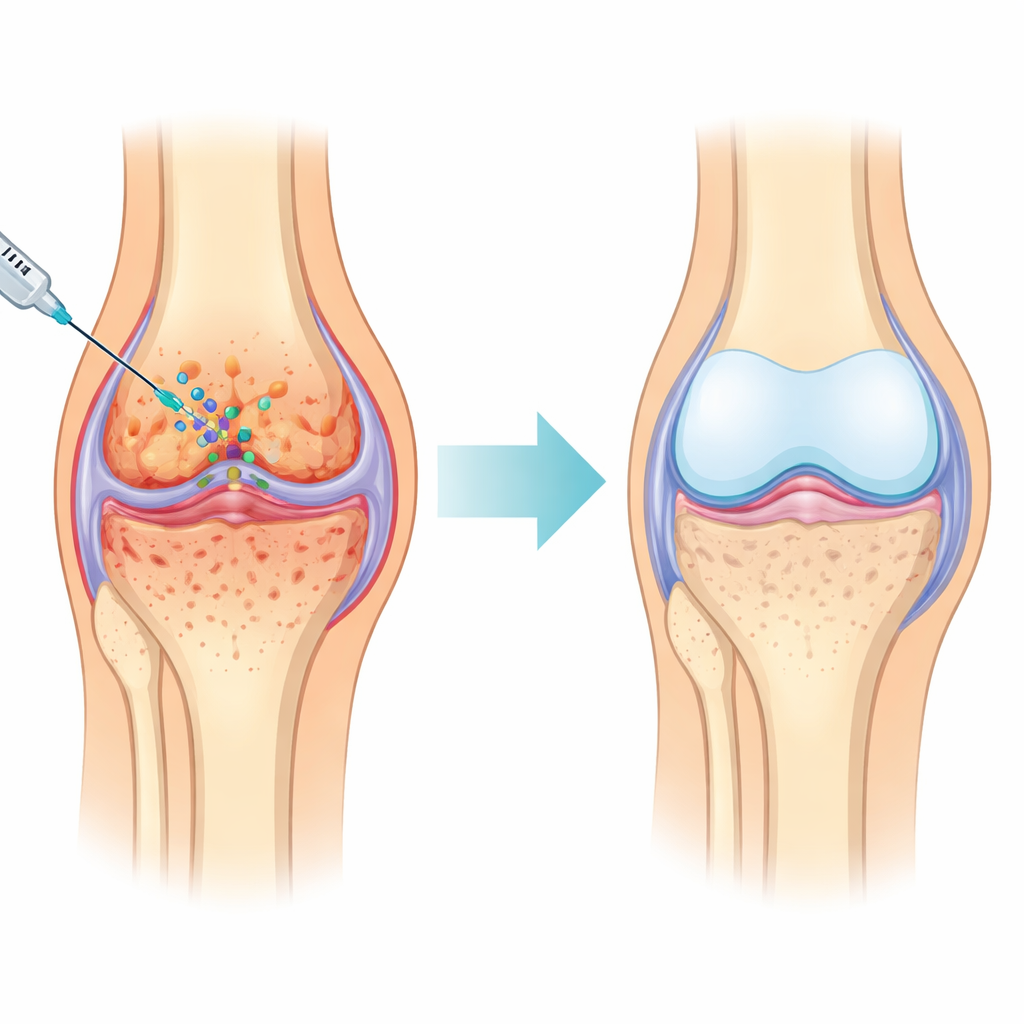
Osteoarthritis is a leading cause of pain and disability, yet most current treatments only ease symptoms or target one part of the joint at a time. This paper describes a smart, injectable material made of tiny gel microspheres carrying an organic form of selenium. Designed to sense and react to the early signals of joint damage, it aims not just to dull pain but to protect and rebuild cartilage, calm inflammation in the joint lining, and stabilize the underlying bone—all at once.
The hidden stress inside worn joints
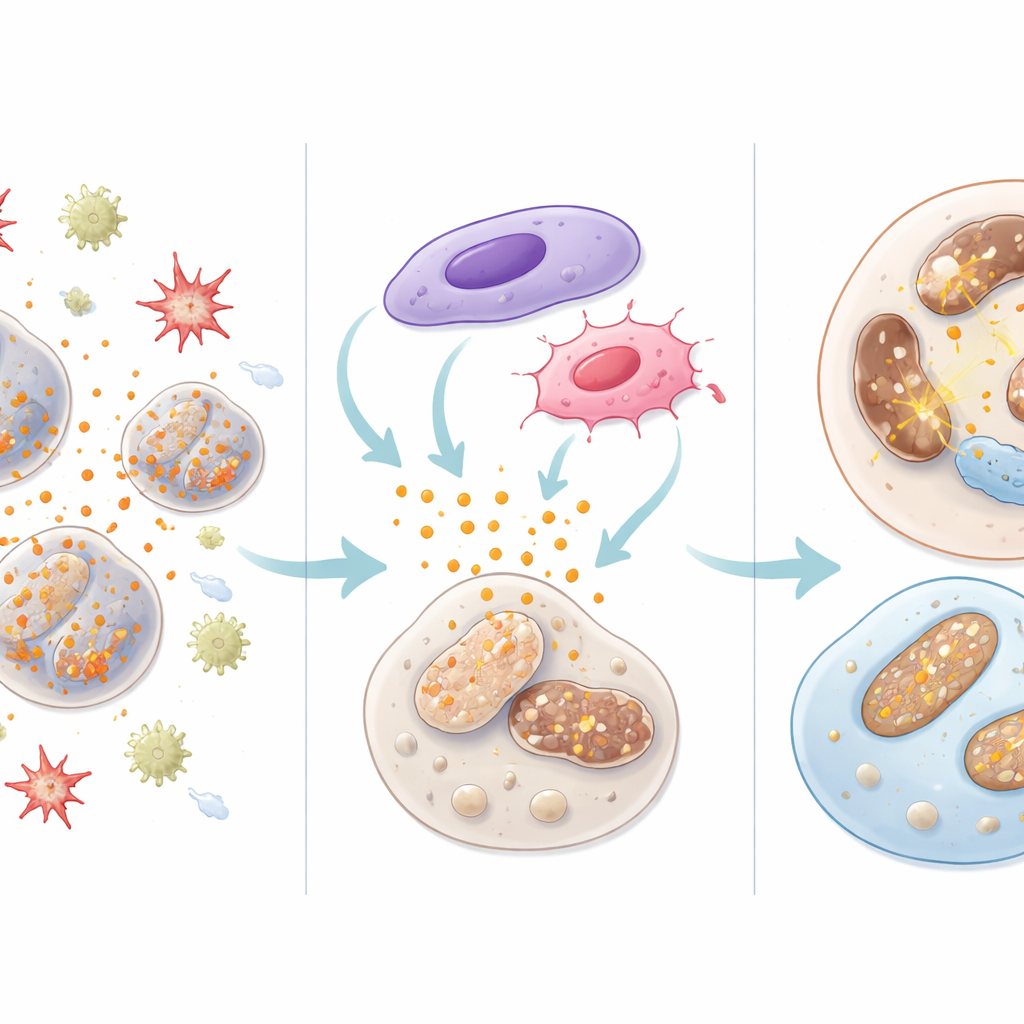
In osteoarthritis, damage builds up across the whole joint: the smooth cartilage surface thins and cracks, the spongy bone underneath becomes abnormally dense or eroded, and the joint lining grows thick and inflamed. A common thread in these problems is oxidative stress—an overload of reactive oxygen molecules that injure cells and their mitochondria, the cell’s power plants. The authors show that in human and animal cartilage with osteoarthritis, key natural “cleanup” proteins that depend on selenium are sharply reduced, leaving cartilage cells more vulnerable to damage and speeding the breakdown of the joint surface.
Turning selenium into a targeted joint medicine
Earlier work with selenium nanoparticles hinted that topping up selenium can help joint cells restore their antioxidant defenses and slow cartilage loss, but loose nanoparticles raise concerns about safety, dosing, and how long they stay in the joint. To solve this, the team chemically linked an organic selenium compound into a soft hydrogel based on hyaluronic acid, a natural joint lubricant. They then shaped this material into microspheres small enough to flow through a needle and sit inside the joint. These spheres are built with special chemical links that break open when they encounter two hallmarks of early osteoarthritis: bursts of reactive oxygen and high levels of a cartilage-degrading enzyme called MMP13. This dual-trigger design means the spheres release selenium where and when the joint is under stress, rather than all at once.
How the smart microspheres help joint cells
In cell studies, the selenium-loaded microspheres outperformed both the base hydrogel and conventional selenium nanoparticles. In stressed cartilage cells, they boosted production of selenium-dependent proteins, improved mitochondrial structure and energy production, and shifted energy use away from emergency glycolysis toward more efficient respiration. A central player in this shift was a protein called TXNRD1, which, when increased by the treatment, helped switch on a key growth and survival pathway (PI3K–AKT–mTOR). As this pathway recovered, cartilage cells made more of the building blocks of healthy matrix and less of the enzymes that chew it up, while also mopping up excess reactive oxygen species.
Rebalancing bone and immune cells in the joint
Osteoarthritis is more than worn cartilage; bone-resorbing cells and immune cells in the joint lining also drive pain and damage. The researchers found that the microspheres dampened the formation and activity of bone-eroding cells in laboratory models, and in animals they reduced early bone loss and later bone hardening beneath the cartilage. At the same time, the treatment nudged joint macrophages—the immune cells in synovial tissue—away from an aggressive, inflammatory state toward a more repairing, calming state. These changes were again tied to selenium-driven antioxidant effects and tuning of the same PI3K–AKT–mTOR pathway, suggesting a shared control switch across different joint cell types.
From protection to regeneration in living joints
When the team injected the microspheres into rats with surgically induced osteoarthritis, the joints showed less cartilage erosion, fewer signs of inflammation in the lining, and a healthier pattern of bone structure over time, compared with saline or simpler hydrogels. Animals moved more freely and showed reduced signs of pain. In a separate model where full-thickness holes were drilled in the cartilage, loading the microspheres with cartilage-forming progenitor cells led to better filling of the defects with smooth, hyaline-like cartilage rather than scar-like tissue. Importantly, the material showed no obvious toxicity in major organs or blood tests.
What this work could mean for people with arthritis
To a non-specialist, the message is that the authors have created a kind of “smart sponge” for the joint—tiny gel spheres that sense the chemical chaos of early osteoarthritis and, in response, locally release a protective nutrient in a controlled way. By restoring the joint’s own antioxidant defenses and energy balance, this approach simultaneously protects cartilage, calms inflammation, and steadies the bone under the joint surface. While much work remains before human use, the study outlines a promising strategy for full-cycle care of osteoarthritis: one injection that speaks the same biochemical language as the disease and treats multiple problem areas at once, rather than chasing symptoms after serious damage has already occurred.
Citation: Liu, Y., Zhang, Y., Yu, C. et al. Organic di-selenide hydrogel microspheres for multimodal treatment of osteoarthritis. Nat Commun 17, 2300 (2026). https://doi.org/10.1038/s41467-026-68817-2
Keywords: osteoarthritis, selenium, hydrogel microspheres, cartilage regeneration, oxidative stress