Clear Sky Science · en
Single-cell atlas of human lung aging identifies cell type dyssynchrony and increased transcriptional entropy
Why aging lungs matter to everyone
As we grow older, our lungs become more vulnerable to infections like pneumonia, severe flu, COVID-19, and chronic conditions such as COPD and pulmonary fibrosis. Yet until recently, scientists did not know exactly how aging changes each individual cell type that makes up the lung. This study uses cutting-edge single-cell sequencing to build a detailed “atlas” of the aging human lung, revealing which cells change the most, how their genetic activity shifts with age, and how accumulating DNA damage may undermine lung resilience.
Peeking into the lung one cell at a time
To map how lungs age, the researchers analyzed nearly 200,000 individual cells from 60 human donors ranging from childhood to late old age. Using single-cell RNA sequencing, they measured which genes were switched on in each cell, and then grouped the cells into 25 distinct types, including air sac lining cells, blood vessel cells, immune cells, and structural cells. They combined these data with large existing bulk lung datasets and tissue staining of lung slices, building a multilayered picture of how cell types and gene activity change with advancing age. This allowed them to compare “young” lungs and “aged” lungs not just as whole organs, but as mosaics of diverse cell populations with their own aging trajectories.
Key lung cells lose their specialized roles
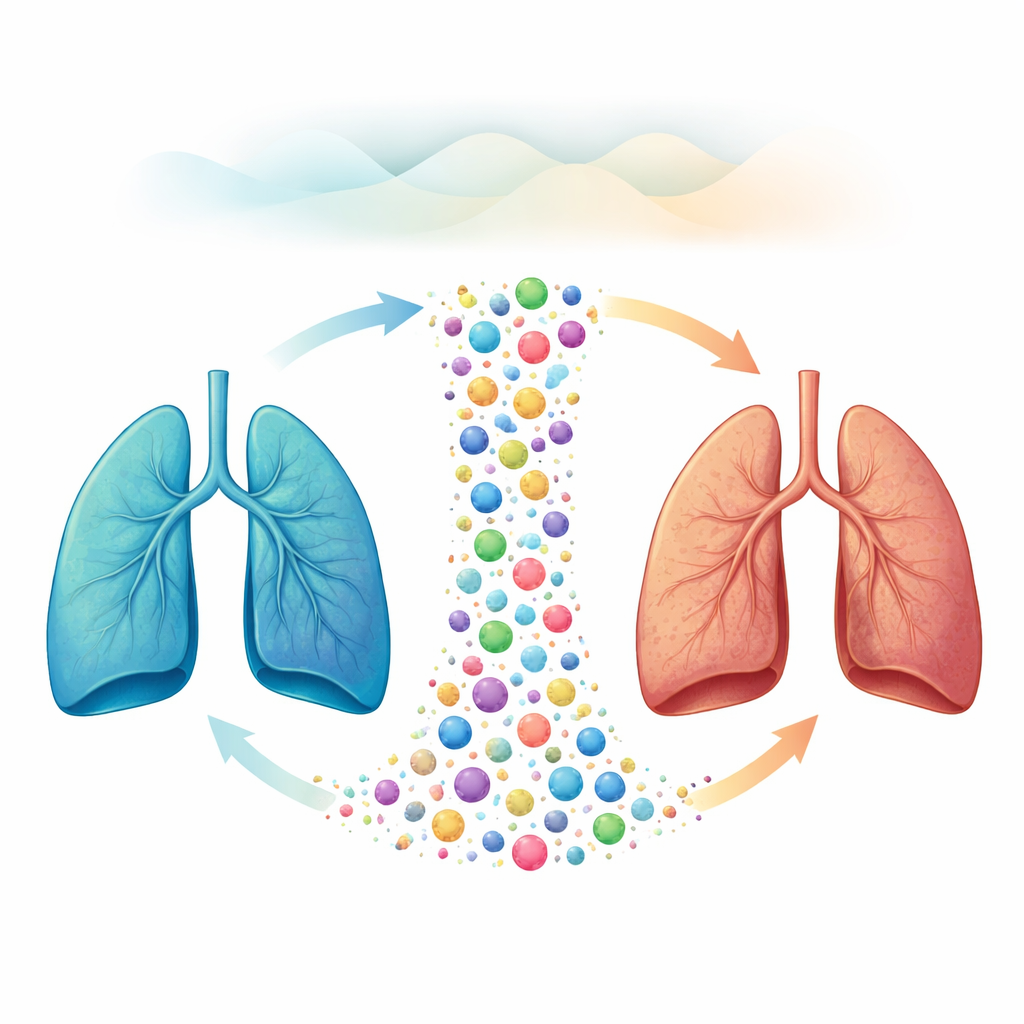
The study found that lung aging is not uniform: some cell types are hit much harder than others. Two stood out. First, alveolar type II cells—cells that line the tiny air sacs and produce surfactant, the slippery substance that keeps air spaces open—showed major shifts in gene activity and became less common with age. Within these cells, the team identified two subgroups: one rich in surfactant production and one more stem-like. With age, lungs lost a large share of the surfactant-rich subgroup, while the stem-like cells accumulated. This was confirmed by both gene activity patterns and microscopic staining of lung tissue, which showed fewer cells that strongly produced a key surfactant-related protein in older lungs. Second, capillary endothelial cells—the thin cells that form the blood vessels wrapped around each air sac—also showed striking changes, including reduced expression of genes tied to normal vessel function.
Stressed vessels, damaged DNA, and noisy gene activity
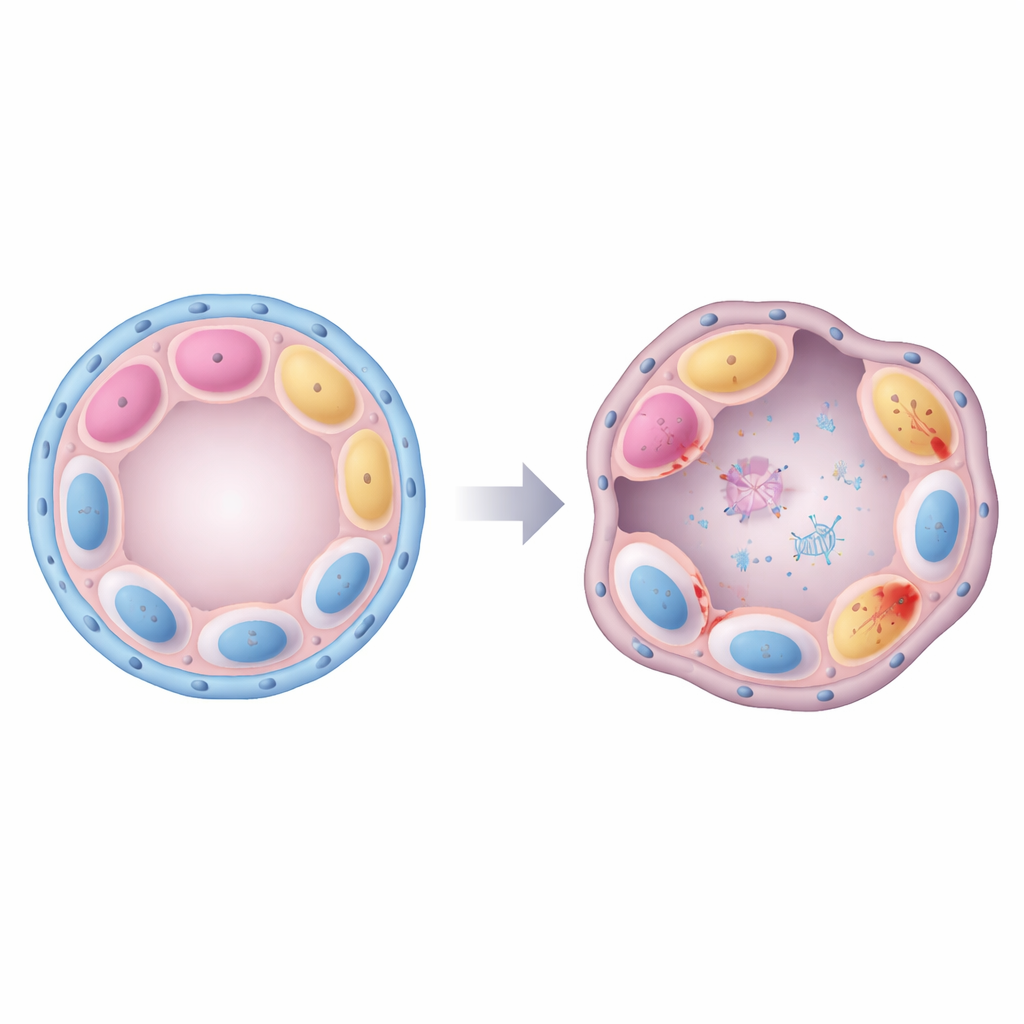
In aging capillary cells, genes involved in autophagy and protein recycling ramped up, while mitochondrial genes and markers of healthy vascular identity declined, suggesting cells under chronic stress and losing their specialization. Across the lung, the researchers used the RNA data itself to infer how many DNA mutations had accumulated in different cell types. They found that mutation burden rose with age and was highest in the alveolar lining and capillary cells that sit at the frontline of exposure to oxygen and airborne pollutants. These mutations were linked to increased activity of DNA damage response pathways and to mitochondrial dysfunction. At the same time, the team measured “transcriptional entropy” and “noise”—statistical measures of how disordered or unpredictable a cell’s gene activity has become. Most non-immune lung cell types showed higher entropy and noise with age, especially those with the greatest mutation burden, indicating that aging cells were drifting away from tightly controlled, clearly defined gene expression programs.
Rethinking cellular aging and senescence in the lung
Because many age-related lung diseases have been linked to cellular senescence, the researchers tested a leading gene signature designed to flag senescent cells. While this signature did pick out cells expressing classic senescence markers, its overall level did not increase with age in any cell type. Instead, senescence-related gene programs looked different in different cells: alveolar cells showed more inflammatory and immune signaling genes, whereas capillary cells showed more genes tied to blood vessel dysfunction and matrix remodeling. The study also uncovered specific gene networks that linked DNA damage, mutation burden, and key senescence regulators, suggesting that the pathways leading from chronic damage to senescence vary between lung cell types.
What this means for aging lungs and disease risk
Altogether, this work shows that aging reshapes the lung in a cell type–specific and “dyssynchronous” way. The cells that maintain open air sacs and support gas exchange—the surfactant-producing alveolar cells and surrounding capillary cells—undergo the most dramatic shifts. They lose specialized functions, accumulate more DNA mutations, and display increasingly disordered gene activity, while classic senescent cells do not simply accumulate in a uniform fashion. For lay readers, this means that vulnerability of older lungs may stem less from a single aging switch and more from gradual, uneven erosion of key cell populations and their finely tuned control systems. By charting these changes cell by cell, the atlas provides a roadmap for designing future therapies and biomarkers aimed at preserving lung resilience well into old age.
Citation: De Man, R., McDonough, J.E., Adams, T.S. et al. Single-cell atlas of human lung aging identifies cell type dyssynchrony and increased transcriptional entropy. Nat Commun 17, 2095 (2026). https://doi.org/10.1038/s41467-026-68810-9
Keywords: lung aging, single-cell RNA sequencing, alveolar cells, endothelial cells, cellular senescence