Clear Sky Science · en
Plastic mulch productivity-sustainability tradeoffs and pathways toward an eco-friendly framework: insights from a global meta-analysis
Feeding a Growing World Without Trashing the Soil
As the global population grows and diets change, farmers are under pressure to produce more food using less land and water. One popular tool is plastic mulch: thin plastic sheets laid over fields to warm the soil, hold moisture, and boost yields. This study asks a pressing question with big implications for our dinner plates and our environment: can we keep the benefits of plastic on farms without turning soils and food chains into plastic sinks?
How Plastic Mulch Supercharges Crops
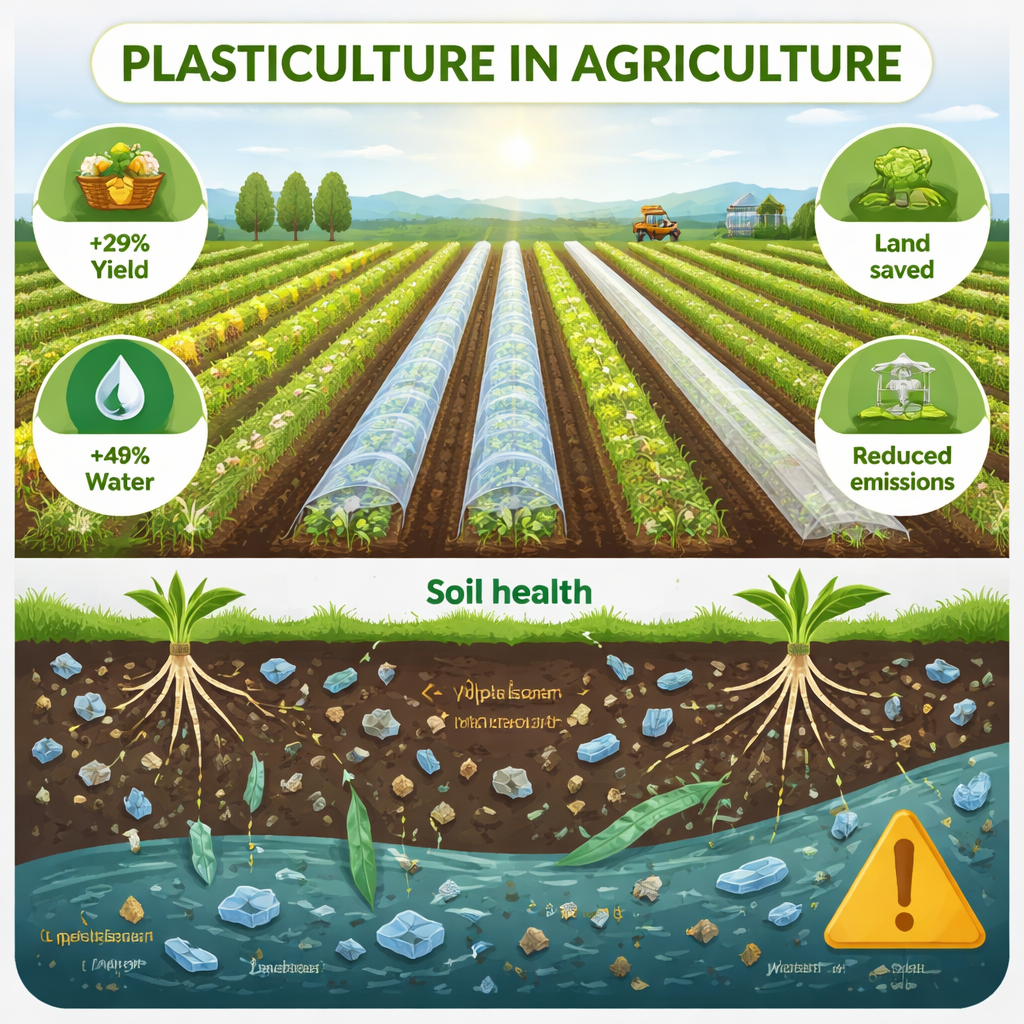
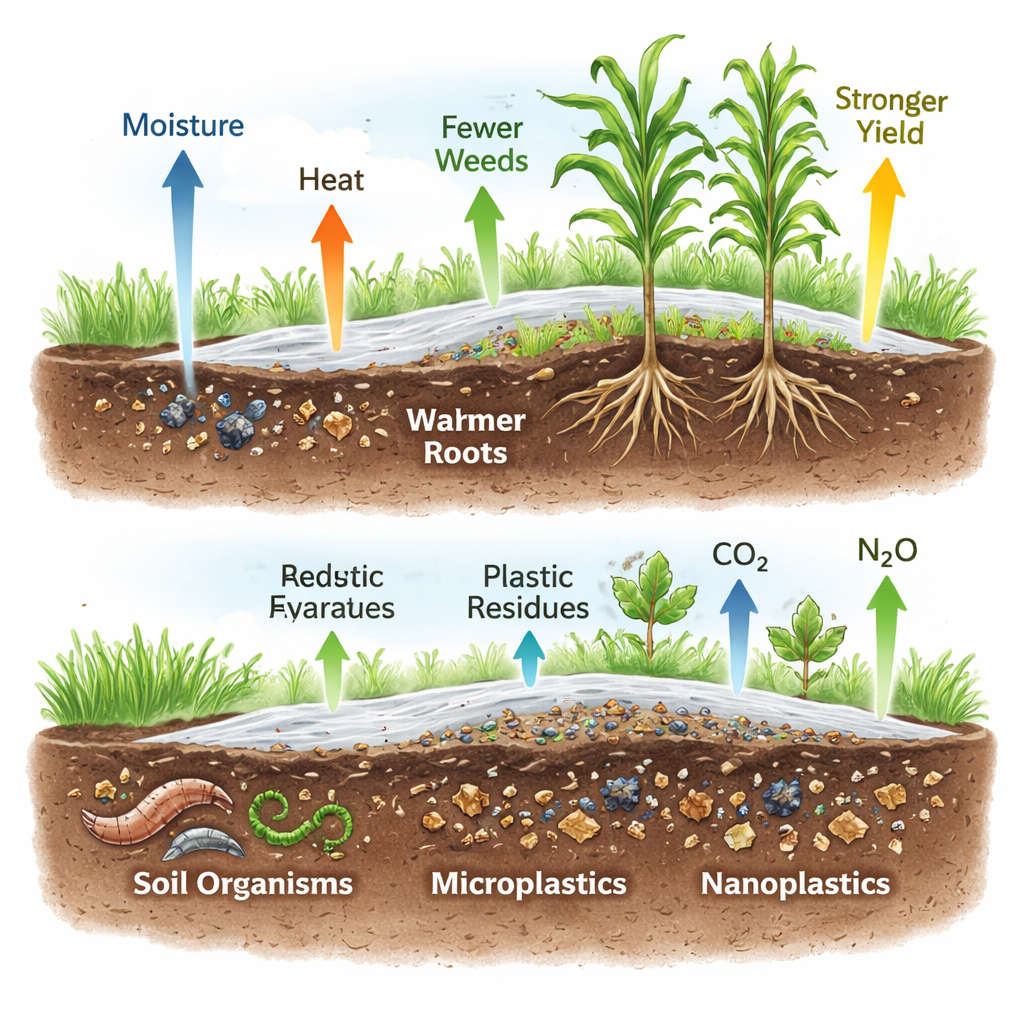
By pulling together results from more than 11,000 field experiments worldwide, the authors show that plastic mulch reliably increases harvests. On average, crop yields rose by about 29 percent compared with fields left bare, and nearly every trial reported an improvement. Gains were seen in many staples—wheat, maize, potatoes, rice, cotton—and in vegetables like tomatoes and cucumbers. Plastic sheets act like a tailored microclimate: they trap warmth in cool regions, extend the growing season by over a week, and hold soil moisture where roots can use it. This combination helps seeds sprout faster, seedlings grow stronger, and plants withstand dry spells.
Saving Water and Land in Dry Regions
Water is often the tightest bottleneck in farming, and plastic mulch sharply improves how efficiently crops use it. Across many crops and climates, water use efficiency—the amount of food produced per unit of water—rose by about half when plastic mulch and smart cropping patterns were combined. In arid areas of northwestern China, where evaporation can be ten times higher than rainfall, this technology has been transformative. Between 2015 and 2024, plasticulture there produced an additional 189 million tons of staple food, saved the equivalent of 33.5 million hectares of farmland, and cut hundreds of millions of tons of fertilizer-related greenhouse gas emissions, all by helping plants squeeze more growth out of every drop.
What Happens When Plastic Never Leaves the Field
The same plastic that boosts yields also lingers long after harvest. Thin films tear easily and are hard to collect, leaving behind scraps that break into ever-smaller fragments. Over years, some fields have built up more than a metric ton of plastic bits per hectare, with hundreds of thousands of particles in each kilogram of soil. These residues change how water moves through the ground, damage soil structure, and interfere with roots’ ability to explore the soil. When plastic levels become high, yields of crops such as maize, cotton, and potatoes can actually drop by nearly a quarter. At microscopic scales, the picture is murkier but worrying: micro- and nanoplastics can alter soil life, harm earthworms and beneficial microbes, and in lab studies can enter plant tissues and animal organs, triggering inflammation and cellular stress.
Rethinking Farm Plastics from Film to Policy
To escape this productivity–pollution trap, the authors argue that farm plastics must be redesigned, reused, and tightly managed. They highlight new "smart" mulches made from plant-based or biodegradable materials, sometimes loaded with helpful microbes that can both nourish crops and break down the film itself. Thicker, more durable plastics are easier to retrieve and recycle, reducing fragments left in the field. On the management side, precision tools—such as AI-guided maps and advanced crop varieties—can cut plastic use by targeting it only where it delivers the biggest gains. The study also envisions circular systems where every roll of mulch is tracked with digital ledgers, farmers are paid to return used film, and waste plastic is turned into new products or even soil-building biochar.
Building a “One Health” Future for Farms and People
Beyond the farm gate, the authors call for global rules to keep agricultural plastic from becoming a slow, invisible pollutant. They propose weaving plastic management into a future United Nations plastics treaty, setting safe residue limits in soils, certifying low-plastic or plastic-free food supply chains, and helping farmers—especially in low-income regions—afford safer materials and better recycling. For consumers, the message is cautious but not alarmist: plastics have helped reduce hunger, current evidence on health risks from nanoplastics in food is still uncertain, and better science is on the way. The article’s bottom line for non-specialists is clear: plastic on farms has been a powerful tool for feeding the world, but unless we redesign materials, farming systems, and policies together, today’s solution could become tomorrow’s soil and health problem. With coordinated innovation and governance, the same ingenuity that created plasticulture can guide agriculture toward high yields that do not come at the planet’s expense.
Citation: Wang, L., Guo, S., Ge, T. et al. Plastic mulch productivity-sustainability tradeoffs and pathways toward an eco-friendly framework: insights from a global meta-analysis. Nat Commun 17, 1924 (2026). https://doi.org/10.1038/s41467-026-68798-2
Keywords: plastic mulch, sustainable agriculture, microplastics, water use efficiency, circular economy