Clear Sky Science · en
The interplay of sleep characteristics with health factors and gut microbiome
Why Your Gut May Hold the Secret to a Good Night’s Sleep
Many of us blame late-night emails, bright screens, or strong coffee for a restless night. But this study suggests an unexpected player in the story of sleep: the trillions of microbes living in our intestines. By examining detailed sleep reports and gut bacteria profiles from nearly seven thousand Dutch adults, the researchers show that how well and when we sleep is tightly linked to our gut ecosystem, our daily habits, and even how much coffee we drink.
Looking at Sleep in Everyday Life
The team drew on a large population study in the Netherlands, focusing on 6,941 adults who had filled out extensive health and lifestyle questionnaires and provided stool samples for genetic analysis of their gut microbes. Sleep was captured in four ways: overall sleep quality, how sleepy people felt during the day, the gap between their workday and free-day sleep times (known as social jet lag), and whether they tended to be “early birds” or “night owls” (chronotype). Most participants reported decent sleep, but about one in four had poor or very poor sleep. Women tended to report worse sleep quality than men, and younger adults showed more social jet lag, meaning their natural sleep schedule clashed more with work demands.
How Lifestyle and Health Tie into Sleep
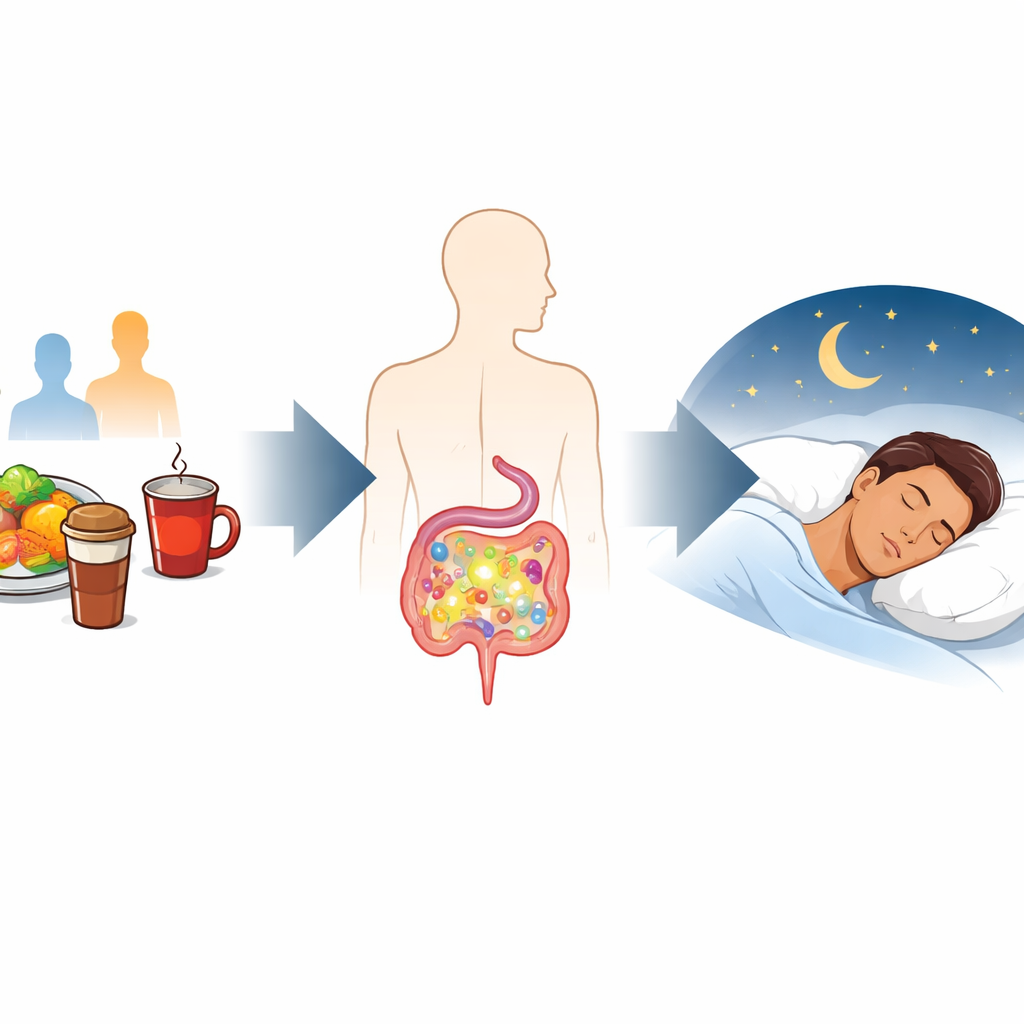
Before zooming in on the gut, the researchers examined how sleep related to a wide range of everyday factors, from diet and exercise to income and disease. Sleep touched almost everything. People in better overall health—physically and mentally—tended to sleep better, feel less sleepy during the day, and have schedules more in tune with their internal clock. Poorer sleep aligned with a higher burden of psychological problems and gut-related complaints. Diet stood out: patterns resembling a wholesome eating style, richer in complex carbohydrates and protein, went hand-in-hand with better sleep. In contrast, more “Western” eating habits, including higher sugar such as maltose, and greater total calorie intake linked to worse sleep measures. Alcohol use was tied to a later chronotype, while people who consumed more calories tended to feel sleepier during the day.
The Gut Microbiome Mirrors Sleep Patterns
With this backdrop, the study turned to the gut microbiome—the vast community of bacteria living in the digestive tract. Using high-resolution DNA sequencing, the researchers measured how many different kinds of microbes people carried (diversity) and which specific species were present. They found that people with poorer sleep quality, more social jet lag, and a later chronotype generally had lower microbial diversity. Subtle but consistent differences in overall community makeup also tracked with these sleep traits, suggesting that the gut ecosystem as a whole reflects sleep behavior. At a finer scale, 137 bacterial species were linked to at least one measure of sleep, mostly to sleep quality. Some species were more common in people who slept well and kept regular schedules, while others appeared more often in those with disturbed or delayed sleep. Five species stood out for being connected to sleep quality, social jet lag, and chronotype all at once, hinting that they may sit at important crossroads between sleep and biology.
Untangling the Roles of Diet, Coffee, and Microbes
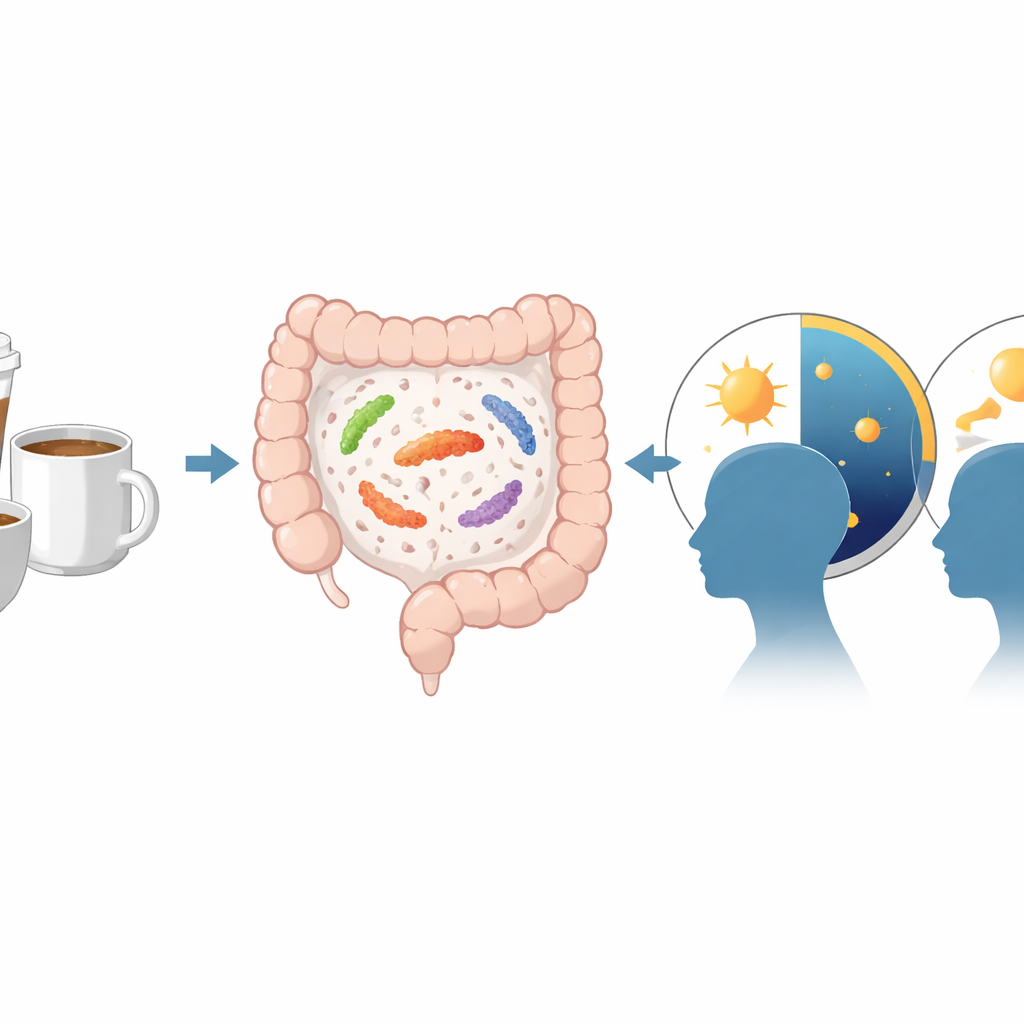
Because food strongly shapes gut bacteria, the scientists used statistical tools to probe how diet, microbes, and sleep might influence one another. They focused on dietary patterns such as healthy eating scores, alcohol use, and especially coffee intake. Most of the time, changes in gut bacteria looked more like a consequence of how people slept and ate, rather than the main cause of poor sleep. Yet a few intriguing exceptions emerged. Two little-known members of the Clostridia group of bacteria consistently sat in the middle of the relationship between coffee drinking and social jet lag. People who drank more coffee tended to have more of these microbes and also more misalignment between workday and free-day sleep times. The analysis suggested that together these two species may explain a small but real fraction of coffee’s link to social jet lag, while much of the effect runs directly from lifestyle to sleep.
What This Means for Improving Sleep
For non-specialists, the takeaway is that sleep does not stand alone: it weaves together with what we eat, how we feel, and the microscopic life in our gut. This large, detailed study supports a two-way relationship: our sleep habits shape our gut microbes, and certain microbes may, in turn, nudge our sleep patterns—sometimes through what we choose to eat or drink, such as coffee or alcohol. While the work cannot prove cause and effect and relies on self-reported sleep and diet, it lays essential groundwork. In the future, adjusting diet or targeting specific gut microbes through probiotics, prebiotics, or other interventions might help people sleep better or ease the strain of social jet lag and late chronotypes. For now, the results reinforce a simple message: caring for your gut—through healthier daily habits—may also be a way of caring for your sleep.
Citation: Wu, J., Andreu-Sánchez, S., Peng, H. et al. The interplay of sleep characteristics with health factors and gut microbiome. Nat Commun 17, 2731 (2026). https://doi.org/10.1038/s41467-026-68791-9
Keywords: sleep, gut microbiome, social jet lag, diet, coffee