Clear Sky Science · en
Ectopic cambia in wisteria vines are associated with the expression of conserved KNOX genes
Climbing vines with hidden tricks
Japanese wisteria is famous for draping pergolas with cascades of purple flowers—and infamous for smothering trees. Beneath its twisting bark, however, lies an unusual way of building wood that may help explain how these vines climb, bend, and bounce back from damage. This study peeks inside wisteria stems and down to the level of genes to reveal how they form extra layers of wood-making tissue, offering a window into how plants reinvent their inner plumbing and support systems.
How most trees grow thicker
In most woody plants, long life and towering height depend on a single slim layer of stem cells called the vascular cambium. This ring of dividing cells quietly adds new wood on the inside and new inner bark on the outside year after year, allowing trunks to thicken and water to rise tens of meters. Classic examples such as redwoods and bristlecone pines follow this straightforward plan: one cambium, one main cylinder of wood, and a fairly orderly stem structure.
Vines that break the rules
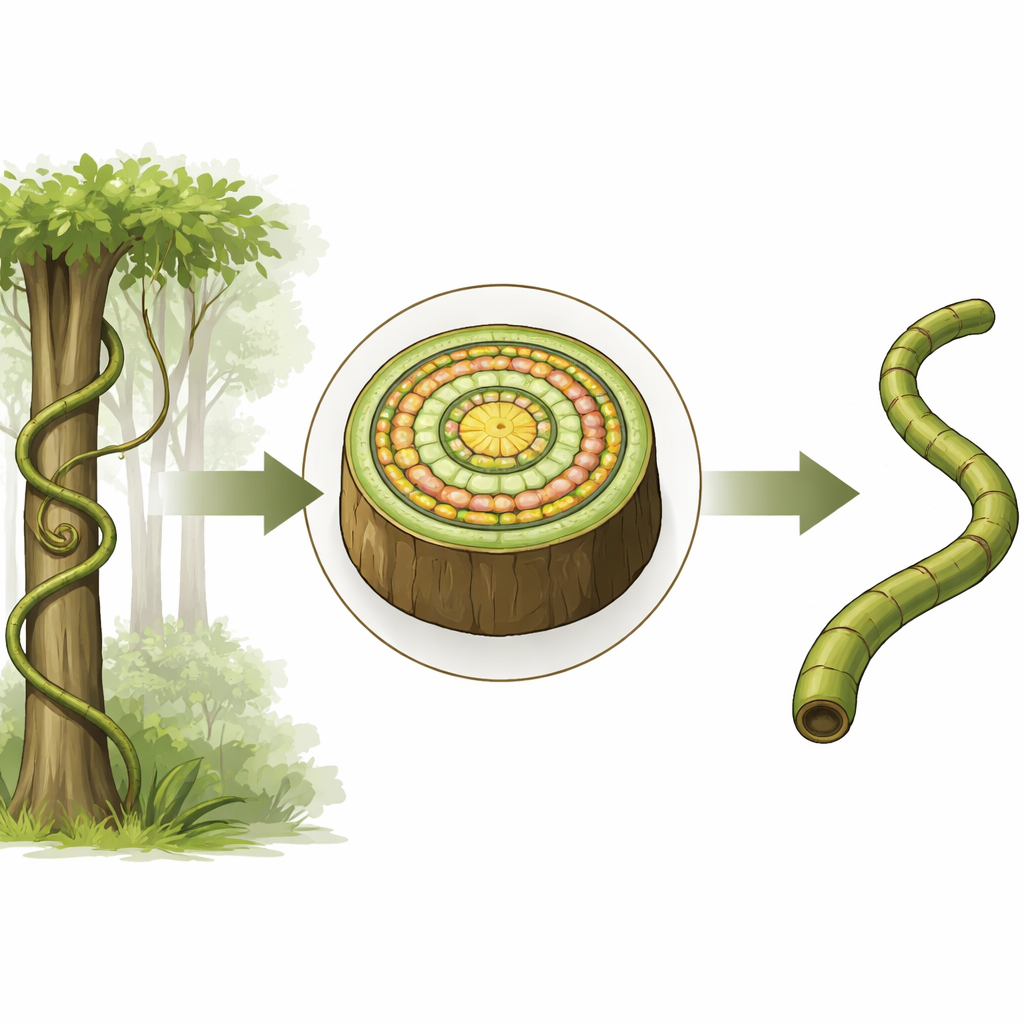
Climbing plants like wisteria face a different challenge. Rather than standing upright on their own, they coil around other plants and are frequently bent, twisted, or wounded when their supports fail. Many such vines carry a structural surprise known as “ectopic cambia”: extra rings or strands of wood-forming tissue that appear in unexpected places in the stem. Earlier anatomical work showed that these extra cambia can help vines repair injuries while preserving water transport and flexibility, but the genetic instructions behind this unusual construction method were largely unknown.
Following cells as they switch careers
The researchers compared Japanese wisteria, which makes ectopic cambia, with common bean, a closely related vine that sticks to the usual single-cambium design. Using detailed microscopy, they traced stem development in both species. Young stems looked similar, with a ring of vascular bundles that merged into a continuous cambium producing ordinary wood and inner bark. In older wisteria stems, however, something new happened: ordinary living cells in the outer cortex began dividing locally, forming scattered pockets of tissue that matured into new cambia. These new layers produced their own wood and bark in patchy, overlapping increments, creating multiple rings and strands instead of a single neat cylinder.
Listening in on cambium genes
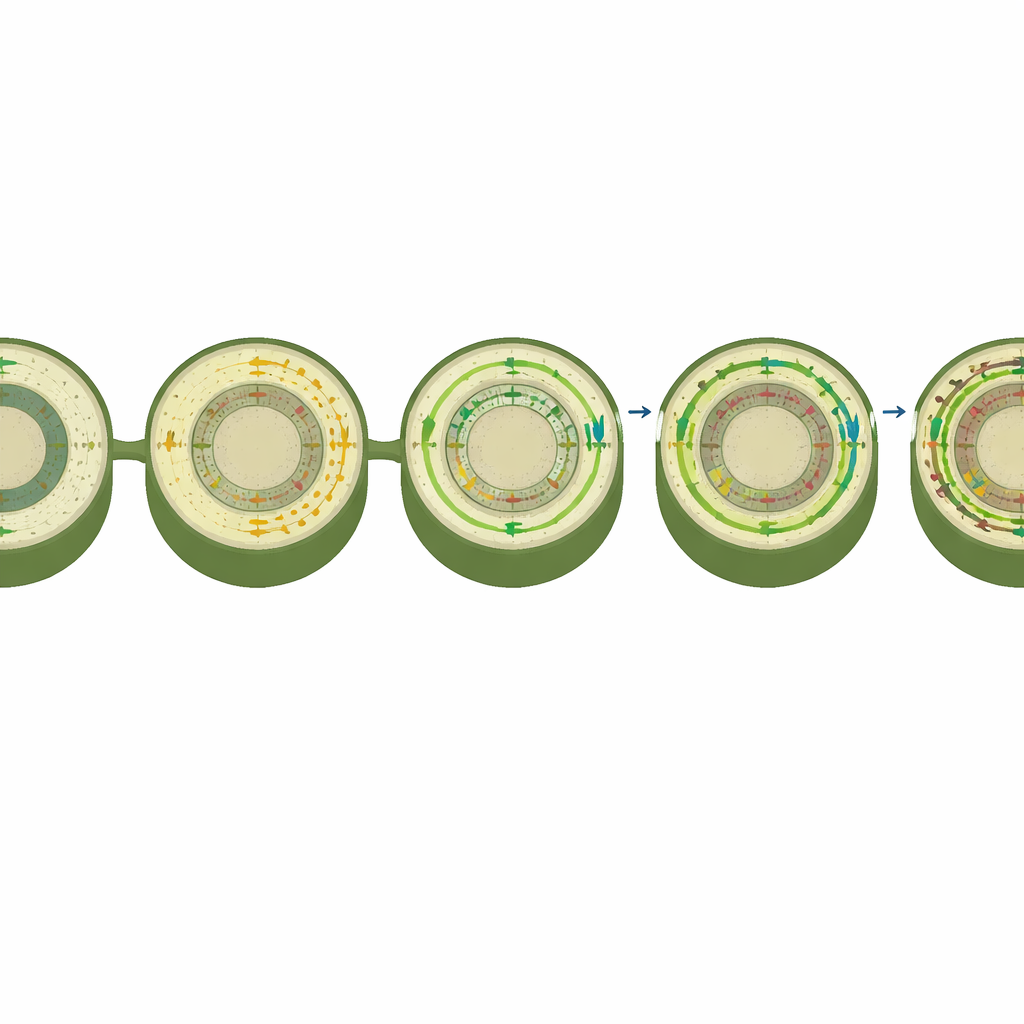
To find out which genes are active when these unusual tissues form, the team carefully shaved thin tangential slices that captured wood, cambium, and inner bark from both species, then sequenced all the RNA in these samples. Comparing gene activity across common bean, typical cambium in wisteria, and wisteria’s ectopic cambia revealed hundreds to thousands of differences, including genes involved in hormone signaling, cell division, and epigenetic regulation. Among the most intriguing were KNOX genes—a family of developmental regulators already known to influence stem cell maintenance and vascular growth in model plants such as Arabidopsis and poplar. Several KNOX-related gene clusters were expressed differently between typical and ectopic cambia, making them strong candidates for controlling the extra growth layers.
Gene family history and a key player
The authors then zoomed out to an evolutionary scale, building a large family tree of KNOX genes from 45 seed plant species, some with ectopic cambia and some without. They found that KNOX genes fall into three major classes and have duplicated many times in different lineages, including in the legume family to which wisteria and beans belong. One subgroup, related to genes called KNAT2 and KNAT6 in Arabidopsis, showed signs of positive selection—an evolutionary signal that certain changes were favored—particularly in two wisteria gene copies that also stood out in the expression data. To test whether a wisteria version of this gene behaved like a typical KNOX regulator, the team introduced it into Arabidopsis plants. The resulting seedlings were smaller, with rumpled, highly serrated leaves and delayed stem development, a classic KNOX-like effect, even though their vascular tissues did not show dramatic new rings.
What this means for plant diversity
Taken together, the anatomical, genetic, evolutionary, and functional lines of evidence point to conserved KNOX genes—especially KNAT2/6-like versions—as important switches in the formation of ectopic cambia in Japanese wisteria. Rather than inventing an entirely new toolkit, wisteria appears to repurpose long-standing developmental genes to coax ordinary cortex cells into becoming new wood-making layers. This work offers the first genetic glimpse into naturally occurring vascular “variants” in vines and suggests that the same core pathways that build standard tree trunks can be rewired to generate flexible, repair-friendly stems. Understanding how plants tune these pathways may ultimately help biologists explain, and perhaps one day engineer, the remarkable variety of woody forms seen across forests and gardens.
Citation: Cunha-Neto, I.L., Snead, A.A., Landis, J.B. et al. Ectopic cambia in wisteria vines are associated with the expression of conserved KNOX genes. Nat Commun 17, 2190 (2026). https://doi.org/10.1038/s41467-026-68669-w
Keywords: wisteria vines, wood development, plant stem cells, gene regulation, vascular anatomy