Clear Sky Science · en
SAMSN1 restrains NK cell mediated anti-tumor immunity in hepatocellular carcinoma
Why our own killer cells sometimes fail
Liver cancer is one of the deadliest cancers worldwide, partly because the body’s immune system often cannot keep it in check. This study asks a simple but crucial question: why do our natural killer (NK) cells—immune cells that can destroy cancer without prior training—lose their edge inside liver tumors, and can that weakness be reversed?
A hidden brake on the body’s cancer fighters
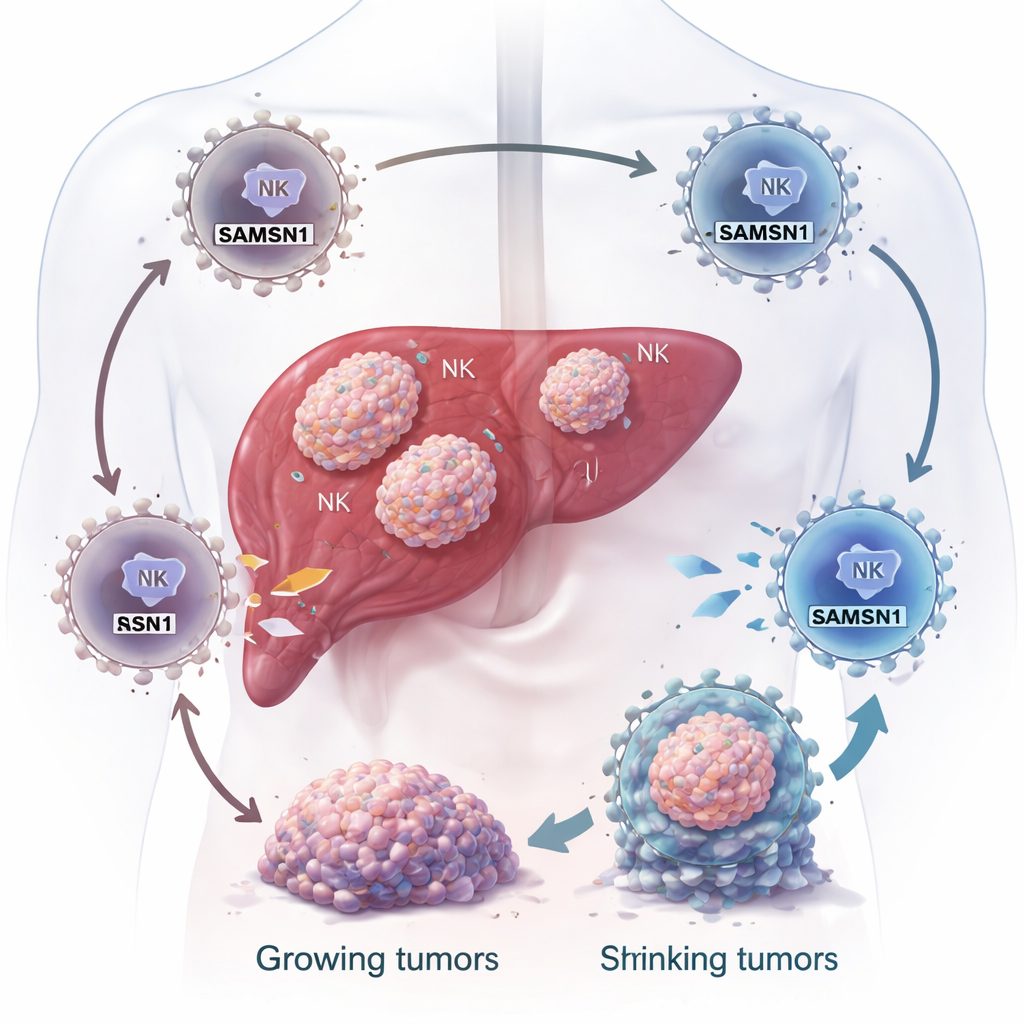
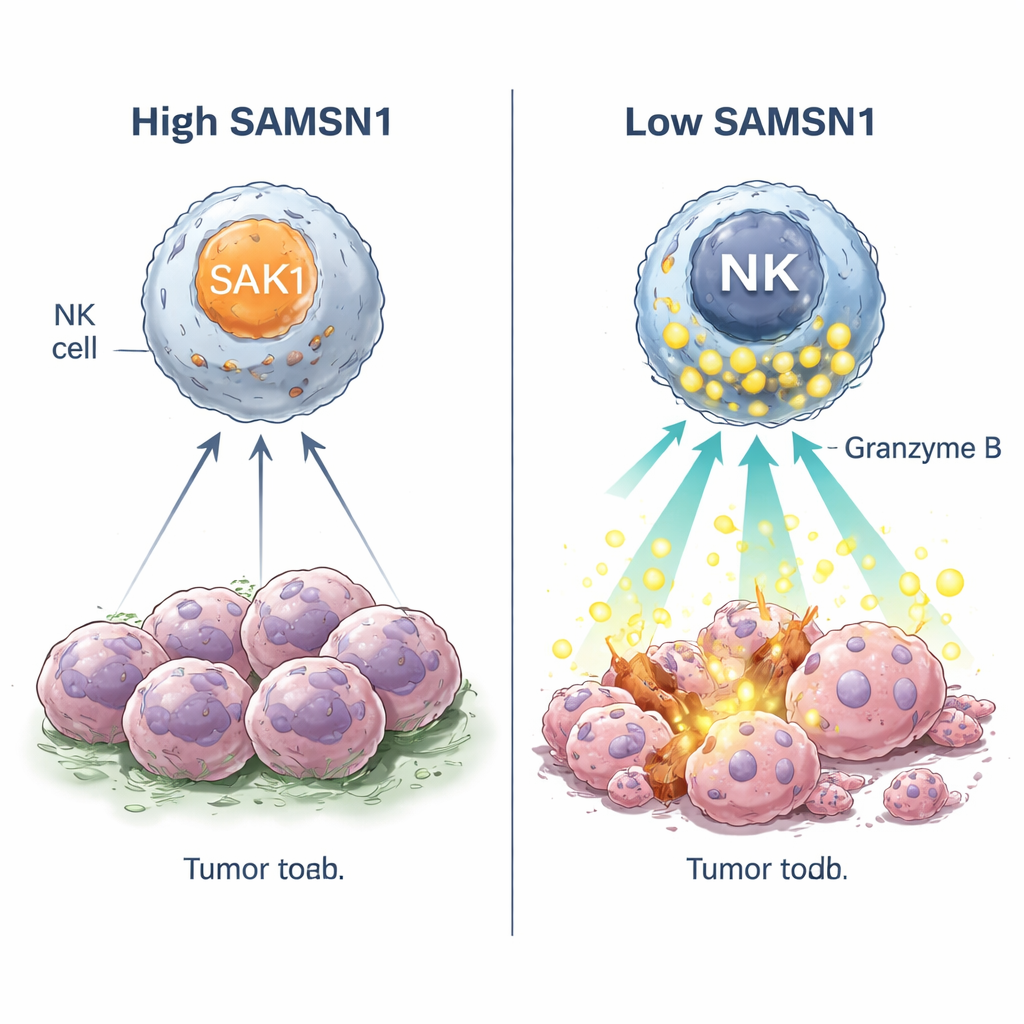
The researchers focused on hepatocellular carcinoma, the most common type of primary liver cancer, which has low response rates to today’s immune therapies. Using single-cell RNA sequencing, they examined thousands of cells from liver tumors and nearby non-tumor tissue of patients. They found that an adaptor protein called SAMSN1, previously linked to immune regulation in other diseases, is especially elevated in NK cells that sit inside tumors. Higher SAMSN1 levels were closely tied to lower amounts of granzyme B, a key “bullet” NK cells use to kill cancer, and to poorer patient survival in large public cancer datasets. In contrast, other immune cells in the tumor showed far weaker or no such increase, pointing to a specific role for SAMSN1 in dampening NK cell activity.
Patient samples reveal weakened NK firepower
To see how this plays out in real tumors, the team analyzed immune cells from the core of liver cancers and from surrounding tissue using high-dimensional mass cytometry. NK cells were more abundant and more armed with granzyme B outside the tumor than inside. Within the tumor, NK cells that carried more SAMSN1 had notably less granzyme B and showed stronger association with inhibitory “checkpoint” markers that signal exhaustion. In practical terms, this means NK cells sitting in liver tumors are not only fewer in effective number, but also less able to fire the molecular weapons needed to destroy cancer cells—precisely where they are needed most.
Switching off SAMSN1 restores NK attack in mice
The scientists then turned to mouse models to test whether SAMSN1 is causing this weakness or just associated with it. Mice bred to lack the Samsn1 gene developed smaller liver tumors when cancer cells were implanted directly into the liver, mimicking human disease. Their NK cells produced more granzyme B and interferon-gamma, and the animals survived longer, even though the total number of NK and T cells in tumors did not change. Importantly, when the researchers deleted Samsn1 only in NK cells—leaving all other immune cells untouched—the benefits were essentially the same: reduced tumor burden and better survival. Similar effects were seen in colon cancer and melanoma models, suggesting that removing this brake from NK cells can boost anti-tumor immunity across multiple tumor types.
Human NK cells show the same pattern
In experiments with human cells, the team used CRISPR gene editing to knock out SAMSN1 in NK cells from blood donors. These edited NK cells displayed more activation markers and produced more granzyme B and perforin, the molecules that punch holes in target cells. In an NK cell line widely used for therapy research, turning SAMSN1 off enhanced cell growth and tumor-killing activity, whereas forcing its overexpression slowed NK cell proliferation, increased signs of exhaustion, and altered cellular metabolism in ways consistent with a tired, less effective immune cell. When SAMSN1-overexpressing NK cells were infused into immunodeficient mice carrying human liver tumors, they controlled tumor growth far less effectively than control NK cells.
What this means for future liver cancer treatments
Together, these results identify SAMSN1 as a previously unrecognized “checkpoint” that acts like an internal brake on NK cells, especially within liver tumors. For a layperson, the takeaway is that NK cells can be powerful cancer assassins, but in hepatocellular carcinoma many of them are forced into a sluggish, exhausted state by SAMSN1. Removing or blocking this protein in NK cells reawakens their killing capacity, shrinks tumors, and prolongs survival in animal models. This work suggests that drugs or cell therapies designed to inhibit SAMSN1 could one day complement existing treatments, giving patients’ own innate immune cells a better chance to fight liver cancer and possibly other solid tumors.
Citation: Wang, R., Chen, H., Liu, H. et al. SAMSN1 restrains NK cell mediated anti-tumor immunity in hepatocellular carcinoma. Nat Commun 17, 1903 (2026). https://doi.org/10.1038/s41467-026-68661-4
Keywords: liver cancer, natural killer cells, immunotherapy, immune checkpoints, SAMSN1