Clear Sky Science · en
Reduced methane emissions in transgenic rice genotypes are associated with altered rhizosphere microbial hydrogen cycling
Rice, Climate, and the Promise of Smarter Roots
Rice feeds about half of humanity, but flooded rice paddies are also one of the largest human-made sources of methane, a potent greenhouse gas. As the world’s demand for rice grows, so could these emissions—unless we find ways to grow rice that is kinder to the climate. This study explores a surprisingly subtle lever for cutting methane: tweaking how rice roots grow and what they leak into the surrounding soil, in turn reshaping the microscopic life that produces and consumes methane.
Turning Down Methane with Re‑engineered Rice
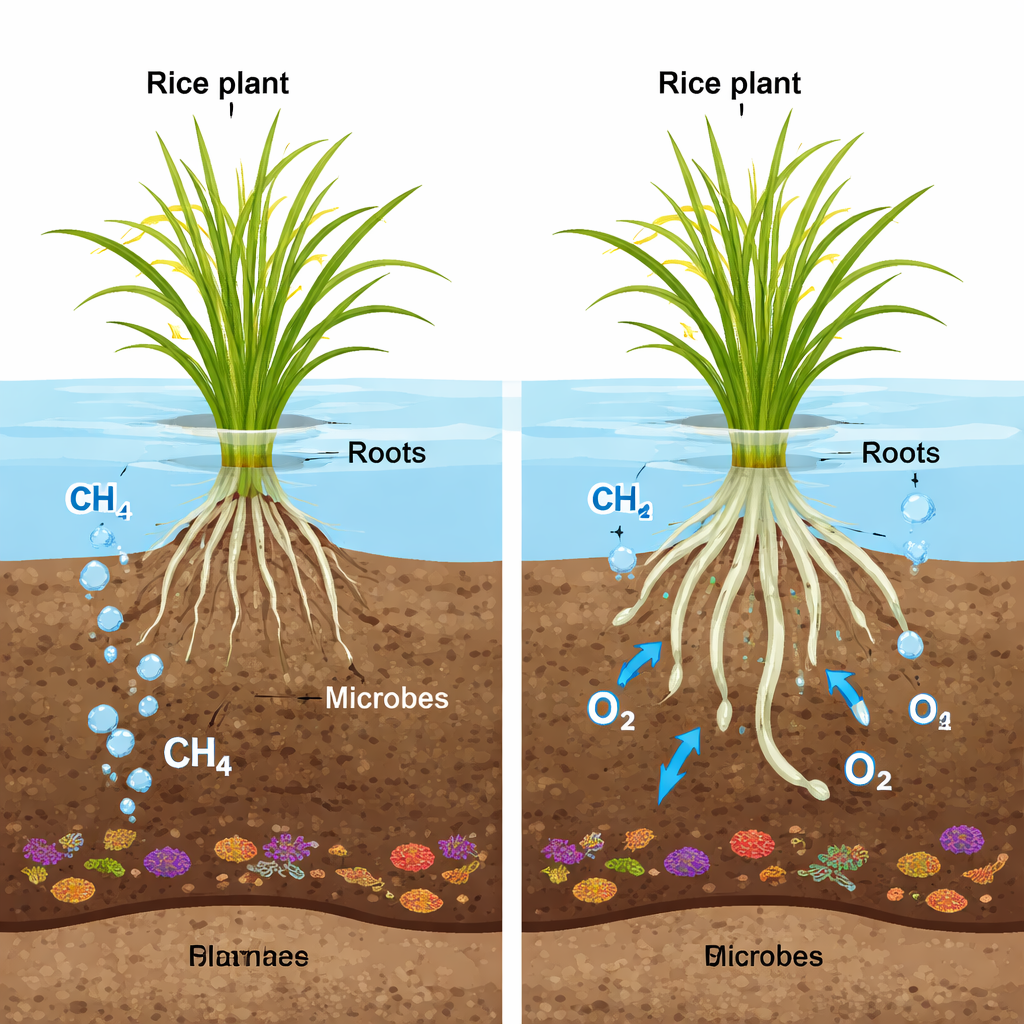
The researchers tested rice plants that had been genetically modified to overproduce tiny signal molecules called PSY peptides, which naturally control root development. These “PSY rice” plants were grown in real paddy soil alongside unmodified rice in greenhouse tanks. Over 70 days, all plants grew well, but the PSY lines emitted much less methane: about 38% lower for one group (PSY1) and 58% lower for another (PSY2) compared with normal rice. That reduction is substantial, given that rice paddies are estimated to contribute roughly a tenth of agricultural greenhouse gas emissions worldwide.
How Different Roots Reshape the Underground World
Under the surface, the PSY plants looked and behaved differently. Their primary roots were longer, with more internal air channels (aerenchyma) and less of the stiff compound lignin in their cell walls. These features likely allow more oxygen to leak from the roots into the surrounding mud. Oxygen in turn supports microbes that can destroy methane or use other pathways to process carbon, shifting the delicate balance between methane production and methane removal in the soil. Yet the overall mix of microbial species was surprisingly similar between PSY and normal plants; what changed most was how active different microbial groups were.
Microbes, Hydrogen, and the Methane Pipeline
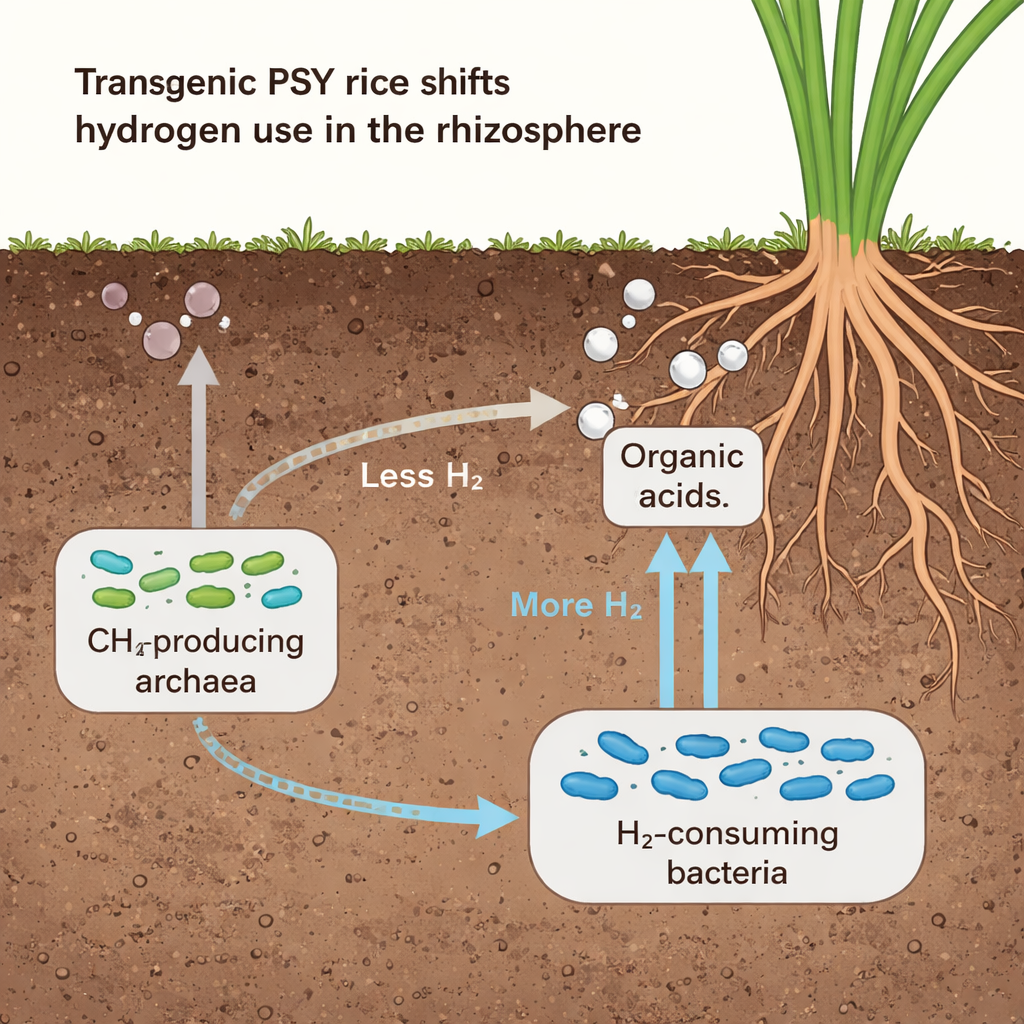
Methane in flooded rice soils is largely made by specialized microbes that use hydrogen gas and carbon dioxide as fuel. The team found that in soils around normal rice, genes involved in methane formation became more active over time than genes involved in methane breakdown, tilting the system toward higher emissions. In contrast, soils around PSY plants kept a lower ratio of methane-producing to methane-consuming activity. Detailed gene expression analyses showed that PSY soils had lower activity of enzymes that generate hydrogen and higher activity of enzymes that burn it, especially in bacteria that use hydrogen for energy. With less hydrogen left over, the “pipeline” feeding methane-producing microbes was effectively throttled.
Root Exudates: Feeding the Right Microbes
The study also examined the chemical cocktail of compounds that rice roots leak into water—known as exudates. PSY roots released a different mix of molecules than normal roots, especially more small organic acids and amino acids linked to a type of metabolism called gluconeogenesis. By combining metabolite measurements with genome-based metabolic models, the authors showed that bacteria which consume hydrogen are particularly good at using these acids, while hydrogen-producing microbes are less suited to them. In soil incubations, adding exudates from PSY plants led to lower methane build-up than adding exudates from normal rice, supporting the idea that altered root chemistry directly steers microbial activity away from methane production.
A New Pathway to Climate‑Friendly Rice
For non-specialists, the key takeaway is that changing the way rice roots grow and what they leak can substantially cut methane emissions without requiring farmers to overhaul their water or fertilizer practices. The PSY rice lines channel more oxygen and more microbe-friendly acids into the root zone, encouraging hydrogen-hungry bacteria and starving methane-producing microbes of fuel. While the work was done in controlled greenhouse conditions and will need to be confirmed in field trials, it points to a promising breeding and biotechnology strategy: design crops not only for yield and disease resistance, but also for the invisible chemistry that governs their climate footprint.
Citation: Shi, LD., Ercoli, M.F., Kim, J. et al. Reduced methane emissions in transgenic rice genotypes are associated with altered rhizosphere microbial hydrogen cycling. Nat Commun 17, 2028 (2026). https://doi.org/10.1038/s41467-026-68640-9
Keywords: rice methane, root microbiome, greenhouse gas mitigation, transgenic crops, soil microbes