Clear Sky Science · en
Effect of a behavioral counseling for adoption and maintenance of a physically active lifestyle on long-term mortality in people with type 2 diabetes: post hoc analysis of the Italian Diabetes and Exercise Study_2
Why moving more matters for people with diabetes
For millions of people living with type 2 diabetes, the advice to “be more active” can feel vague and hard to follow. This study from Italy asks a very concrete question: if doctors and exercise specialists systematically coach inactive patients to sit less and move more in everyday life—and keep at it for several years—does it actually help them live longer? The answer, after more than a decade of follow‑up, is yes: a relatively modest but well‑supported change in daily movement was linked to far fewer deaths, especially from cancer.
A long look at everyday movement
Researchers enrolled 300 adults with type 2 diabetes who were both physically inactive and spent much of the day sitting. All were patients at diabetes clinics in Rome. The volunteers were randomly assigned to one of two groups. One group received standard diabetes care, including routine medical visits and general advice to be more active. The other group received the same medical care plus a carefully designed counseling program that focused on two simple goals: increase daily movement and cut down on sitting time. Everyone was then followed for just over 10 years to see who died and from what causes. 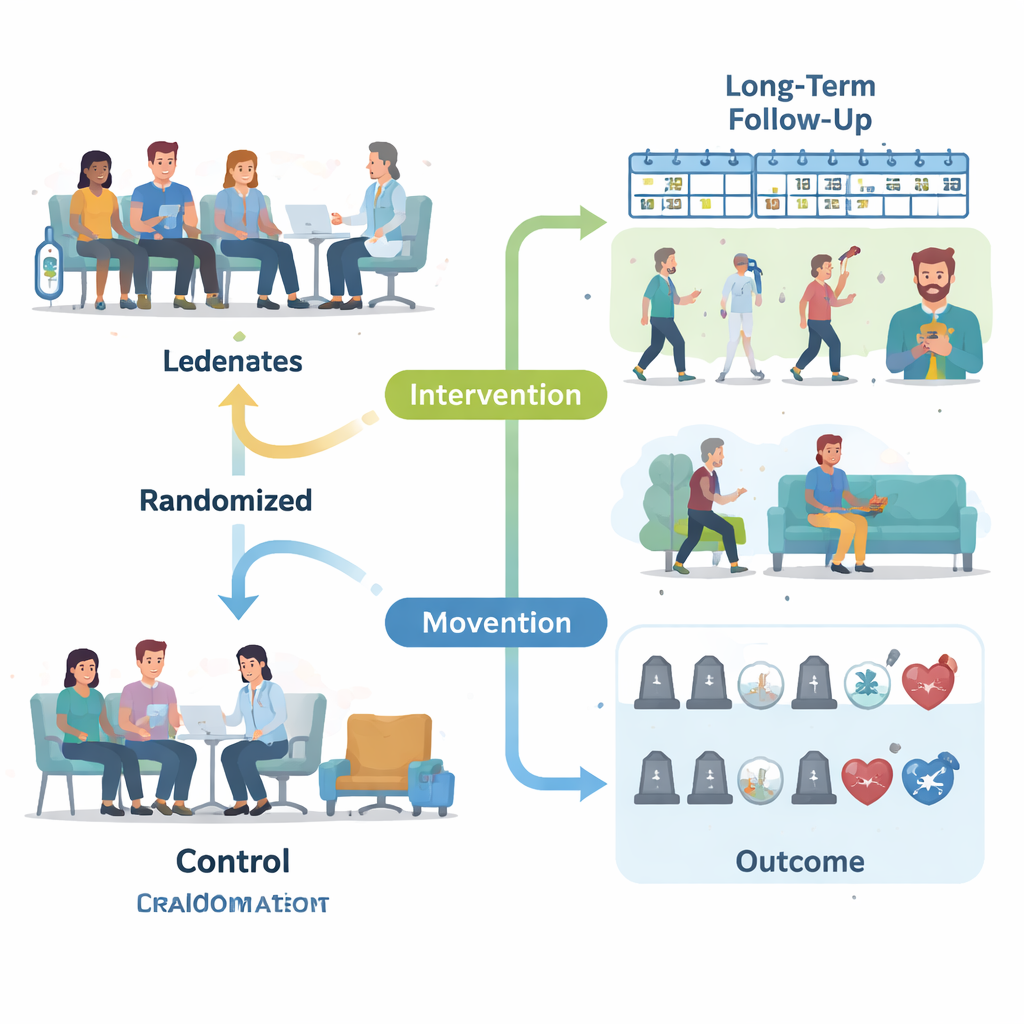
Coaching people to sit less and move more
The counseling program ran for three years. Each year, participants in the program had one individual session with a diabetes doctor and eight sessions with an exercise specialist. Rather than pushing intense gym workouts, the team emphasized realistic changes spread across the whole day: more light‑intensity activities such as slow walking or household chores, breaking up long sitting spells, and adding small amounts of moderate exercise when possible. Patients wore activity monitors so the team could track how much time they spent sitting, moving lightly, or exercising more briskly. Over time, those in the counseling group made only small gains in moderate‑to‑vigorous exercise, but they substantially reduced their sitting and increased their light activity.
Fewer deaths, especially from cancer
After an average of 10.3 years, the researchers checked national health records to see who was still alive. Out of 150 people in each group, 35 in the usual‑care group had died, compared with only 18 in the counseling group. When the team accounted for age, sex, treatments, heart and kidney health, and starting fitness levels, the counseling group had about a 50–60% lower risk of death from any cause. Most of the difference came from cancer: cancer deaths were roughly four times lower in the counseling group, while deaths from heart and blood vessel disease were similar between groups. Additional analyses showed that people who, regardless of group, spent less time sitting, did more light activity, and had better fitness tended to live longer. 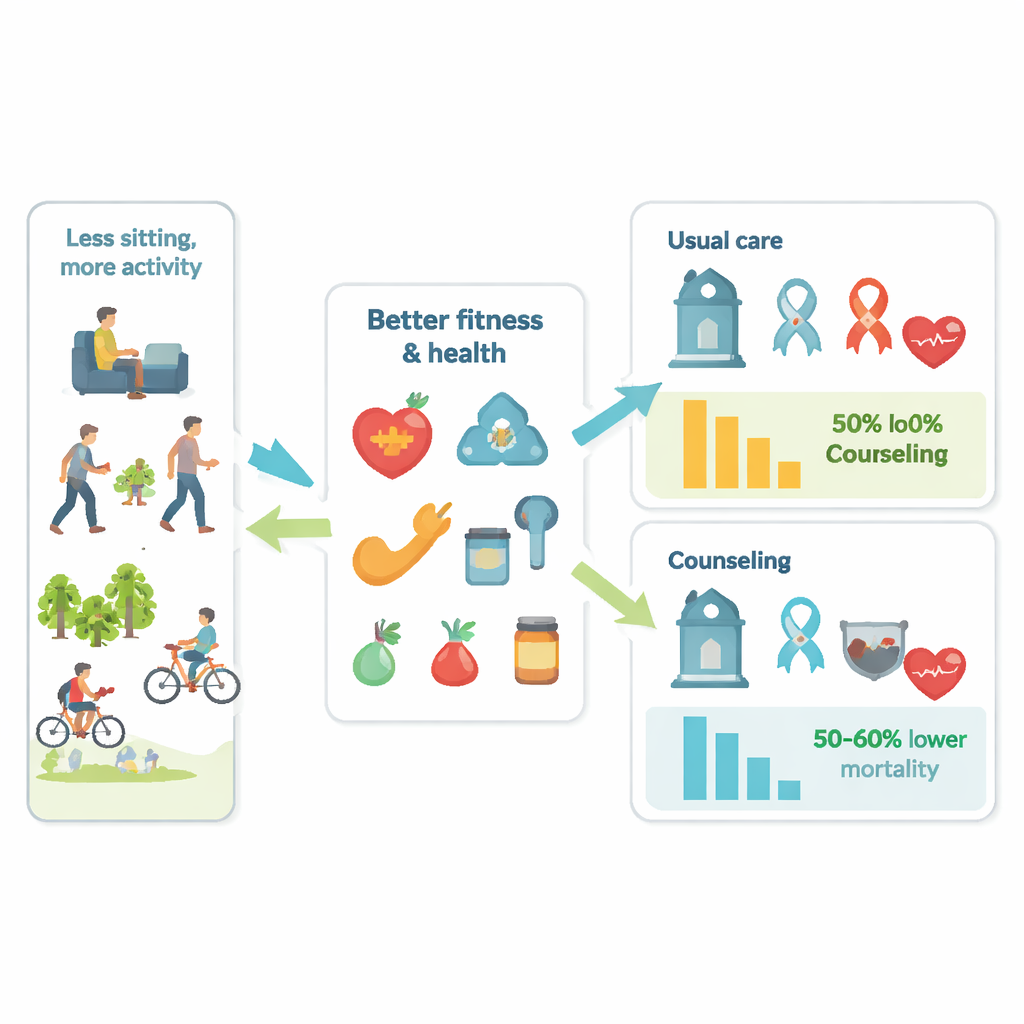
How gentle movement may protect health
Why would shaving down sitting time and nudging up movement have such a powerful effect? The authors suggest that changing daily habits in a sustainable way improves overall fitness, blood sugar control, blood pressure, and other risk factors, and may also benefit mental well‑being and quality of life. These improvements, even if modest, appear to add up over years. Importantly, the counseling program targeted all settings—at home, at work, and while commuting—not just leisure‑time exercise. That broad approach likely made it easier for people to keep up the new habits long after the supervised program ended.
What this means for people with type 2 diabetes
This study has limitations: it is a post‑hoc analysis that was not originally planned around death as the main outcome, the sample size is moderate, and the participants were all from a single country with specific clinical care. Still, the results align with many observational studies showing that less sitting and more daily movement are linked to longer life. For someone with type 2 diabetes, the take‑home message is encouraging: you do not need to become an athlete to gain meaningful benefits. Systematic support to reduce sitting and build in more light and moderate activity—walking, household tasks, standing breaks—can be both realistic and life‑extending, and should be considered a core part of diabetes care.
Citation: Balducci, S., Haxhi, J., Vitale, M. et al. Effect of a behavioral counseling for adoption and maintenance of a physically active lifestyle on long-term mortality in people with type 2 diabetes: post hoc analysis of the Italian Diabetes and Exercise Study_2. Nat Commun 17, 1930 (2026). https://doi.org/10.1038/s41467-026-68618-7
Keywords: type 2 diabetes, physical activity, sedentary behavior, behavioral counseling, mortality