Clear Sky Science · en
Challenges and opportunities in scaling climate-resilient housing solutions in the United States
Why safer homes matter more than ever
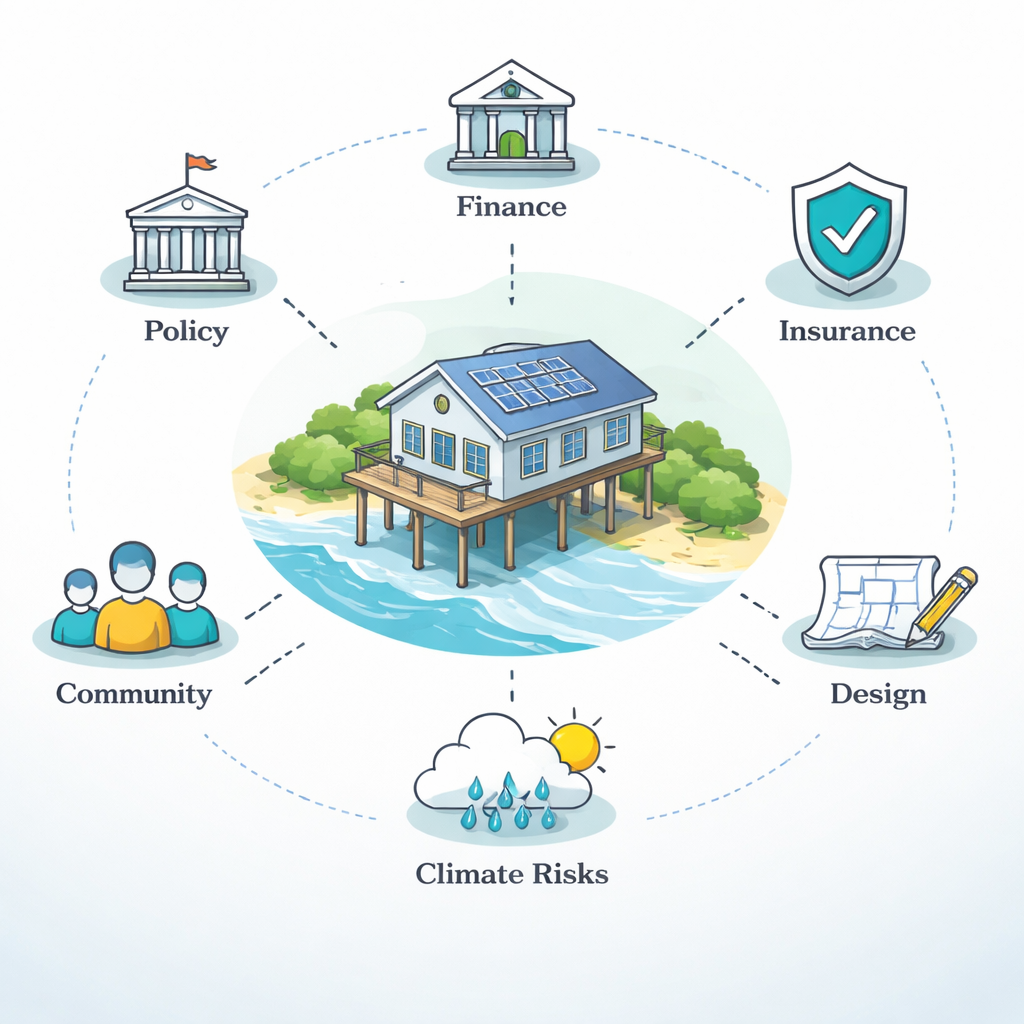
Across the United States, more families are seeing floods, storms, and wildfires damage the places they live. This article explores a big question with very personal consequences: how can we make housing both affordable and better protected from a changing climate? Focusing on coastal communities, the authors talk with dozens of people who shape housing—builders, bankers, planners, insurers, advocates, and officials—to understand what is being tried today, what is getting in the way, and what it would take to protect homes and neighborhoods at scale.
Big weather, big losses, and rising pressure on homes
Climate-related disasters now erase the equivalent of a month’s worth of U.S. homebuilding every year. In 2023 alone, 2.4 million Americans were forced from their homes by disasters, and many never went back. At the same time, the country already faces a severe shortage of housing and high prices. That means every home lost or damaged makes both affordability and displacement worse. Most past efforts in housing and climate have focused on cutting energy use and emissions—think efficient appliances and “green” buildings. Those are important, but they do not directly tackle physical dangers like flooding, storm winds, or wildfire. The paper argues that the U.S. now urgently needs to focus on how climate risks and housing systems interact—from land-use decisions to mortgages, insurance, building codes, and local politics.
What experts are doing now—and why it’s not enough
The authors conducted 64 in-depth interviews across government, finance, real estate and construction, design, academia, advocacy groups, and climate data providers. They cataloged 141 concrete actions already being taken. Most of these are relatively small and local: public education campaigns, research studies, and property-level fixes such as elevating homes or adding extra height above known flood levels. A smaller share of effort is going into bigger-ticket steps like upgrading regional infrastructure or steering new development away from high-risk coastlines. Even fewer actions involve changing core rules and money flows—such as building codes, mortgages, or insurance products—that ultimately shape where and how homes are built. Yet when interviewees were asked what solutions would make the biggest difference, they overwhelmingly pointed to those deeper, system-wide changes, not just more sandbags or higher foundations.
Roadblocks: money, information, and rules that lag behind risk
Experts described a thicket of barriers that keep climate-smart housing from spreading. Policies and institutions are often locked into old ways of doing things; there may be no standards or past examples to follow, making it harder and more expensive to try new approaches. Good risk data can be scarce, inconsistent, or locked behind paywalls. Different flood or fire models can give very different answers, leaving banks and cities unsure what to trust. On top of that, stronger construction and safer locations usually cost more up front, in a market already struggling with labor shortages, high material prices, and tight budgets. Interviewees also highlighted four especially knotty tensions: building codes that look backward rather than forward; insurance that does not yet reward homeowners for reducing risk; climate data that is uneven in quality and access; and the risk that honest pricing of climate danger could undercut the home values many families rely on for their savings.
Why government leadership and teamwork are crucial
Despite these difficulties, the interviews surfaced stories of promising progress. State and local reforms—such as Alabama’s program that helps homeowners strengthen roofs to withstand hurricanes, or Charleston’s decision to stop building slab-on-grade houses in floodplains—show that targeted rules and incentives can significantly cut damage and insurance losses. In nearly every example of success, governments partnered with private companies, nonprofits, and researchers. Experts across sectors agreed that voluntary action alone will not get the job done; most felt that laws, standards, or conditions tied to public money are needed to push the market toward safer practices. At the same time, they warned that poorly designed rules could unintentionally raise costs or deepen inequality, especially if safer homes become something only wealthier households can afford.
What this all means for families and communities
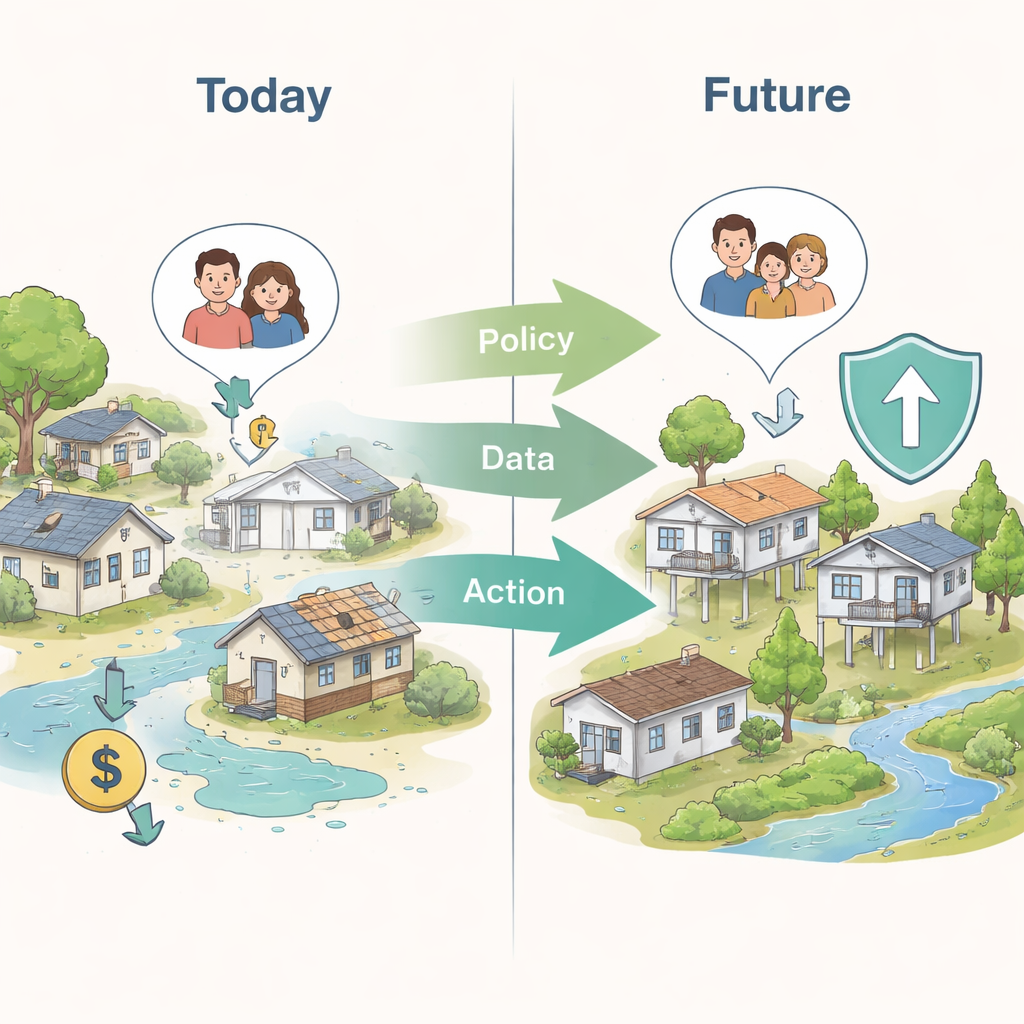
For non-specialists, the core message is straightforward: climate risks to housing are rising faster than the systems that finance and regulate homes are changing. Today’s scattered pilot projects and property-by-property fixes are not enough to protect communities or keep housing affordable. The study suggests that real progress will depend on stronger public leadership, better and fairer risk information, and carefully crafted partnerships that spread costs and benefits across governments, lenders, insurers, builders, and residents. Without this kind of coordinated effort, someone will pay the growing bill—whether through higher taxes, lost savings, or repeated disaster losses. With it, communities can begin to shift new construction into safer places, upgrade building standards, and design financial tools that reward resilience, making homes both more secure and more sustainable in the face of a changing climate.
Citation: Seeteram, N.A., Shi, L., Mach, K.J. et al. Challenges and opportunities in scaling climate-resilient housing solutions in the United States. Nat Commun 17, 2032 (2026). https://doi.org/10.1038/s41467-026-68595-x
Keywords: climate-resilient housing, coastal communities, building codes, disaster risk, housing affordability