Double-dose firmonertinib as first-line treatment in patients with locally advanced or metastatic non-small-cell lung cancer harboring EGFR L858R mutation: a prospective, multicenter, phase II study (FIRM)
Many people with a common form of lung cancer carry a specific change in a growth-related gene called EGFR. These patients often respond well to modern "targeted" pills instead of chemotherapy, but the benefit usually fades after a year or two as the cancer finds ways to grow again. This study asked a simple, practical question: can safely giving a higher daily dose of one such drug, firmonertinib, keep the cancer under control for longer in patients with a harder‑to‑treat EGFR subtype called L858R?
A tougher kind of EGFR‑driven lung cancer
Non-small-cell lung cancer (NSCLC) is the most common type of lung cancer. In many patients, the tumor is fueled by changes in the EGFR gene, and tablets that block EGFR have become standard first treatment. But not all EGFR changes behave the same. People whose tumors have an alteration called L858R in exon 21 generally do worse than those with another common change known as exon 19 deletion, even when treated with the latest drugs. Combination treatments that add chemotherapy or antibodies can help, but they also add more side effects and clinic visits. Doctors therefore want options that are stronger than standard tablets alone, yet still simple and tolerable enough for everyday use.
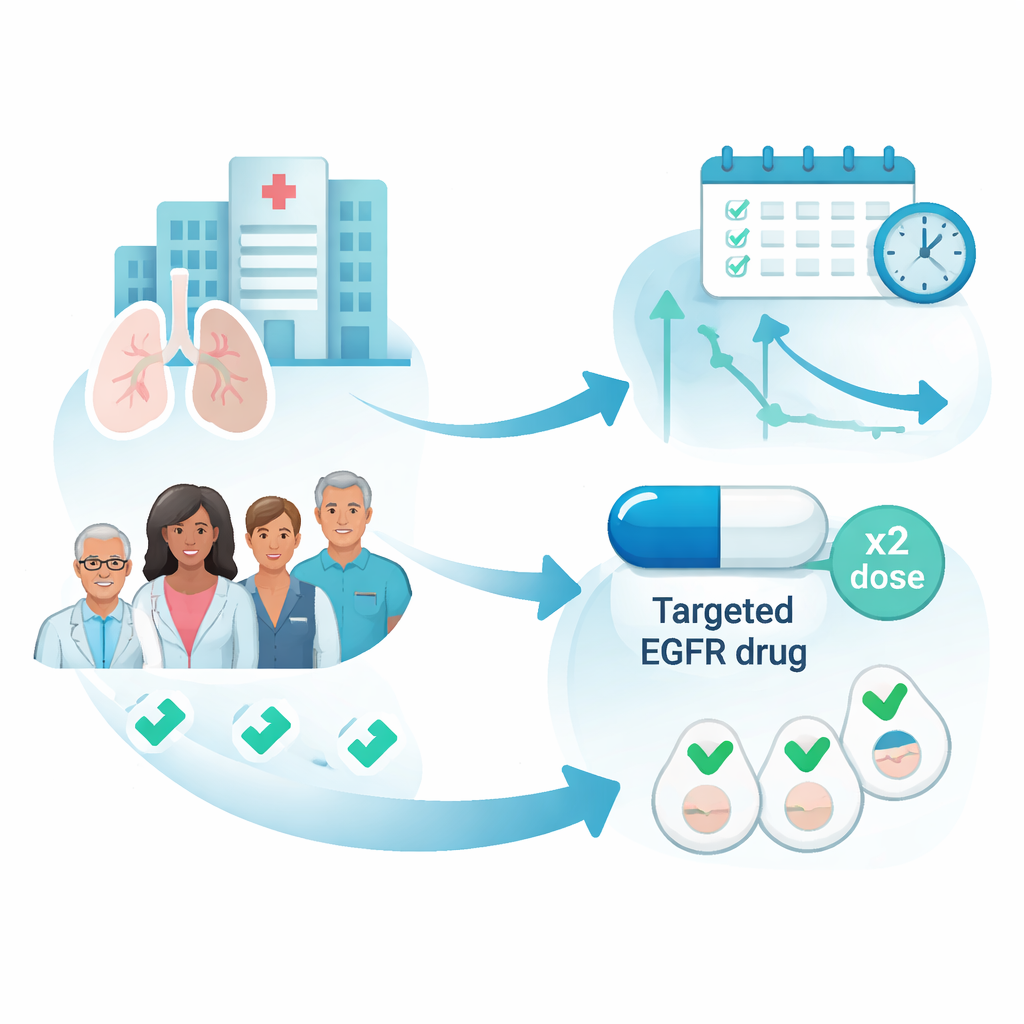
Testing a higher dose in real patients Figure 1.
Firmonertinib is an EGFR‑blocking pill already approved in China at a standard daily dose of 80 milligrams. Earlier work showed that even much higher doses did not cause serious new safety problems, and laboratory tests suggested that tumors with the L858R change might need more drug exposure to be fully suppressed. In this phase II FIRM study, researchers across five hospitals treated 33 adults who had locally advanced or metastatic NSCLC with the L858R mutation and had not received prior drug treatment for advanced disease. All patients took a double dose of firmonertinib—160 milligrams once a day—until their cancer worsened or side effects became unacceptable. Doctors tracked how long each patient lived without the disease getting worse, how much tumors shrank on scans, and what side effects appeared.
How long the cancer stayed in check
After a median follow‑up of a little more than two years, about two thirds of the patients had experienced cancer growth or had died. On average, patients went just over 21 months before their disease worsened, and nearly two thirds were still free of progression at 18 months. Tumors shrank measurably in about three out of four patients, and more than nine out of ten saw at least disease stability rather than early growth. Among the small group who already had cancer spread to the brain, responses were also frequent and lasted a long time, with a typical time to worsening of more than two years. Overall survival data are still immature, but most patients were alive at two and even two and a half years.
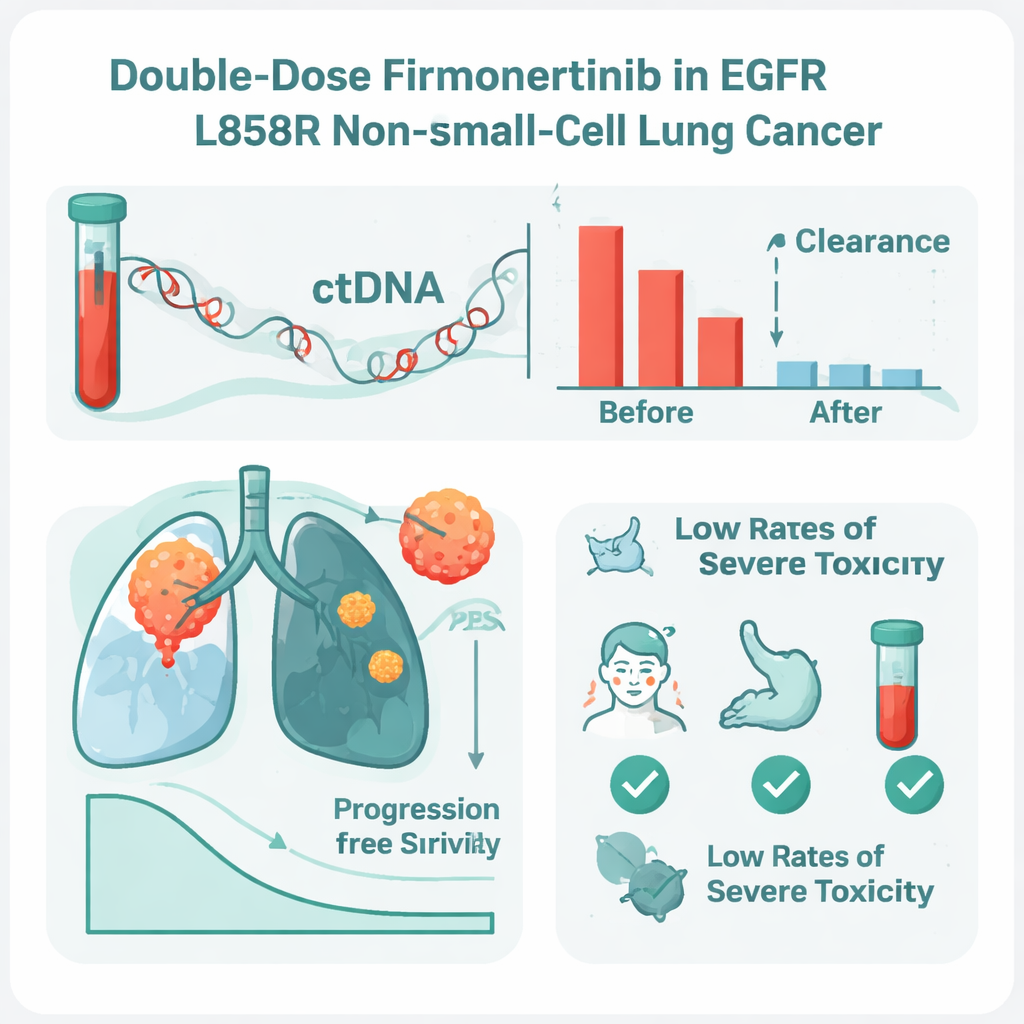
What blood tests revealed about early response Figure 2.
The team also explored a blood‑based marker called circulating tumor DNA (ctDNA)—tiny fragments of genetic material shed by cancer cells into the bloodstream. In 28 patients with suitable samples, ctDNA was present in most before starting treatment but dropped sharply after two cycles of the higher‑dose drug. Patients whose ctDNA became undetectable at this early time point tended to stay progression‑free roughly twice as long as those whose ctDNA remained positive. In some cases, the ctDNA signal disappeared before CT scans showed clear shrinkage, hinting that this blood test could serve as an early warning that treatment is working or, conversely, that stronger measures may be needed.
Side effects and overall safety
Despite the doubled dose, firmonertinib was generally well tolerated. About nine in ten patients reported some treatment‑related issue, but nearly all were mild problems such as low white blood cell counts, loose stools, small changes in blood tests, skin rash, or itchiness. Only two patients (around 6%) had severe side effects, and none needed to stop the drug permanently or reduce the dose because of treatment‑related problems. No serious lung inflammation was seen, a rare but feared complication of EGFR‑targeted drugs. A few patients had temporary treatment pauses, but overall the regimen proved practical for long‑term daily use.
What this means for patients and what comes next
For people with advanced lung cancer driven by the L858R EGFR change, doubling the dose of firmonertinib appears to offer strong, lasting control of the disease with manageable side effects, approaching the benefits seen with more complex drug combinations but with the simplicity of a single daily pill. The study was small and did not directly compare this strategy to other standard treatments, so larger randomized trials are needed to confirm whether the higher dose truly improves survival. If future studies agree, double‑dose firmonertinib, guided by simple blood tests that track tumor DNA, could become an appealing first‑line option for patients who want to avoid chemotherapy while still aiming for long‑lasting control.
Citation: Shen, B., Wang, C., Zhang, L. et al. Double-dose firmonertinib as first-line treatment in patients with locally advanced or metastatic non-small-cell lung cancer harboring EGFR L858R mutation: a prospective, multicenter, phase II study (FIRM).
Nat Commun17, 1840 (2026). https://doi.org/10.1038/s41467-026-68554-6