Clear Sky Science · en
Low intensity vibration with zoledronate reduces musculoskeletal weakness and adiposity in estrogen deprived female mice
A Gentle Way to Protect Bones and Muscles
Many women with hormone-sensitive breast cancer rely on drugs that shut down estrogen, a hormone that can feed tumors. While lifesaving, these treatments often thin bones, weaken muscles, and increase body fat, raising the risk of fractures and frailty. This study in mice explores whether a very gentle, whole-body vibration—something far milder than exercise—combined with a standard bone drug can protect the skeleton and muscles during intense estrogen deprivation.
When Cancer Therapy Drains Hormones
Estrogen helps keep bones strong, muscles functioning, and fat in check. Aromatase inhibitors, a common breast cancer therapy, deliberately strip away estrogen to starve tumors. In doing so, they speed up bone breakdown, shrink muscle quality, and encourage fat buildup in places like the belly and bone marrow. The research team recreated this extreme hormone loss in female mice by removing their ovaries and blocking residual estrogen production, mimicking high-risk human patients on long-term aromatase inhibitor therapy.
Testing a “Passive Exercise” Signal
To see if subtle mechanical signals could counter these side effects, the scientists exposed some estrogen-deprived mice to daily low-intensity vibration (LIV)—a high-frequency, low-force wobble delivered through a platform the animals simply stood on. In young, still-growing mice, this non-strenuous stimulus was given once a day for many weeks and compared with standard care alone. The results were striking: treated mice developed denser vertebral bones with better internal connectivity, more bone-forming cells, and fewer bone-resorbing cells. Their muscles were leaner and stronger, with larger fibers and better grip strength, while whole-body fat and fat pads around the organs stayed lower. Blood tests also showed healthier patterns of fat-related metabolites, hinting at improved metabolism. 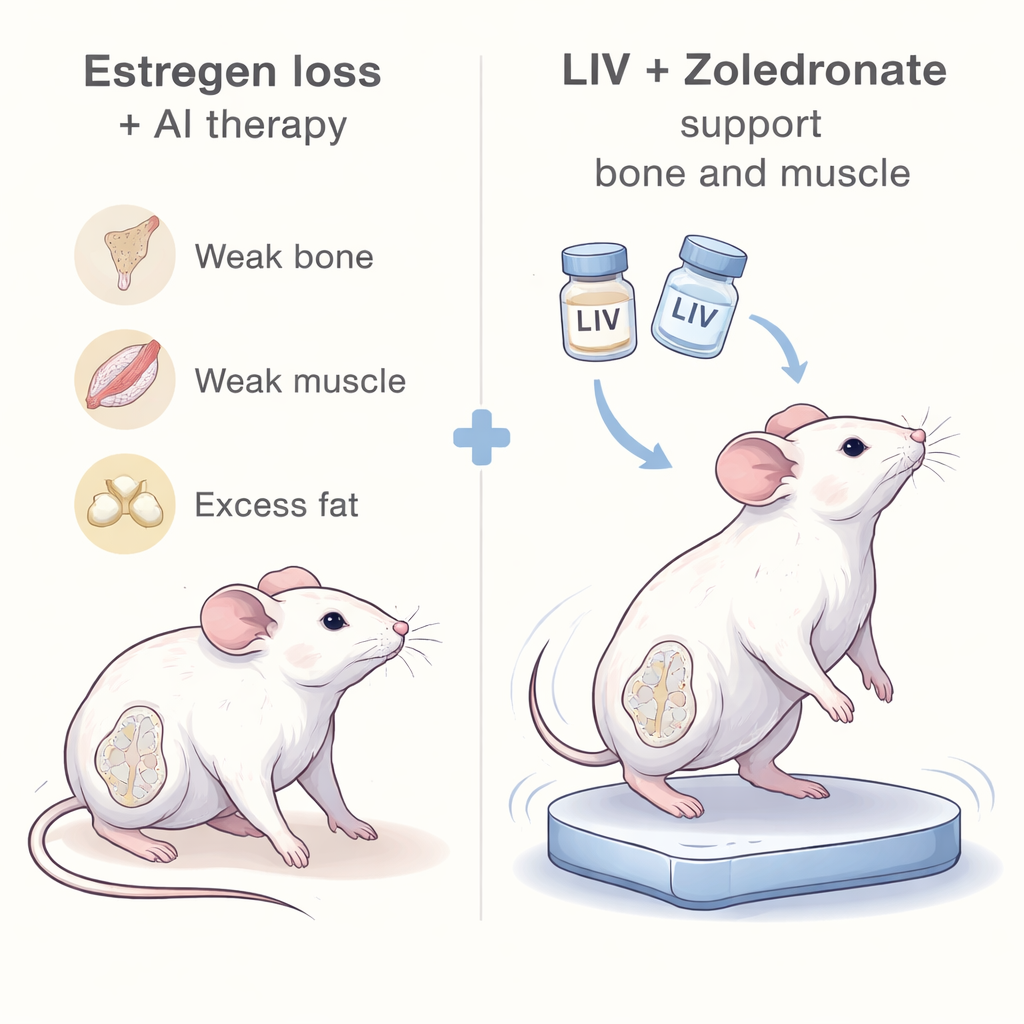
Adding a Bone Drug in Older Skeletons
Because many breast cancer patients are older, the team next examined skeletally mature mice. Here, bone responds less vigorously to mechanical cues alone. The mice again underwent profound estrogen loss, but now some groups received weekly zoledronic acid, a bisphosphonate drug already used in clinics to slow bone breakdown. Others received LIV, and a final group got both. While zoledronic acid by itself improved bone mineral density and strength, pairing it with LIV did even more. Spinal and femur bones showed greater internal bone volume, thicker outer walls, and better resistance to fracture than with the drug alone. Muscle function, measured by grip tests and fatigue resistance in isolated muscles, also benefitted from LIV, particularly when combined with zoledronic acid.
Shifting the Balance Away from Fat
Estrogen loss pushed fat into several depots, including fatty tissue within the bone marrow—a change linked to poor bone health and inflammation. The researchers found that LIV, with or without zoledronic acid, tended to slow weight gain, reduce body and marrow fat in younger mice, and blunt some of the fat expansion in older mice. They also measured small fat-derived molecules called acylcarnitines in the blood. Several of these rose sharply with estrogen deprivation, signaling stressed metabolism, but dropped again when mice received daily vibration. These metabolic changes suggest that gentle mechanical loading not only helps bones and muscles but may also steer stem cells away from becoming fat cells and toward rebuilding bone.
What This Could Mean for Patients
To a layperson, the takeaway is that a carefully tuned “micro-exercise” delivered as low-intensity vibration may help offset some of the toll that estrogen-blocking cancer treatments take on the body. In this mouse model, LIV preserved bone density, supported muscle strength, and curbed fat buildup, especially when used together with the established bone drug zoledronic acid. While more work is needed to confirm safety, dosing, and effectiveness in people, the study suggests that combining gentle mechanical stimulation with standard medications could someday offer women undergoing breast cancer therapy a way to stay stronger, more mobile, and less prone to fractures—without requiring strenuous exercise they may be too fatigued to perform. 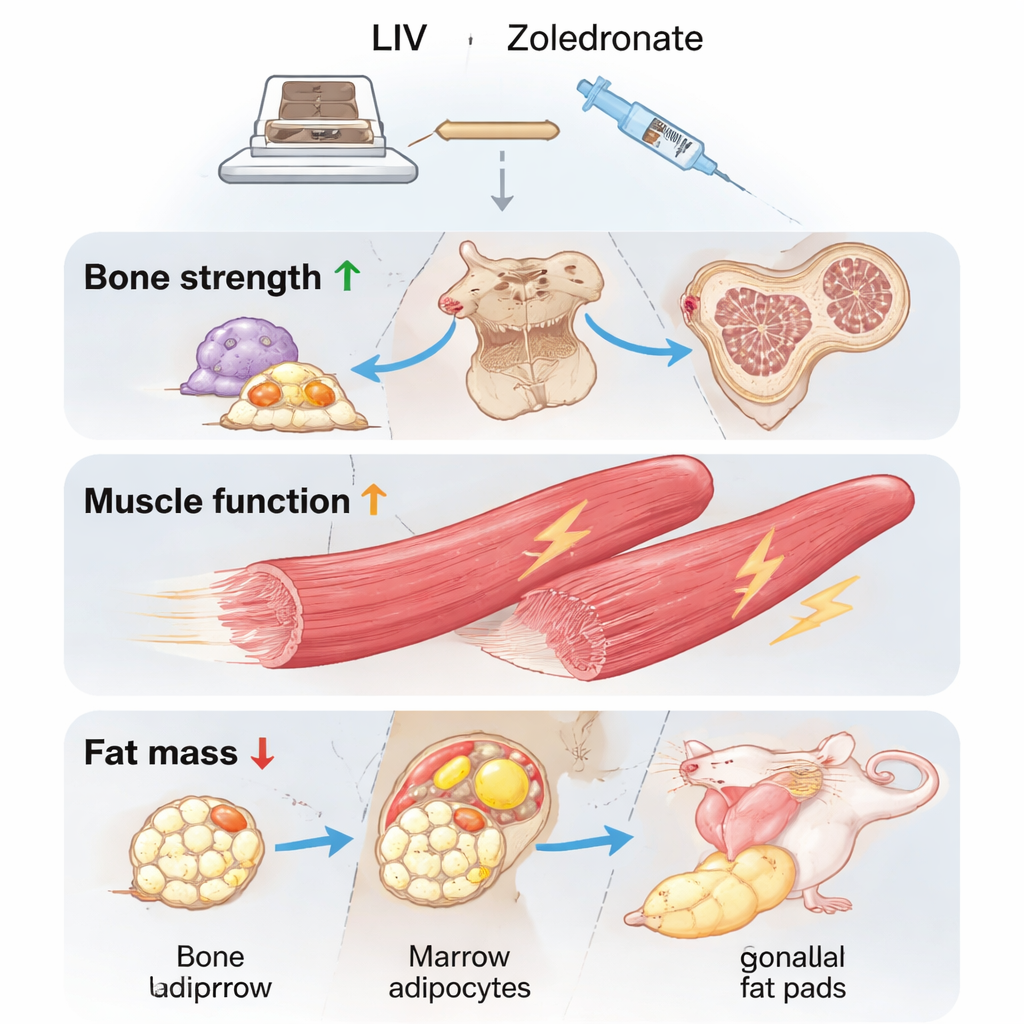
Citation: Pagnotti, G.M., Trivedi, T., Wright, L.E. et al. Low intensity vibration with zoledronate reduces musculoskeletal weakness and adiposity in estrogen deprived female mice. Nat Commun 17, 1808 (2026). https://doi.org/10.1038/s41467-026-68522-0
Keywords: breast cancer, bone density, low-intensity vibration, zoledronic acid, estrogen deprivation