Clear Sky Science · en
Identification of modifiable plasma protein markers of cardiometabolic risk in children and adolescents with obesity
Why children’s blood can warn about future heart and liver problems
Pediatric obesity is not only about extra weight—it quietly stresses the heart, blood vessels, and liver long before any symptoms appear. This study asked a simple but powerful question: can a simple blood test in children and teenagers reveal early warning signals of future cardiometabolic disease, and show whether lifestyle treatment is really helping the body recover?
Looking inside blood to read the body’s early signals
To answer this, researchers studied more than 4,000 Danish children and adolescents, comparing those with obesity to those with normal weight. Instead of focusing only on standard markers like cholesterol or blood sugar, they used a sensitive method to measure 149 different proteins in blood plasma. Many of these proteins are involved in inflammation or the health of blood vessels and organs. By linking protein levels to detailed measures of body fat, liver fat, blood pressure, blood sugar, and blood fats, the team built a kind of molecular “map” of how obesity in youth affects the body’s internal chemistry. 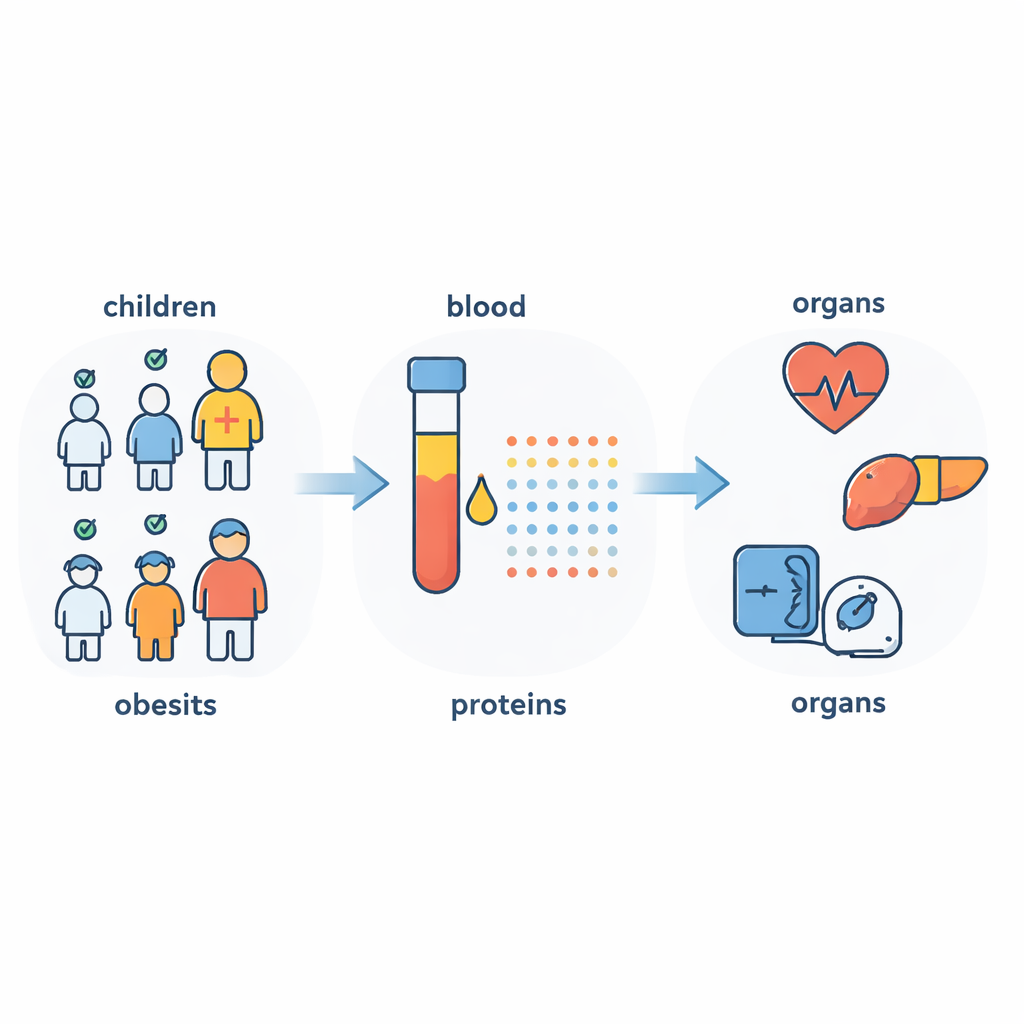
Patterns that differ by age, sex, and weight
The study showed that most of the measured proteins changed with age, and over half were different between boys and girls, even after accounting for body size. Puberty also shifted many protein levels. On top of this, obesity itself was linked to large changes in more than 80% of the proteins. Children with obesity had higher levels of proteins tied to inflammation and stress, and lower levels of others that are usually seen in healthier states. When the researchers compared these findings with data from over 45,000 adults in the UK Biobank, they found that many of the same obesity-related protein changes were already present in childhood, suggesting that harmful patterns emerge early in life.
Proteins that flag liver disease and broader metabolic risk
A major concern in pediatric obesity is steatotic liver disease, where fat builds up in the liver and can later progress to serious damage. By using machine learning, the team identified a three-protein combination—CDCP1, FGF21, and HAOX1—that was especially good at detecting children with too much liver fat. When this protein trio was added to standard liver enzyme tests, the ability to identify steatotic liver disease improved meaningfully. Across the whole dataset, many proteins were also linked to high blood fats, insulin resistance, high blood pressure, and markers of inflammation, even after accounting for body mass index. This suggests that these blood proteins are not just bystanders; they may help drive or reflect the development of cardiometabolic problems.
How weight loss treatment changes the protein signals
The researchers then followed 184 children with obesity who took part in a one-year, family-centered lifestyle program focused on diet, activity, and everyday habits. Most reduced their degree of obesity and improved their cholesterol, blood sugar, and blood pressure. Alongside these changes, 14 inflammation-related proteins fell, including CDCP1 and FGF21, and shifts in several proteins tracked with better liver tests and improved insulin sensitivity. Statistical analyses suggested that some of these proteins partly “mediate” the link between weight loss and better metabolic health—that is, as weight goes down, the proteins change, and those protein changes are closely tied to organ recovery. 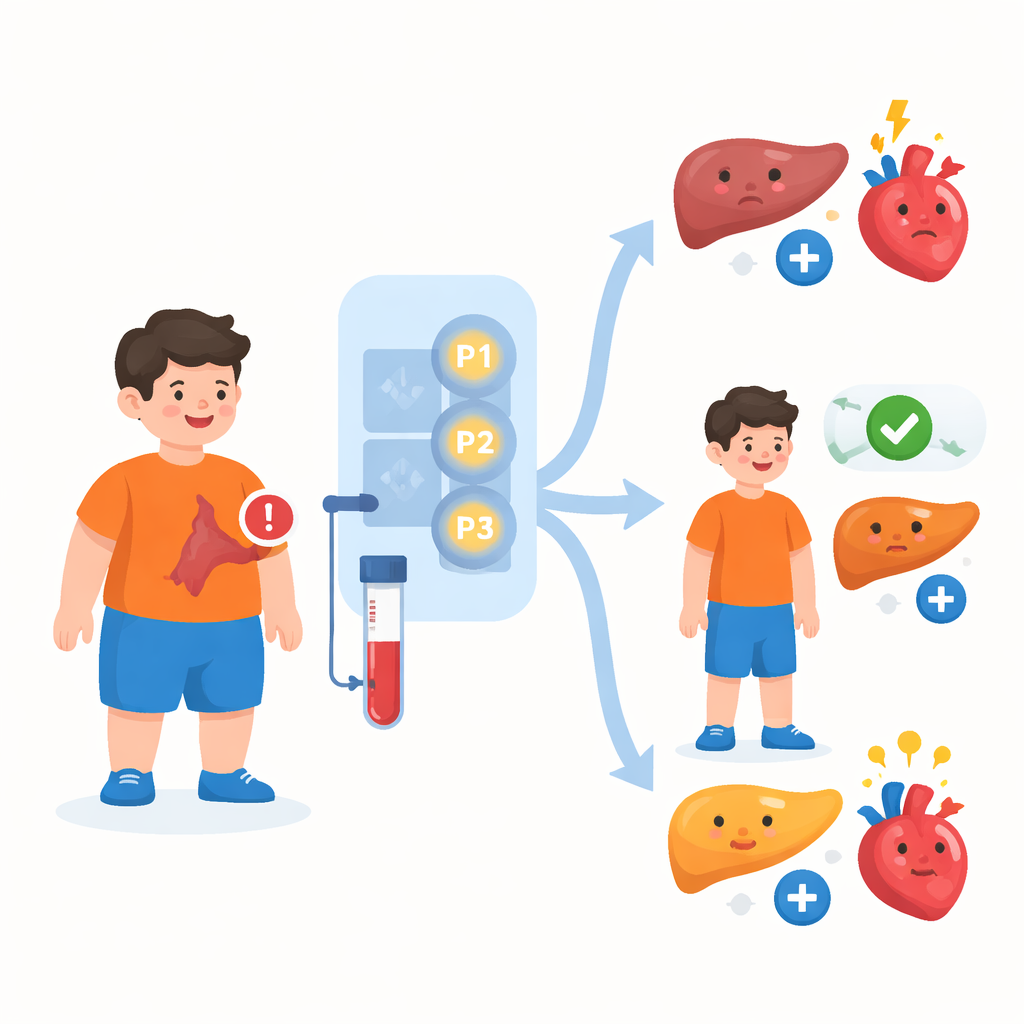
What this means for children, families, and doctors
For a layperson, the main message is that a simple blood sample can reveal much more than today’s routine tests about how a child’s body is coping with extra weight. The identified protein patterns help explain why some children with obesity develop serious heart and liver risks while others are less affected, and they show that lifestyle treatment can dial down harmful inflammatory signals. In the future, panels of proteins like CDCP1, FGF21, and HAOX1 could help doctors detect liver disease earlier, personalize treatment, and monitor whether an intervention is truly improving a child’s underlying biology—not just the number on the scale.
Citation: Stinson, S.E., Huang, Y., Thielemann, R. et al. Identification of modifiable plasma protein markers of cardiometabolic risk in children and adolescents with obesity. Nat Commun 17, 1718 (2026). https://doi.org/10.1038/s41467-026-68415-2
Keywords: childhood obesity, cardiometabolic risk, liver fat, blood biomarkers, inflammation