Clear Sky Science · en
The glymphatic system clears amyloid beta and tau from brain to plasma in humans
Why a Good Night’s Sleep Matters for Brain Cleaning
Many people have heard that sleep is important for brain health, especially when it comes to Alzheimer’s disease, but it has been unclear exactly why. This study looks at a hidden “plumbing” system in the brain, called the glymphatic system, that flushes out waste during sleep. The researchers asked a simple but profound question: in real, living humans, does this system actually move Alzheimer’s-related proteins out of the brain and into the bloodstream while we sleep, and does sleep loss interfere with that process?
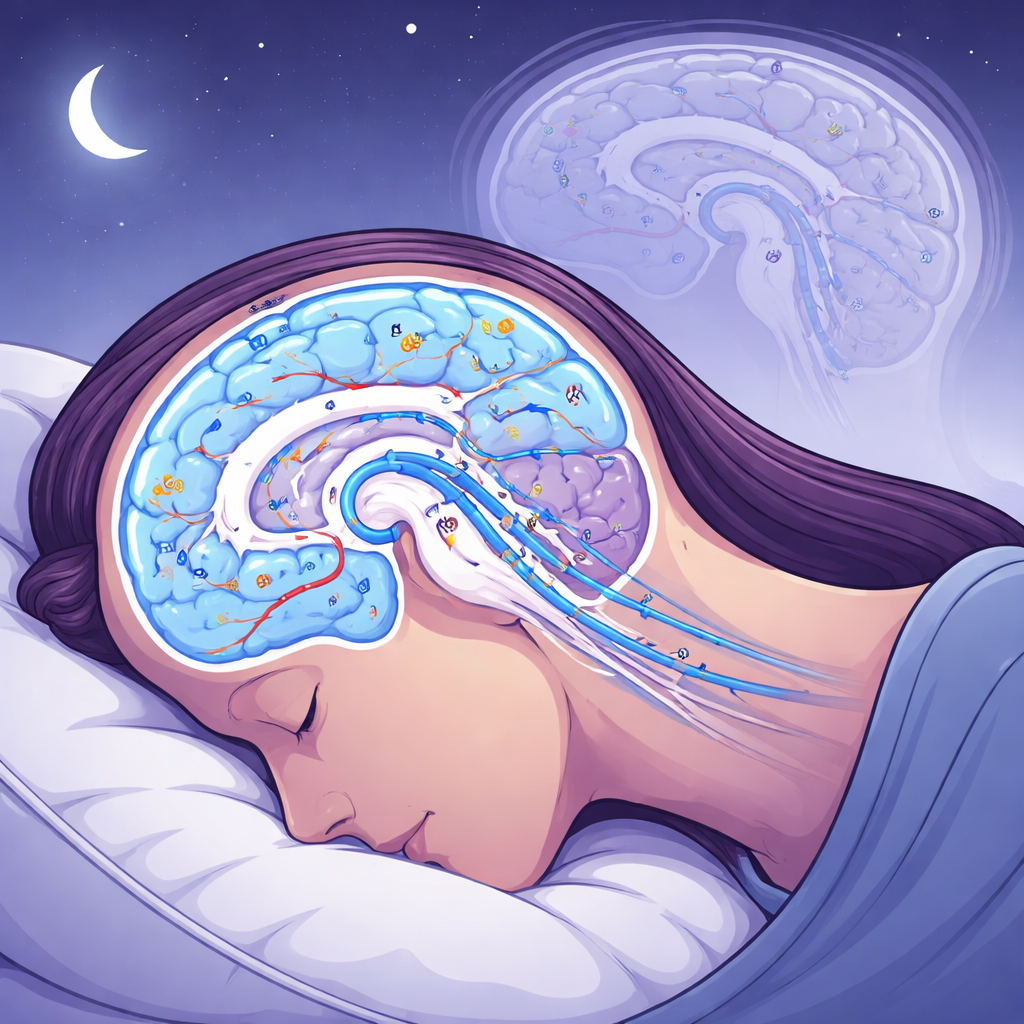
A Nighttime Rinse Cycle for the Brain
The glymphatic system is a network of fluid-filled channels that surround blood vessels in the brain. With each heartbeat and slow vascular pulse, clear fluid called cerebrospinal fluid is driven into brain tissue, mixes with the fluid between cells, and carries away waste. Animal studies showed that this “rinse cycle” switches into a higher gear during deep, non-dream sleep and slows down when animals are kept awake. Those studies also linked poor glymphatic flow to a buildup of amyloid beta and tau, two proteins that form the plaques and tangles seen in Alzheimer’s disease. Until now, however, scientists did not know whether the same kind of sleep-dependent flushing of amyloid and tau occurs in everyday human sleep.
Putting Human Sleep and Brain Plumbing to the Test
The authors designed a tightly controlled experiment involving middle-aged and older adults without dementia. Each person spent two different nights in the lab: one with a normal opportunity to sleep and one where they were kept awake, in random order. Blood samples were taken in the evening and again the next morning, and highly sensitive tests measured several forms of amyloid beta and tau in the plasma. At the same time, participants wore an investigational in-ear device that recorded brain waves, heart signals, and tiny changes in electrical resistance in brain tissue. From these signals, the team could infer how much time was spent in different sleep stages and how strongly the glymphatic system was likely moving fluid through the brain.
Modeling How Waste Moves from Brain to Blood
To interpret the blood measurements, the researchers built a detailed mathematical model of how amyloid and tau are made, move between brain cells and surrounding fluid, pass into the cerebrospinal fluid, and finally reach the blood where they can be measured. The model distinguished two key processes: how much of these proteins are released by active brain cells, and how efficiently the glymphatic system clears them out. Both higher production and better clearance can raise levels in blood, but they leave different fingerprints on the relative amounts of the more sticky versus less sticky forms of amyloid and tau. By comparing model predictions with real overnight changes in blood, the team could infer whether sleep was mainly changing production, clearance, or both.
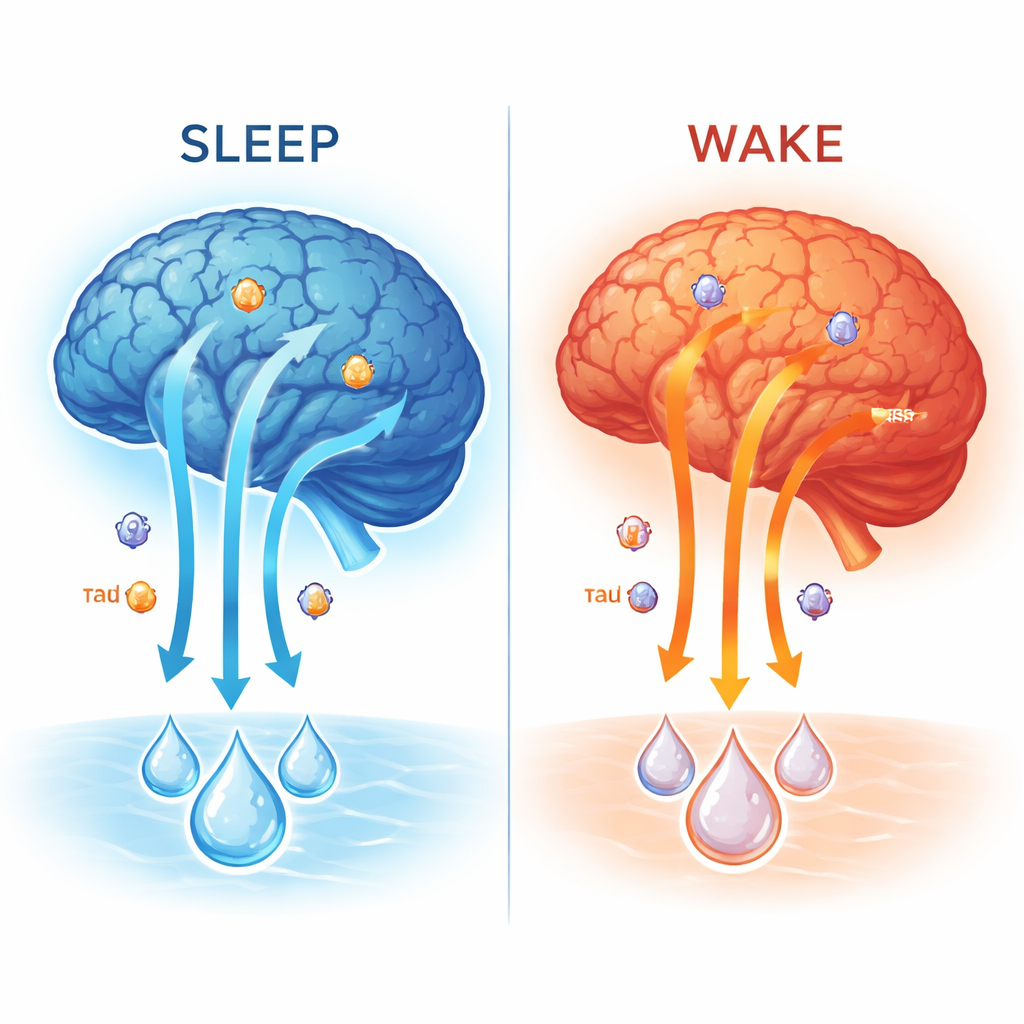
What Happens in the Brain During Sleep Versus Sleepless Nights
During normal sleep, especially during non-REM deep sleep, people with stronger signatures of glymphatic activity—lower resistance to fluid flow in brain tissue, more elastic blood vessels, and higher slow-wave brain activity—tended to show higher morning levels of Alzheimer’s-related proteins in their blood. The pattern of which forms increased matched what the model predicted when clearance, not production, was enhanced: more of the aggregation-prone forms like amyloid beta 42 and phosphorylated tau were washed from the brain into the plasma. In contrast, during sleep deprivation, signals of heightened brain activity were linked to changes best explained by increased production of these proteins, with less evidence that the glymphatic “drain” was helping to clear them. Across conditions, the more time people spent in deep non-REM sleep, the more effectively amyloid and tau appeared to be cleared overnight.
What This Means for Protecting the Aging Brain
For a layperson, the main takeaway is that human sleep does appear to turn on a brain cleaning system that helps move Alzheimer’s-related proteins from the brain into the bloodstream, where they can be broken down or removed. When that sleep-dependent flushing is strong—especially when deep sleep is plentiful and the brain’s resistance to fluid flow is low—amyloid and tau are cleared more effectively. When people stay awake through the night, the balance shifts: brain cells keep producing these proteins, but the plumbing that should be carrying them away is less active. Over a single night, these changes are subtle, but repeated over years they may help explain why chronic poor sleep raises Alzheimer’s risk. The study suggests that supporting healthy sleep and, in the future, directly enhancing glymphatic function could become important strategies to slow or prevent the progression of Alzheimer’s disease.
Citation: Dagum, P., Elbert, D.L., Giovangrandi, L. et al. The glymphatic system clears amyloid beta and tau from brain to plasma in humans. Nat Commun 17, 715 (2026). https://doi.org/10.1038/s41467-026-68374-8
Keywords: glymphatic system, sleep and Alzheimer’s, amyloid beta, tau protein, brain waste clearance