Clear Sky Science · en
Sero-genomic evidence for occult mpox exposure in healthy Nigerian adults
Why hidden mpox infections matter
Most people think of mpox (formerly called monkeypox) as a rare disease that always causes obvious rashes and sickness. This study shows that, in parts of Nigeria, the virus has likely been slipping through communities far more quietly. By looking at both blood samples and virus genetic data, the researchers reveal that many older adults still carry protection from long-ago smallpox shots, while some younger adults appear to have been exposed to mpox without ever knowing it. These findings help explain why mpox spreads slowly yet stubbornly, and how we might better target vaccines and surveillance.
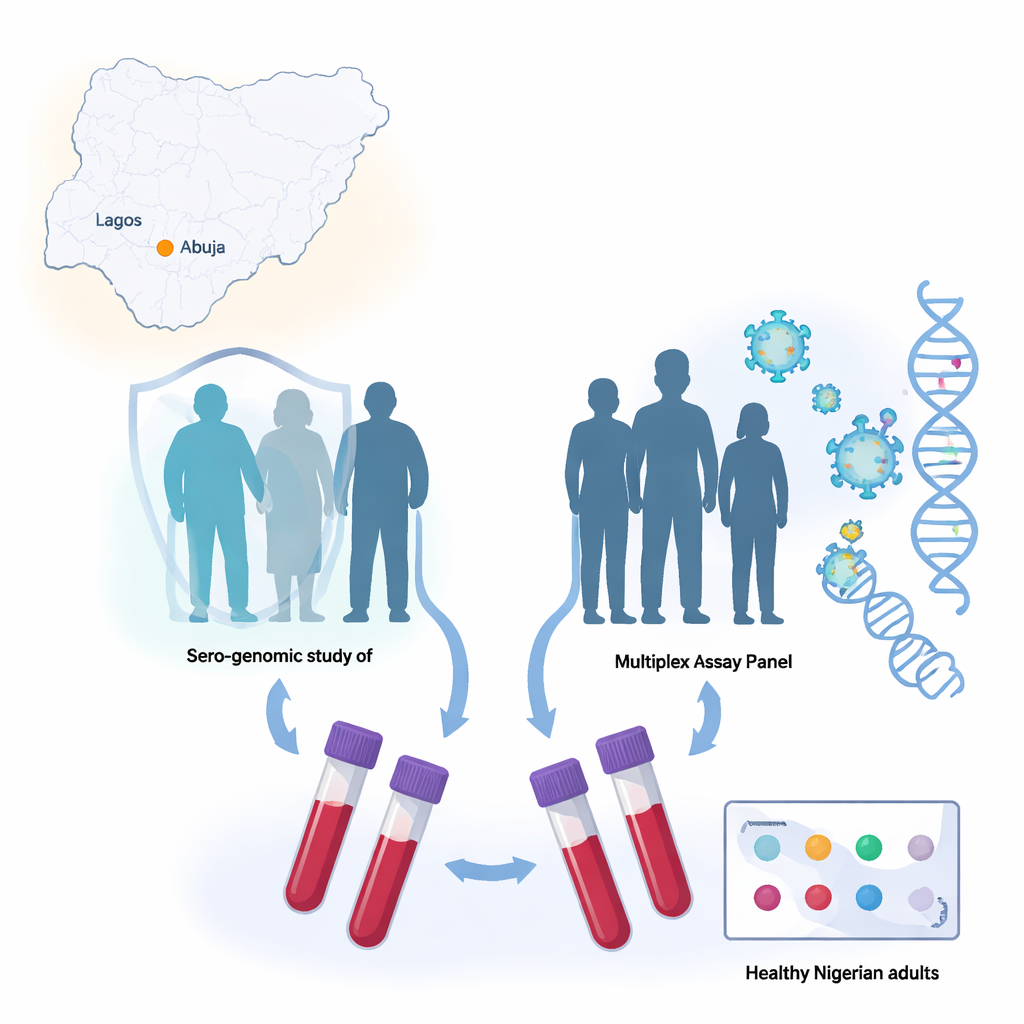
Two groups, one question
The team studied 176 healthy Nigerian adults who were originally enrolled in COVID-19 vaccine studies: healthcare workers in Lagos in 2021 and community volunteers in Abuja in 2023. Before they received their COVID-19 shots, each person gave blood samples, and most gave a second sample about nine months later. The key question was simple: could the scientists see signs of past or recent mpox contact in people who had never been diagnosed with the disease?
Reading immune memories in blood
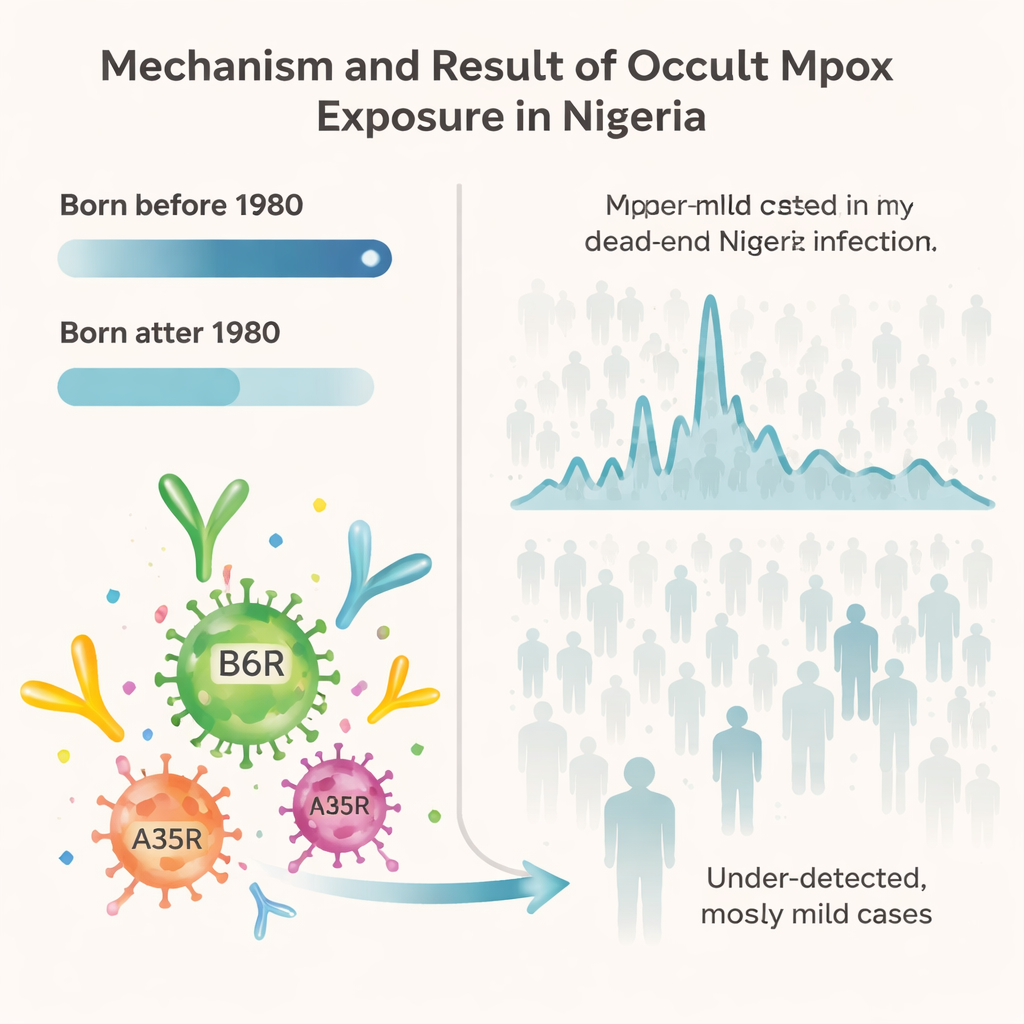
To answer that, the researchers used a laboratory method that can measure antibodies against six different pieces of the mpox virus at once. Antibodies are proteins our bodies make after infections or vaccines, and they often linger for decades as a kind of immune memory. The team defined a person as clearly mpox-exposed if their blood reacted to at least four of the six viral targets. At the first timepoint, 24 out of 176 people (about 14%) met this strict standard. Most of them were born before 1980, when smallpox vaccination campaigns ended worldwide. Their antibody levels were not only higher but also broader, recognizing more parts of the virus—strong evidence that the effects of those old smallpox shots are still present.
Younger adults and quiet exposure
However, the story did not end with older adults. A smaller number of people born after 1980, who would not have received routine smallpox vaccination, also showed convincing antibody patterns suggestive of mpox or related poxvirus exposure. Among the 153 people with follow-up samples, five showed a sharp rise—at least a doubling—in their overall antibody signal and in at least four of the six viral targets over nine months, despite reporting no mpox-like illness. Certain viral components, especially one called B6R, showed particularly strong boosts. This pattern points to recent, mostly unnoticed encounters with the virus rather than full-blown disease, suggesting that “silent” or very mild infections are happening in the community.
What virus genomes reveal about spread
To place these immune clues in context, the researchers also analyzed 105 mpox virus genomes from Nigeria collected over several years, along with national case counts. The genetic data and case patterns show that the main mpox lineage in Nigeria has been spreading slowly since around 2015, with many infections leading to dead ends instead of large, sustained chains of transmission. The effective reproduction number generally hovered around one—just enough to keep the virus going but not enough for explosive growth. This stop–start pattern fits well with a population where many older adults still have partial protection from past smallpox vaccination, and where younger adults can be infected but often only mildly, meaning many cases are missed.
What this means for public health
In plain terms, the study suggests that older Nigerians still benefit from the immune “shadow” of smallpox vaccines given decades ago, which helps limit how far mpox can spread. At the same time, younger adults, who lack that protection, show signs of quiet exposure that rarely shows up in clinics or official statistics. The combination of antibody testing and virus genetics paints a picture of a slow-burning epidemic: mpox is not exploding, but it is not going away either. Recognizing this hidden layer of infection can help countries design smarter surveillance systems and more focused vaccination strategies, especially using key viral markers like B6R, A35R, and M1R, to spot exposure early and protect those most at risk.
Citation: Abdullahi, A., Omah, I., Kassanjee, R. et al. Sero-genomic evidence for occult mpox exposure in healthy Nigerian adults. Nat Commun 17, 482 (2026). https://doi.org/10.1038/s41467-026-68335-1
Keywords: mpox, smallpox immunity, Nigeria, asymptomatic infection, sero-genomics