Clear Sky Science · en
The Knowledge Connector decision support system for multiomics-based precision oncology
Personalizing Cancer Care
Cancer treatment is increasingly moving away from one-size-fits-all approaches toward therapies tailored to the unique biology of each patient’s tumor. But modern tests can measure thousands of genetic and molecular changes at once, creating more information than any human team can reliably interpret on its own. This article describes a software system called the Knowledge Connector that helps doctors turn this flood of data into clear, consistent treatment recommendations for individual patients.
Why Cancer Data Are So Hard to Use
Today’s cancer centers can sequence whole genomes, analyze RNA activity, and examine chemical tags on DNA, producing a multilayered “molecular profile” of each tumor. These profiles can reveal clues about how aggressive a cancer is, which drugs it might respond to, and whether a patient could join a clinical trial. However, these tests generate long lists of mutations, gene fusions, and other changes that must be interpreted in light of ever‑growing medical literature and many online knowledge bases. Molecular tumor boards—meetings where oncologists, geneticists, bioinformaticians, and other experts discuss individual patients—struggle to keep up with this complexity and to make decisions in a standardized, reproducible way.
A Digital Assistant for Tumor Boards
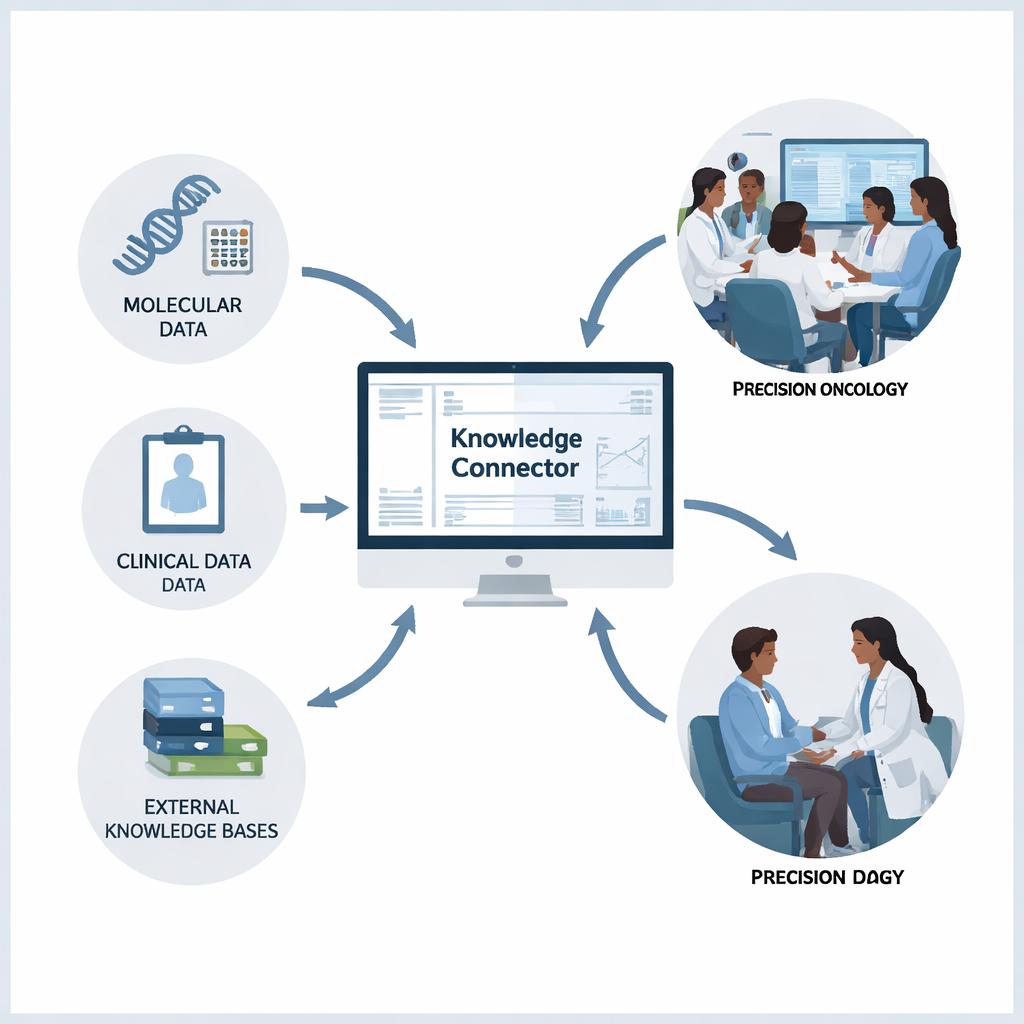
The Knowledge Connector is a web-based decision support system designed to sit at the heart of this process. It securely combines a patient’s clinical information (such as diagnosis and prior treatments) with detailed molecular data from multiple testing methods. Through a single interface, users can switch between views that show simple gene changes, more complex patterns like genomic instability, and curated treatment suggestions. The system automatically pulls in information from major cancer knowledge bases and scientific publications, then presents it in an organized, human-readable format for tumor board discussion and documentation.
Building Reusable Building Blocks of Knowledge
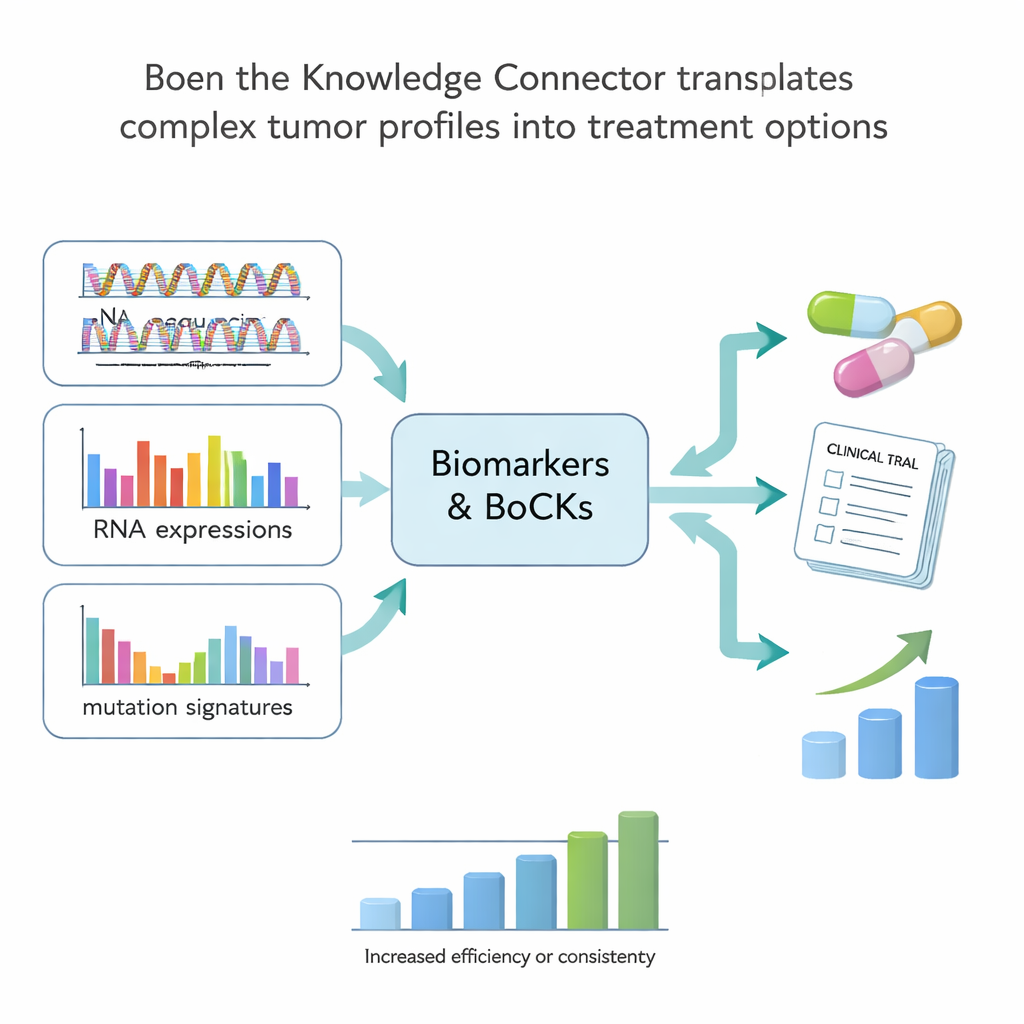
A key innovation of the system is the concept of “blocks of clinical knowledge,” or BoCKs. Each BoCK links a specific biomarker—such as a mutation, gene fusion, or expression pattern—to evidence about what it means for diagnosis, prognosis, drug response, or clinical trial eligibility in particular cancer types. Instead of searching the literature from scratch for every new patient, curators can reuse existing BoCKs that have already been vetted. Over time, these blocks form a shared, cross-institutional knowledge base called BoCKbase. This structure also supports more nuanced reasoning, such as applying evidence from similar tumor types or related drugs when direct data are limited.
From Complex Profiles to Actionable Options
The authors demonstrate the system with real cases from a large German precision oncology program. In one example, the software highlighted subtle DNA patterns indicating defective DNA repair, pointing doctors toward a trial of a drug class (PARP inhibitors) not usually considered for that cancer type. In another, it integrated genomic and RNA data to clarify the effect of unusual gene fusions involving the BRAF gene, supporting recommendations for targeted therapies. The platform also helps identify patients whose tumors strongly overexpress certain genes, making them candidates for experimental cell therapies in clinical trials. Across hundreds of cases, the Knowledge Connector supported multiple treatment or trial recommendations for most patients while steadily increasing reuse of existing BoCKs, a sign of growing efficiency.
What This Means for Patients
For patients, the system does not replace doctors but acts as a powerful assistant, helping expert teams make better-informed, faster, and more consistent decisions based on the full molecular picture of a tumor. By organizing complex data into clear, evidence-linked options, the Knowledge Connector aims to make personalized cancer treatment more scalable and accessible, so that advanced genomic testing can translate into real, practical benefits for a larger number of people with cancer.
Citation: Hübschmann, D., Kreutzfeldt, S., Roth, B. et al. The Knowledge Connector decision support system for multiomics-based precision oncology. Nat Commun 17, 742 (2026). https://doi.org/10.1038/s41467-026-68333-3
Keywords: precision oncology, molecular tumor board, clinical decision support, cancer biomarkers, multiomics