Clear Sky Science · en
Systems acclimation to osmotic stress in zygnematophyte cells
How Early Land-Plant Relatives Handle Drying Out
When plants first moved from water to land, they faced a constant threat: drying out. This study looks at two modern green algae that are the closest living relatives of land plants and asks a simple question with big implications: how do their cells cope when water suddenly becomes scarce or salty? By following their responses in fine molecular detail, the researchers reveal a set of survival tricks that likely helped the ancestors of today’s forests and crops colonize land.
Two Tiny Algae Standing In for Ancient Pioneers
The team studied two zygnematophyte algae: Mesotaenium, which lives as single cells from a lake that dries each year, and Zygnema, which forms filaments in a meadow ditch. These algae are the closest algal sisters of land plants, making them powerful stand-ins for the earliest plant pioneers. The researchers exposed both species to two types of osmotic stress: salty water (sodium chloride, adding both salt and water loss stress) and a concentrated sugar alcohol solution (mannitol, causing water to leave the cells without adding extra salt). Over 25 hours, they monitored photosynthesis, water content, cell shape, and a wide array of internal molecules, building a time-resolved picture of how the cells struggle, adjust, and ultimately acclimate. 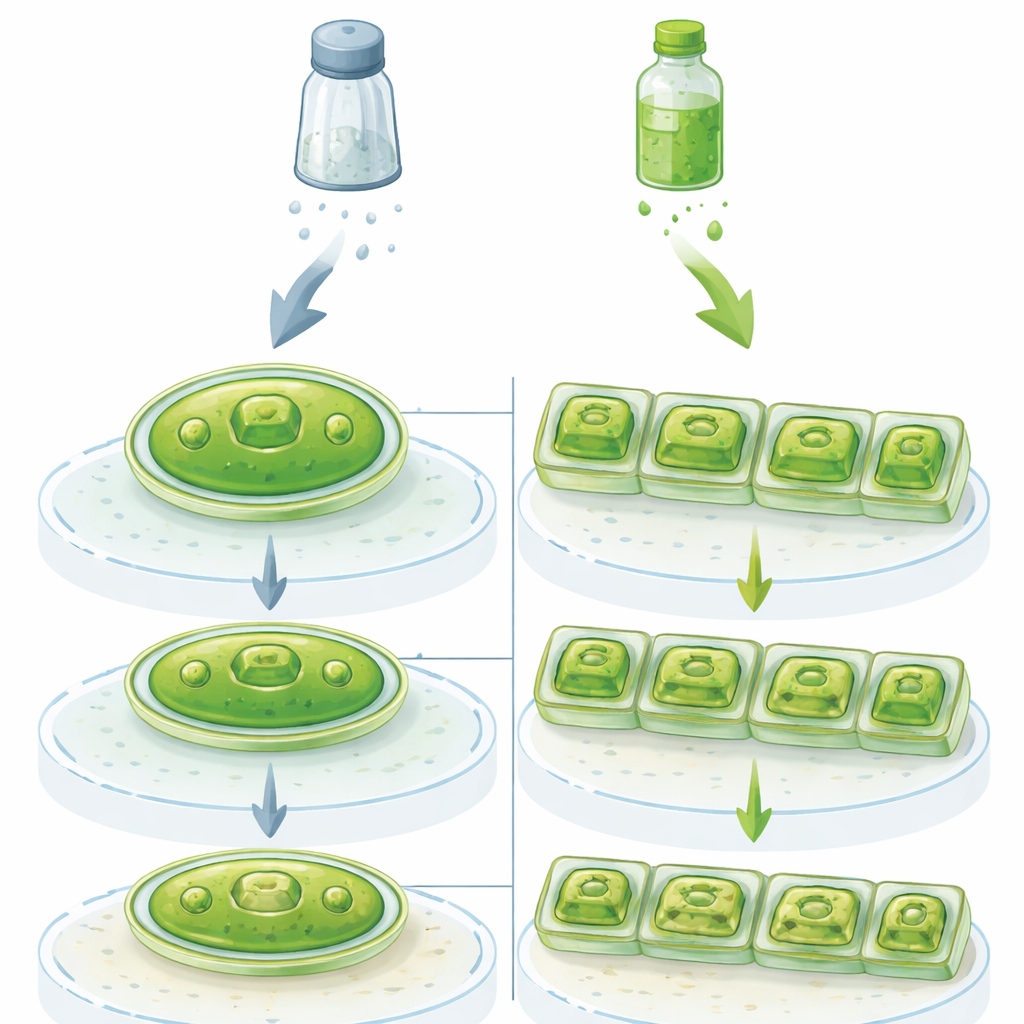
What Happens to the Cells Under Stress
When the surrounding solution became more concentrated, water moved out of the algal cells. This reduced their internal pressure, leading to classic signs of stress: photosynthesis efficiency dropped, cells lost water, and the living contents of the cell pulled back from the rigid wall in a process called plasmolysis. Under strong mannitol treatment, both algae showed shrunken interiors, distorted chloroplasts, and bent or broken filaments, yet they did not completely shut down photosynthesis. Over time, Zygnema tended to bounce back more quickly in salty conditions, while Mesotaenium mounted a slower but robust recovery, and even tolerated long-term salt exposure that severely damaged Zygnema filaments.
Inside the Cellular “Control Room”
To see how cells reprogram themselves, the authors combined three large-scale approaches: transcriptomics (which genes are turned on or off), proteomics (which proteins are present and in what amounts), and metabolomics (which small molecules such as sugars are produced). They collected hundreds of samples across time and treatments. Many thousands of genes changed their activity, with gene expression typically shifting within a few hours and protein levels following later. A shared set of “core responders” stood out in both algae. These included protective proteins that stabilize cell structures under stress, enzymes that remodel the cell wall, and pumps and channels that move water and ions across membranes. There were also contrasts: for example, one alga leaned more heavily on a family of small heat shock proteins, while the other adjusted components of its photosynthetic machinery instead.
Reinforcing the Wall and Managing Water
A major theme of the response was reinforcement and fine-tuning of the cell wall and internal water balance. The algae boosted enzymes that reshape wall‑linked carbohydrates, including xyloglucan-modifying enzymes found only in land plants and their closest algal relatives. They also adjusted complex surface glycoproteins known as arabinogalactan proteins, changing how these sugar-rich molecules are built and sometimes releasing them outside the cell, where they may help bind ions and buffer the wall. At the same time, the cells raised levels of water channels in the vacuole membrane and sugar-handling enzymes such as sucrose synthase, effectively stockpiling compatible solutes—benign dissolved molecules that help draw water back in without disrupting biochemistry. These combined changes appear to stiffen or reconfigure the wall while restoring internal pressure and limiting damage. 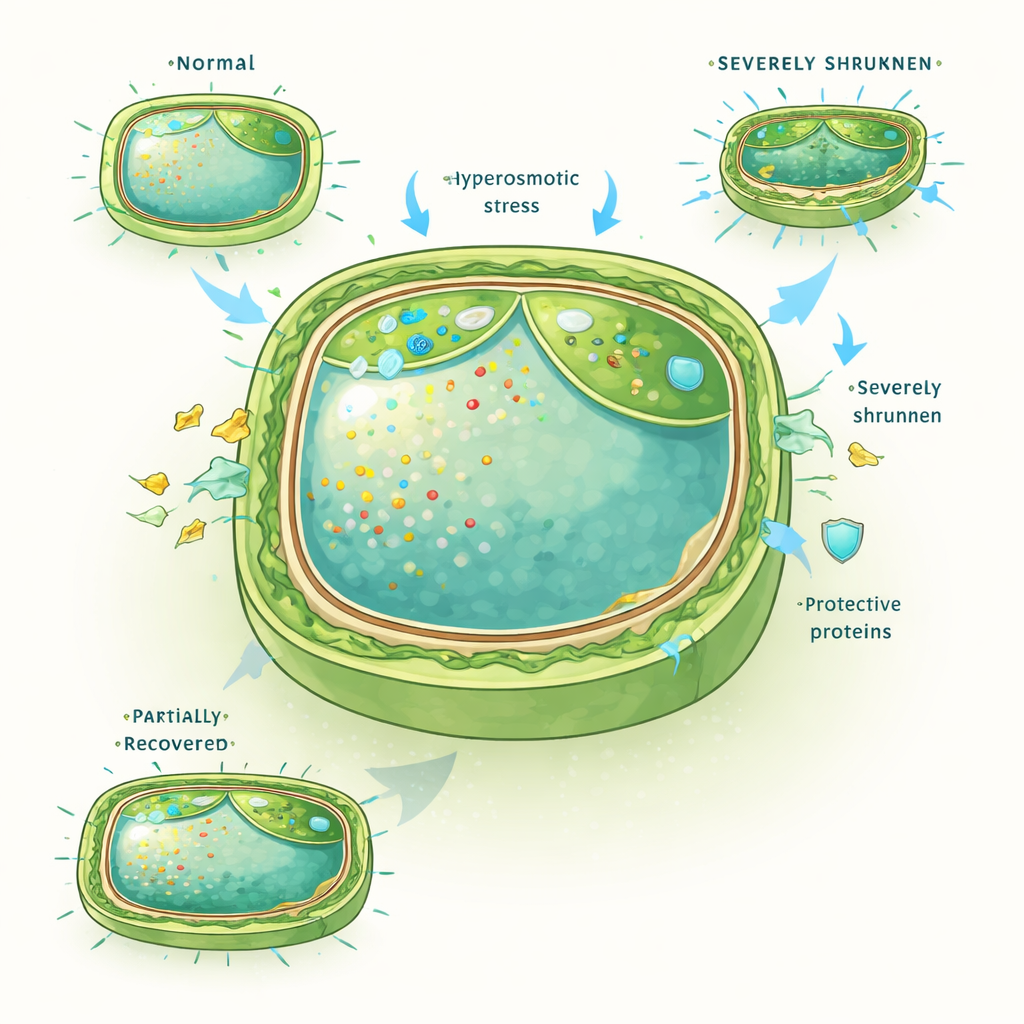
What This Means for the Story of Plants on Land
To a non-specialist, the key message is that these algae already possess a sophisticated “toolkit” for surviving when water is scarce or salty—one that looks strikingly similar to the stress responses of modern land plants. Instead of inventing entirely new systems, the first plants on land likely repurposed and refined strategies that had evolved earlier in their algal ancestors: managing water flow, shoring up the cell wall, re-routing sugars, and deploying protective proteins. This work shows that the cellular solutions to drying and salt stress are ancient, deeply shared, and were probably crucial stepping stones in the successful greening of Earth’s continents.
Citation: Zegers, J.M.S., Pfeifer, L., Darienko, T. et al. Systems acclimation to osmotic stress in zygnematophyte cells. Nat Commun 17, 755 (2026). https://doi.org/10.1038/s41467-026-68329-z
Keywords: osmotic stress, green algae, plant evolution, cell wall, drought tolerance