Clear Sky Science · en
Cholesterol-lowering effects of oats induced by microbially produced phenolic metabolites in metabolic syndrome: a randomized controlled trial
Why a bowl of oats matters for your heart
Many people have heard that oatmeal is good for cholesterol, but the reasons why have remained surprisingly murky. This study digs into that mystery in people with metabolic syndrome—a common cluster of belly fat, high blood pressure, abnormal blood fats, and impaired blood sugar. By tracking not just cholesterol but also gut microbes and hundreds of small molecules in blood and stool, the researchers show that naturally occurring chemicals produced when gut bacteria break down oats may be key players in lowering “bad” LDL cholesterol.
Two ways of eating oats put to the test
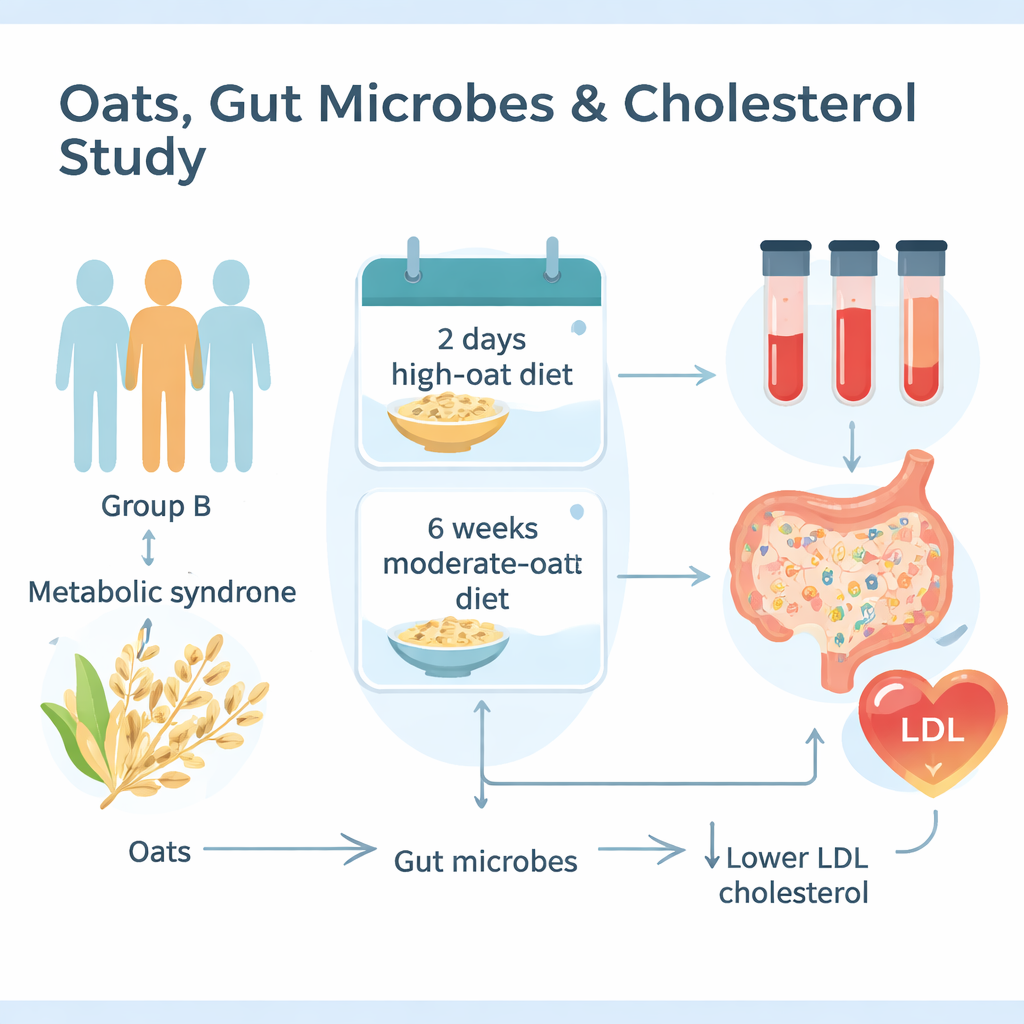
The team ran two randomized controlled trials in adults with metabolic syndrome. In the short, intensive trial, one group ate three simple oat-based meals a day for two days, while a control group ate carefully matched meals without oats. In the second trial, another set of volunteers added one oat-based meal a day to their usual Western-style diet for six weeks, while controls kept eating as usual but avoided oats. In both trials, researchers collected blood and stool, measured cholesterol and other risk factors, and profiled gut bacteria and thousands of metabolites—tiny chemicals that reflect how food is processed in the body and by microbes.
Oats quickly boosted plant-like compounds in the blood
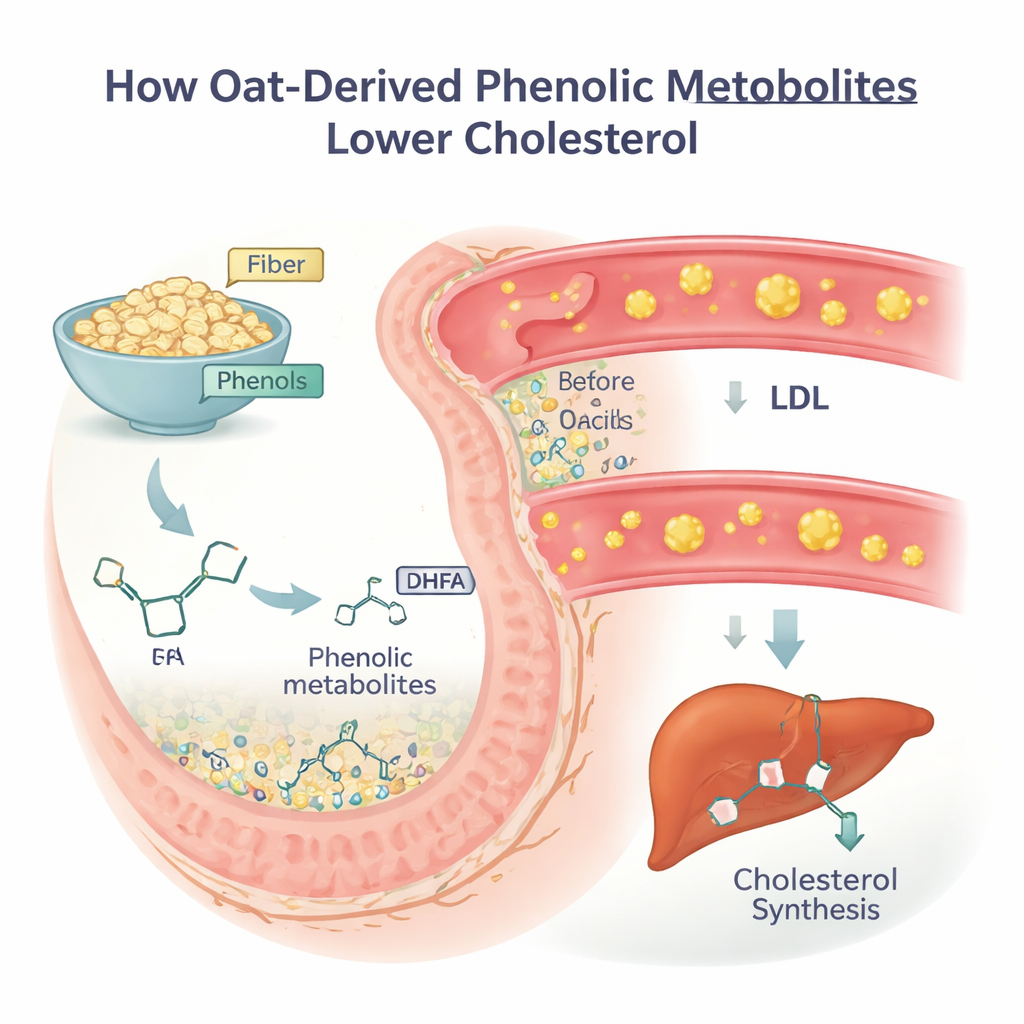
Oats are rich in phenolic compounds, including ferulic acid, which plants use as natural defenses. Gut microbes can transform ferulic acid into related molecules such as dihydroferulic acid. After just two days on the high-oat diet, participants showed clear rises in blood levels of ferulic acid and dihydroferulic acid; a daily bowl of oats for six weeks also raised ferulic acid, though less dramatically. Non‑targeted metabolomics confirmed that a broader set of phenolic compounds and their microbial breakdown products—such as 2‑aminophenol sulfate, 2‑acetamidophenol sulfate, and 4‑hydroxyhippurate—increased much more with oats than with the control diets. These findings mean that oat components are not only absorbed but also actively processed by the gut microbiome and enter circulation.
A rapid drop in LDL cholesterol linked to these metabolites
The short, high-dose oat intervention caused a notable fall in blood lipids: on average, LDL cholesterol dropped by about 10% and total cholesterol by about 8% compared with controls, after only two days. These improvements partly persisted during six weeks of follow-up without further oats. Advanced statistical modeling showed that people whose phenolic metabolites rose the most tended to have the largest reductions in LDL. Changes in these metabolites alone explained nearly one-fifth of the variation in LDL lowering, suggesting they are not just bystanders but likely contributors to the cholesterol benefit. In contrast, the modest six‑week oat addition stabilized cholesterol but did not clearly separate from the control group, probably because the single daily oat meal was diluted within an otherwise typical Western diet.
Gut microbes as the missing middleman
The researchers also saw that oats subtly reshaped the gut microbiome. After the high-oat diet, one bacterial group, Erysipelotrichaceae UCG‑003, increased and was linked to higher phenolic metabolites and lower LDL cholesterol. Predicted microbial functions involved in breaking down aromatic compounds, such as aminobenzoate and naphthalene degradation pathways, also shifted, fitting with increased processing of plant-derived molecules. In fecal samples, amino acid and lipid-related metabolites changed in ways that may further support healthier cholesterol handling. To probe cause and effect, the team performed lab experiments: when human immune cells and liver-like cells were exposed to dihydroferulic acid, they incorporated less cholesterol into their lipid pools, indicating a direct influence on cholesterol metabolism. Separate fecal fermentation experiments showed that human gut microbes can rapidly convert oat phenolics into the same metabolites seen in the trials.
What this means for everyday health
To a lay reader, the key message is that oats appear to help lower harmful LDL cholesterol not only through their well-known fiber, which can trap cholesterol in the gut, but also via plant compounds that gut bacteria transform into active metabolites. A short, high‑dose oat regimen—essentially an “oat cure” for a couple of days—produced measurable cholesterol drops in people with metabolic syndrome and boosted these beneficial microbial products. A single daily oat meal over weeks seemed gentler, and its benefits may depend more on individual diet and microbiome differences. Overall, the work suggests that strategically using oats, possibly in intermittent high‑intake periods, could be a practical, sustainable way to support heart health by working with, rather than against, our gut microbes.
Citation: Klümpen, L., Mantri, A., Philipps, M. et al. Cholesterol-lowering effects of oats induced by microbially produced phenolic metabolites in metabolic syndrome: a randomized controlled trial. Nat Commun 17, 598 (2026). https://doi.org/10.1038/s41467-026-68303-9
Keywords: oats, cholesterol, gut microbiome, phenolic metabolites, metabolic syndrome