Clear Sky Science · en
Environment, taxonomy, and socioeconomics predict non-imperilment in freshwater fishes
Why the fate of river fish matters to us
Freshwater fishes may not grab headlines like tigers or whales, but they quietly support food supplies, recreation, and cultural traditions for hundreds of millions of people. At the same time, they are the most threatened group of vertebrates on Earth. This study asks a surprisingly hopeful question: instead of only reacting when species are already in trouble, can we use global data and modern computing to predict which fish species are likely to stay safe—and what keeps them that way?
Seeing the whole freshwater world at once
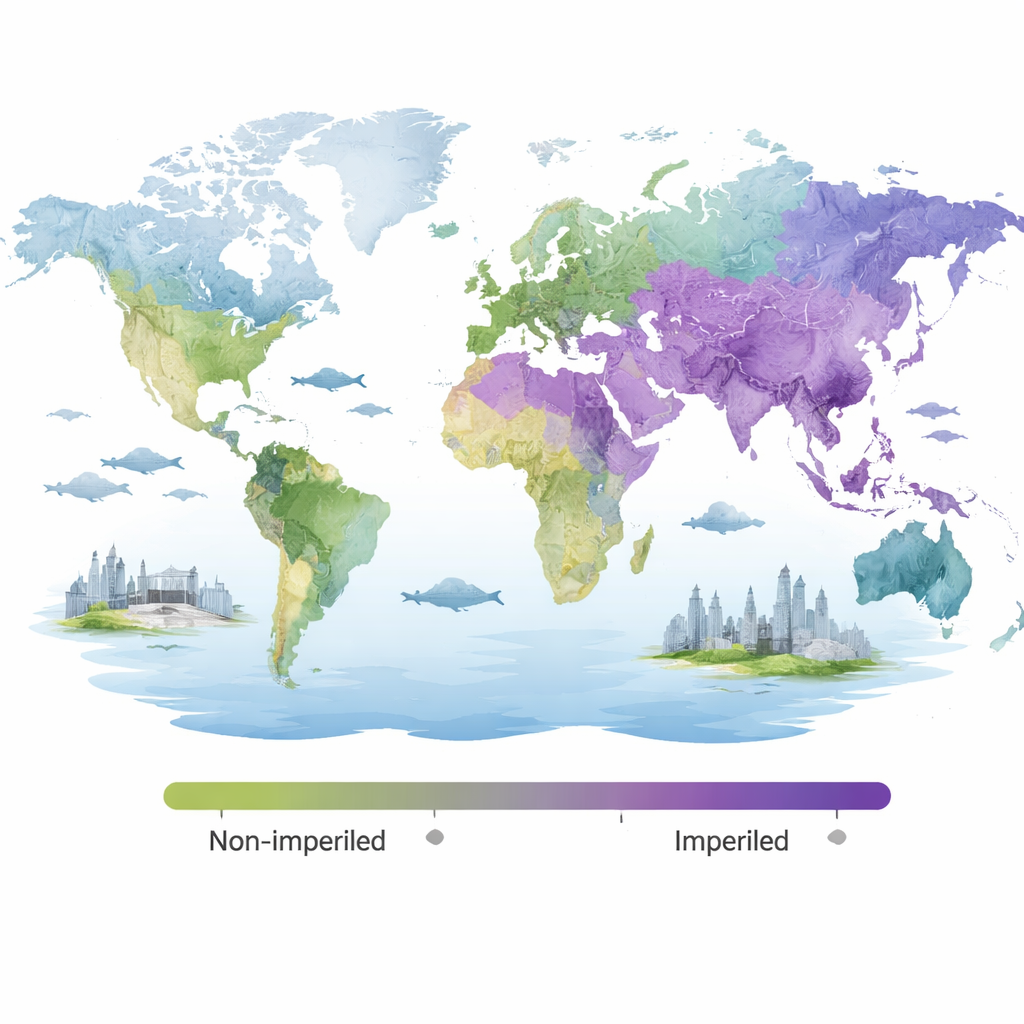
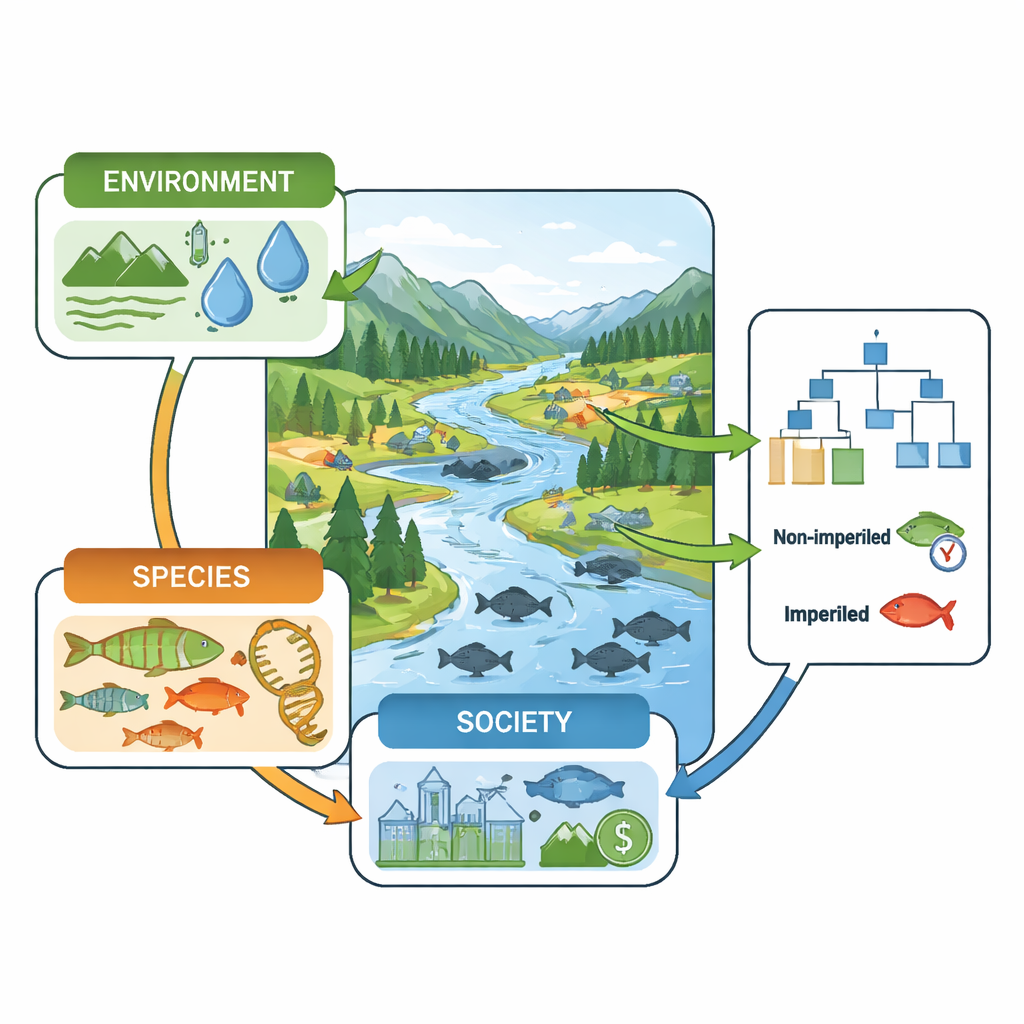
The researchers assembled a global portrait of 10,631 freshwater fish species, drawing on 12 international data sources. They combined information about where fish live, what their habitats are like, how rivers flow, how people use land and water, and basic biological details such as which taxonomic group each fish belongs to. Crucially, they did not include information that is directly used to decide a species’ official risk status, such as exact population size or trend. Instead, they looked at broader environmental, social, and biological conditions and asked how well these could predict whether a species is currently listed as imperiled or not on the International Union for Conservation of Nature (IUCN) Red List.
Teaching a computer to spot safe versus struggling species
To analyze this massive dataset, the team used a machine-learning method called a random forest classifier. Rather than trying to distinguish every level of threat one by one, they grouped species into two broad categories: "imperiled" (Vulnerable, Endangered, Critically Endangered) and "non-imperiled" (Near Threatened and Least Concern). The model learned from patterns in 52 different variables, ranging from water availability and river types to human population density, economic activity, and simple species traits. After training and careful testing, the model could correctly identify overall conservation status about 88 percent of the time. It did especially well for non-imperiled species (about 90 percent accuracy), but had somewhat more trouble correctly flagging imperiled species (about 82 percent accuracy), reflecting the messy and varied ways that species can decline.
What keeps freshwater fish out of danger
The most important safeguards for fish turned out to be where and how they live, rather than fine details of their biology. Species that tend to be non-imperiled are more often found in places with abundant water, relatively intact habitats, moderate—not extreme—levels of river damming, and a lighter human footprint on the surrounding landscape. A key signal was how diverse the river and wetland habitats were within a species’ range. Species occurring in areas with many different habitat types per unit area were more likely to be imperiled, likely because this pattern reflects fragmented river systems where barriers and altered flows disrupt connectivity. In contrast, species in more continuous, well-connected habitats faced lower overall risk.
How people and knowledge shape conservation status
Socioeconomic conditions also left a strong imprint on fish safety. Regions with stable economies, moderate development, and some but not overwhelming human modification of rivers were more likely to support non-imperiled species. High human footprint values, rapid economic change, or very intense habitat alteration often coincided with higher imperilment. Interestingly, the amount of information scientists have about a species—how many traits and environmental details are known—also helped the model. Species that are very well-studied or very poorly known both tended to be classified as imperiled, suggesting that risk-averse decisions and uneven research effort influence how we label species. Taxonomic order, a simple way of grouping related fishes, emerged as another important predictor, implying that closely related species often share similar vulnerabilities or resilience.
Using early warnings instead of emergency rescues
For a general reader, the takeaway is that we can now use global data and artificial intelligence not just to identify crises, but to spot and strengthen the conditions that keep species safe in the first place. This study shows that intact, well-connected freshwater habitats, moderate human pressures, and attention to the broader social context all help prevent fish from sliding toward extinction. Because the patterns of safety are more consistent than the many different ways species can become imperiled, acting early in these favorable settings may yield more reliable conservation gains than waiting for alarms to ring. In practical terms, protecting flowing rivers, limiting extreme development, and closing knowledge gaps can help secure the world’s freshwater fishes—and the human communities that depend on them—before they reach the brink.
Citation: Murphy, C.A., Olivos, J.A., Arismendi, I. et al. Environment, taxonomy, and socioeconomics predict non-imperilment in freshwater fishes. Nat Commun 17, 1661 (2026). https://doi.org/10.1038/s41467-025-68154-w
Keywords: freshwater fish conservation, extinction risk, river ecosystems, machine learning ecology, biodiversity protection