Clear Sky Science · en
Advances in lignocellulosic feedstocks for bioenergy and bioproducts
Turning Plants into Everyday Powerhouses
Lignocellulose may sound esoteric, but it is simply the tough, fibrous material that makes up most of a plant’s stems, trunks, and leaves. Because it is incredibly abundant and does not compete directly with food crops, this plant matter could supply fuels for airplanes, chemicals for industry, and advanced materials for buildings and electronics—all while helping cut greenhouse gas emissions. This article reviews how scientists are learning to better harvest, process, and even re‑engineer this plant material so it can replace a substantial share of today’s fossil‑fuel‑based products.
What Makes Woody Plants So Valuable?
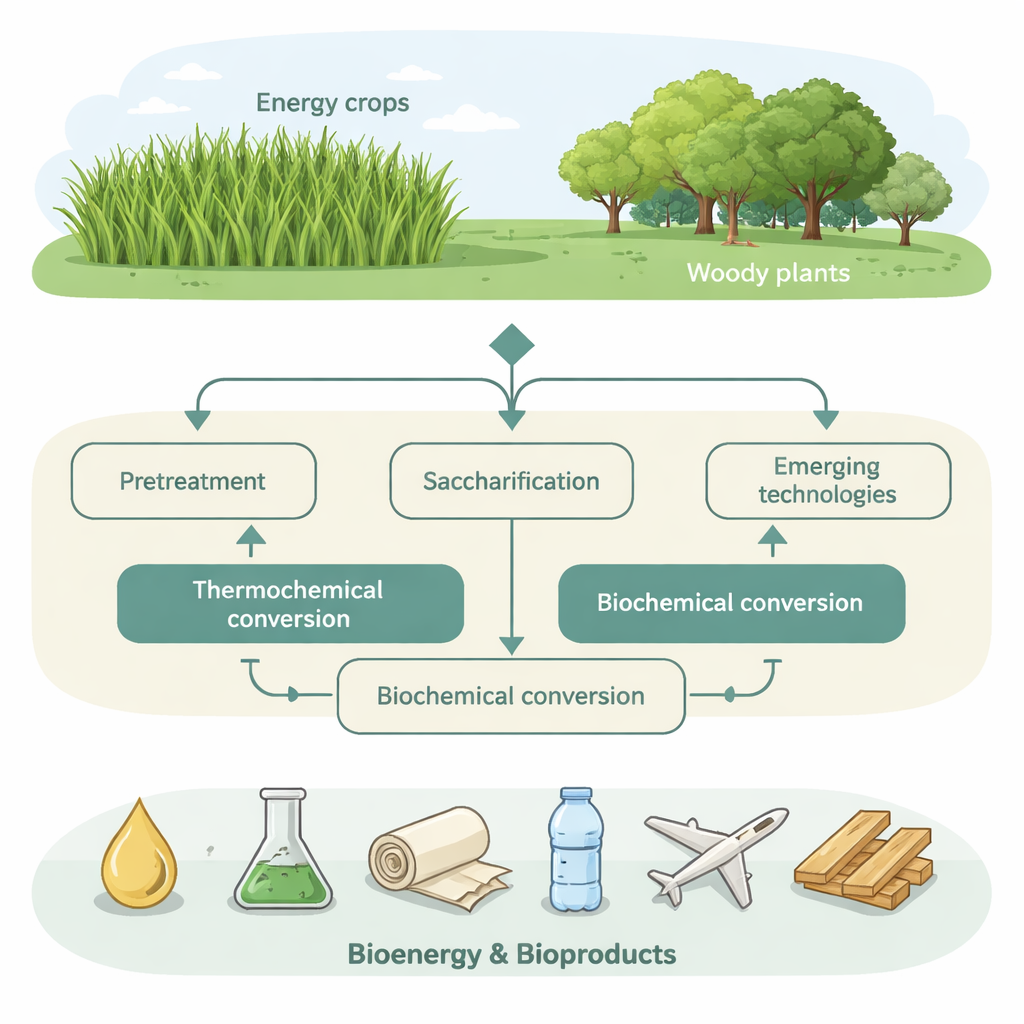
Lignocellulosic biomass comes largely from two sources: grassy “energy crops” and woody plants such as poplar or pine. Their cell walls are built from three main ingredients—cellulose, hemicelluloses, and lignin—that together account for more than half of all carbon stored in living biomass on Earth. Cellulose already underpins familiar products like paper, cardboard, and textiles, and is now being refined into high‑value nanocellulose for water filters, flexible electronics, and strong lightweight composites. Hemicelluloses can be converted into sugars for biofuels or used directly in foods, coatings, and medical products, while lignin, the most carbon‑rich component, is emerging as a source of aromatic chemicals, bioplastics, and soil‑enhancing biochar.
From Standing Tree to Useful Product
To turn a tree or grass stem into fuel or materials, industries must first crack open its stubborn structure. The review describes a chain of processing steps, beginning with the choice of feedstock and its transport to a “biorefinery,” a plant designed to handle biomass the way oil refineries handle crude. Pretreatment methods—mechanical, chemical, thermal, or biological—break the material into more manageable pieces and separate its main components. Enzymes then digest cellulose and hemicelluloses into sugars, which microbes ferment into ethanol, jet fuel precursors, or other chemicals. Other routes use heat and catalysts to turn biomass directly into gases, oils, or solid carbon. Each step must be tuned to the specific biomass type, and together they dominate the cost of bio‑based products, with pretreatment and enzymes alone accounting for a large share of total expenses.
Why Biology, Engineering, and Policy Must Work Together
Even as laboratory and pilot plants improve efficiency, large‑scale use of lignocellulosic feedstocks faces major hurdles. Moving bulky biomass from fields and forests to biorefineries is expensive, and harsh pretreatments can generate by‑products that poison the microbes used for fermentation. Recovering enzymes and solvents, and finding profitable uses for every by‑product stream, are essential to keep costs down and environmental impacts low. Life‑cycle assessments show that well‑designed systems can substantially reduce carbon footprints compared with fossil‑based fuels and materials, especially when they co‑produce fuels, chemicals, and advanced materials. However, supportive policies and clear regulations—such as fuel‑blending mandates and incentives for low‑carbon products—are indispensable to attract investment and enable biorefineries to compete with established fossil‑fuel infrastructure.
Re‑Designing Plants from the Inside Out
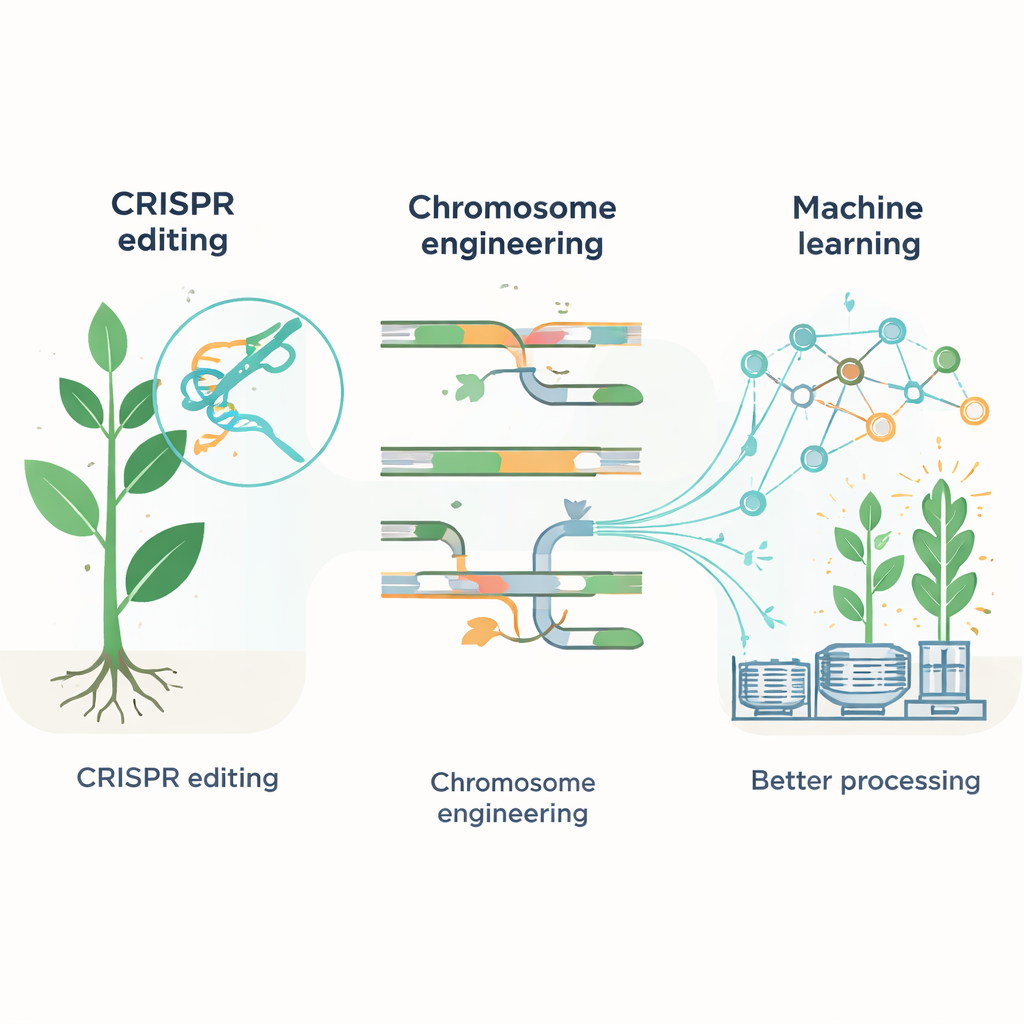
A distinctive feature of this work is its focus on changing the plants themselves, not just the factories that process them. Lignin, for example, makes wood strong but also difficult to break down. By dialing back or subtly reshaping lignin through modern genetics, researchers have created trees and grasses that yield far more sugar and ethanol without sacrificing growth. New genome‑editing tools based on CRISPR now allow precise changes to single genes, sets of genes, and even regulatory switches that control when and where those genes are active. Scientists are beginning to edit chromosomes to lock in desirable combinations of traits, such as high yield and drought tolerance, and to use large CRISPR libraries and machine‑learning models to uncover previously unknown genes that influence growth, resilience, or ease of processing.
Looking Ahead to a Plant‑Powered Future
The authors conclude that lignocellulosic feedstocks could become a central pillar of a low‑carbon economy, supplying fuels that are hard to electrify and renewable materials for construction, packaging, and high‑tech devices. Realizing this potential will require coordinated advances: smarter biorefineries, improved methods for transforming and regenerating plants, powerful CRISPR‑based tools for tailoring cell walls and stress responses, and data‑driven models that predict which genetic changes will pay off in the field and factory. With sustained research, industry partnerships, and policy support, the tough tissue that lets plants stand upright could help human societies stand up to climate change.
Citation: Sulis, D.B., Lavoine, N., Sederoff, H. et al. Advances in lignocellulosic feedstocks for bioenergy and bioproducts. Nat Commun 16, 1244 (2025). https://doi.org/10.1038/s41467-025-56472-y
Keywords: bioenergy, lignocellulosic biomass, biorefineries, CRISPR genome editing, sustainable materials