Clear Sky Science · en
Constant light disrupts biological rhythms and worsens sleep quality but does not elevate blood pressure in female rats
Why Always-On Light Matters
Most of us live in cities that never really get dark—streetlamps, glowing screens, and office lights blur the line between day and night. This study asks what happens when that blur becomes extreme: when nighttime disappears altogether. By keeping female rats under constant light for a month and closely tracking their hearts, blood pressure, movement, and sleep, the researchers show that round‑the‑clock lighting scrambles the body’s internal timing and sleep quality, yet does not raise blood pressure the way earlier work suggested. The findings highlight how artificial light can quietly strain the body even when classic risk markers, like average blood pressure, look normal.
The Body’s Daily and Shorter Rhythms
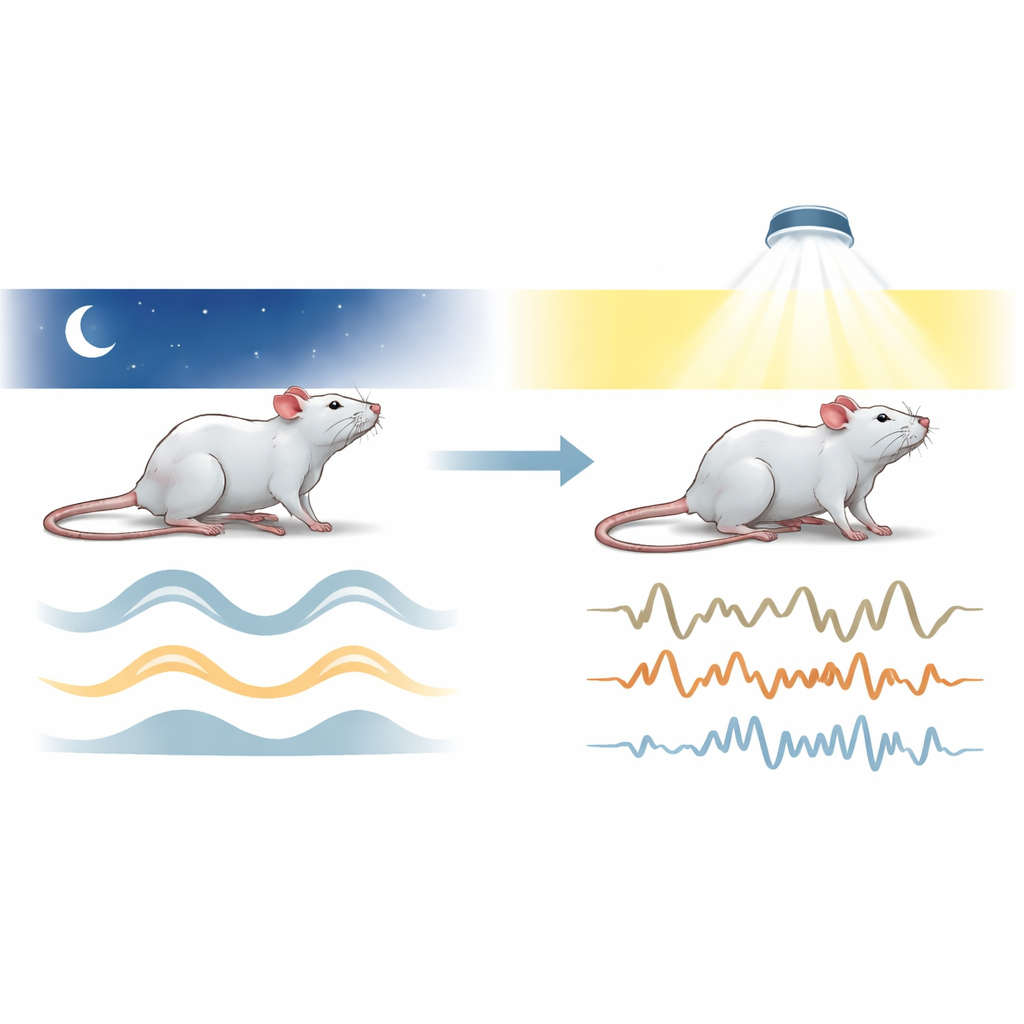
Our bodies run on many repeating cycles. The best known are daily, or roughly 24‑hour, rhythms that separate active daytime from restful night. But there are also shorter “ultradian” cycles that shape patterns of activity, hormone pulses, and shifts in heart function within each day. In nocturnal animals such as rats, darkness usually signals it is time to move, eat, and raise heart rate and blood pressure, while light cues rest and deeper sleep. Constant light strips away this daily contrast, allowing scientists to see how the loss of a reliable day–night signal affects these intertwined timing systems.
What the Researchers Did
The team studied adult female rats living first under a normal 12‑hour light, 12‑hour dark schedule and then under unbroken light for four weeks. Tiny implanted sensors sent continuous readings of blood pressure, heart rate, and movement, and in another group of animals, brain and muscle signals were recorded to classify sleep stages. The rats also underwent a brief shaking challenge to test how strongly their hearts and blood vessels reacted to sudden stress. This careful telemetry approach avoided some of the stress and error that can occur with traditional cuff‑based blood pressure measurements.
Slower Hearts, Softer Pressure, but Sharper Stress
Under constant light, the rats’ average heart rate and systolic blood pressure gradually fell, and the regular daily swings in these measures weakened or disappeared. Detailed analysis showed that control of the heart shifted toward the calming “rest and digest” branch of the nervous system, and reflexes that stabilize pressure became more sensitive. At first glance, this might look protective. Yet when the animals were briefly stressed, their cardiovascular responses became relatively stronger against this low, flat baseline—suggesting that the loss of day–night variation makes the system more jumpy and potentially more vulnerable to sudden surges, even if typical readings remain modest.
Broken Sleep Without Less Sleep
Sleep told a different but related story. Under normal conditions, these nocturnal rats slept more deeply during the light phase and were awake and active in the dark. Constant light did not greatly change the total amount of time spent asleep over 24 hours, but it scrambled when and how that sleep occurred. Deep non‑REM sleep during the usual rest phase was reduced and scattered, REM sleep was shifted and increased at unusual times, and the animals cycled more frequently between states. Measures of rhythm strength and day‑to‑day regularity fell across all sleep stages. In other words, the architecture and timing of sleep were badly fractured, even though the overall tally of minutes asleep looked similar.
Shorter Internal Cycles and Hidden Strain
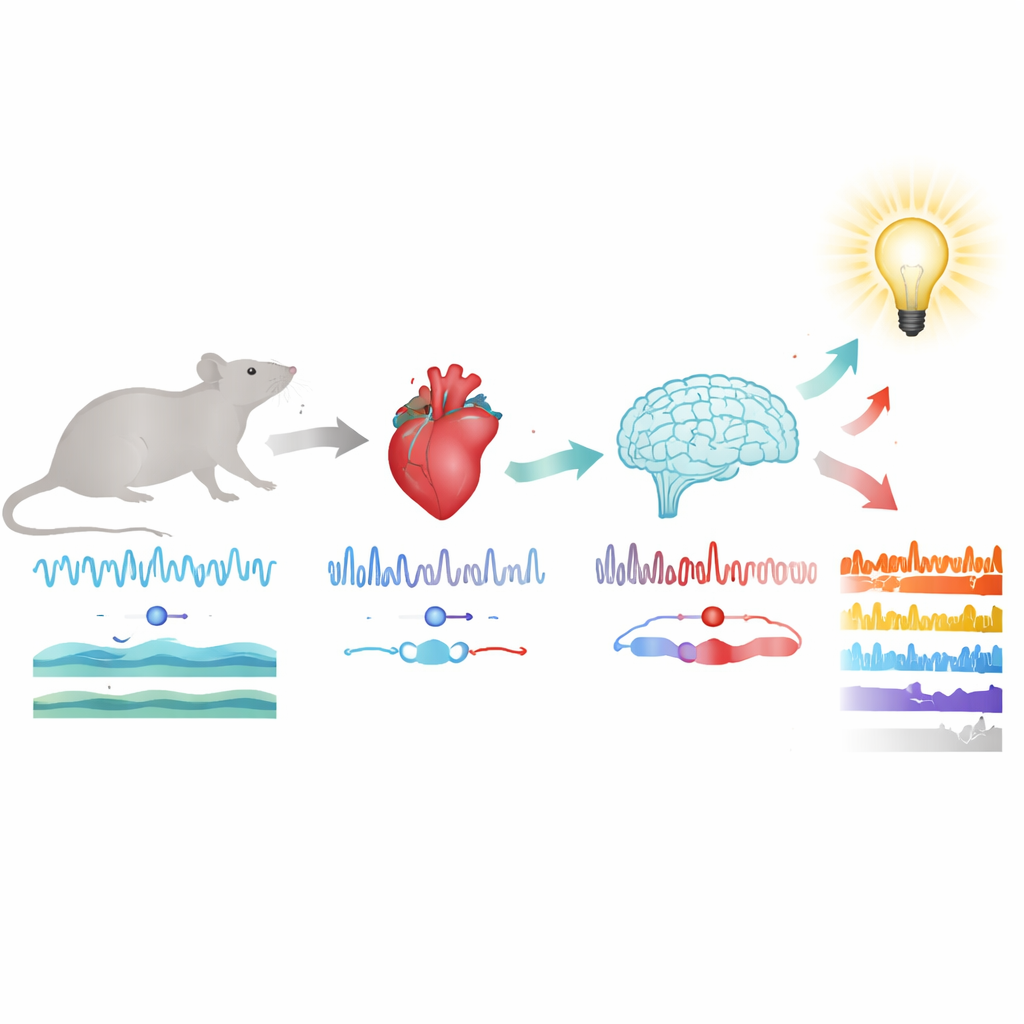
Looking closer at the shorter ultradian rhythms, the researchers found that under normal lighting, heart, pressure, and movement tended to follow repeating patterns lasting several hours. Constant light did not erase these fluctuations, but it shifted power away from longer cycles toward shorter, choppier ones, especially for heart rate. Some multi‑hour patterns disappeared entirely by the fourth week. The authors suggest that this shift, along with flatter daily rhythms and disrupted sleep, reflects a state of chronic physiological strain: the body is constantly adapting to a world with no clear night, rather than smoothly anticipating regular changes.
What It Means for Everyday Life
For these female rats, living under unending light did not drive up average blood pressure, but it did dismantle their internal timing and degrade sleep quality while making stress responses more pronounced. Translated to human life in brightly lit cities, hospital wards, or shift‑work schedules, the message is cautionary. Even when routine checkups show acceptable blood pressure, long‑term exposure to distorted light–dark cycles may quietly burden the heart, blood vessels, and brain through broken rhythms and restless, poorly organized sleep. Protecting darkness at night may be as important as getting enough hours of sleep in the first place.
Citation: Molcan, L., Mauer Sutovska, H. & Zeman, M. Constant light disrupts biological rhythms and worsens sleep quality but does not elevate blood pressure in female rats. Hypertens Res 49, 1349–1360 (2026). https://doi.org/10.1038/s41440-026-02579-8
Keywords: light at night, biological clocks, sleep disruption, blood pressure, circadian rhythms