Clear Sky Science · en
Investigating feature-engineered predictors for systolic blood pressure changes in an mHealth-based disease management program
Why Your Phone Could Help Tame High Blood Pressure
High blood pressure is a leading cause of heart attacks and strokes, yet many people struggle to keep it under control between brief doctor visits. This study asks a timely question: if people measure their blood pressure at home and use a coaching app for several months, can patterns in those readings—and in how they use the app—help predict whose numbers will improve and who might need extra help? The researchers tested whether clever ways of combining digital data could make those predictions more accurate.
Watching Pressure in Daily Life
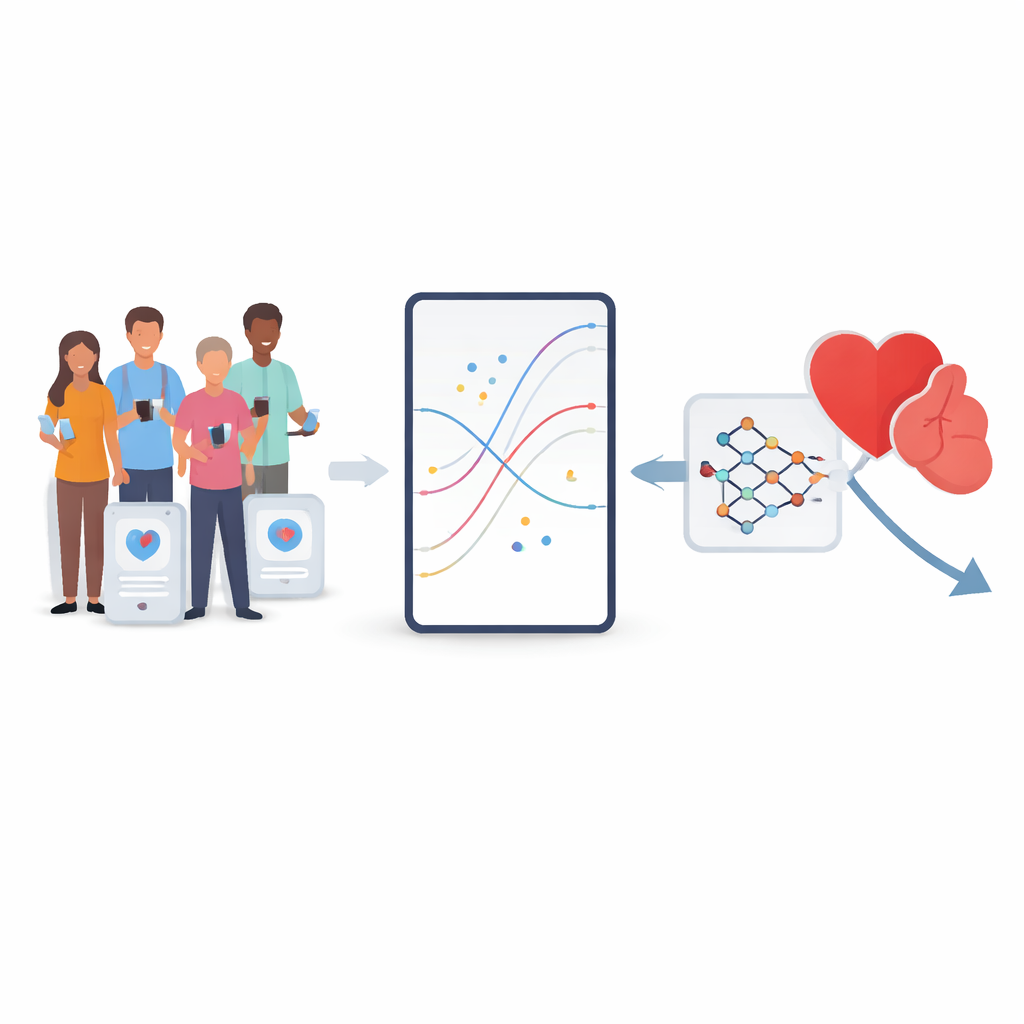
The research team analyzed records from more than 2,300 adults in Japan who joined a 24‑week mobile health program called Mystar. Participants had conditions such as high blood pressure, diabetes, or high cholesterol and were already at risk for heart and blood vessel disease. Over six months they received regular phone coaching, used an app to log lifestyle habits, and measured their blood pressure at home each morning. The main question was how much each person’s top blood pressure number—the systolic pressure—changed from the start to the end of the program.
Turning Raw Readings into Signals
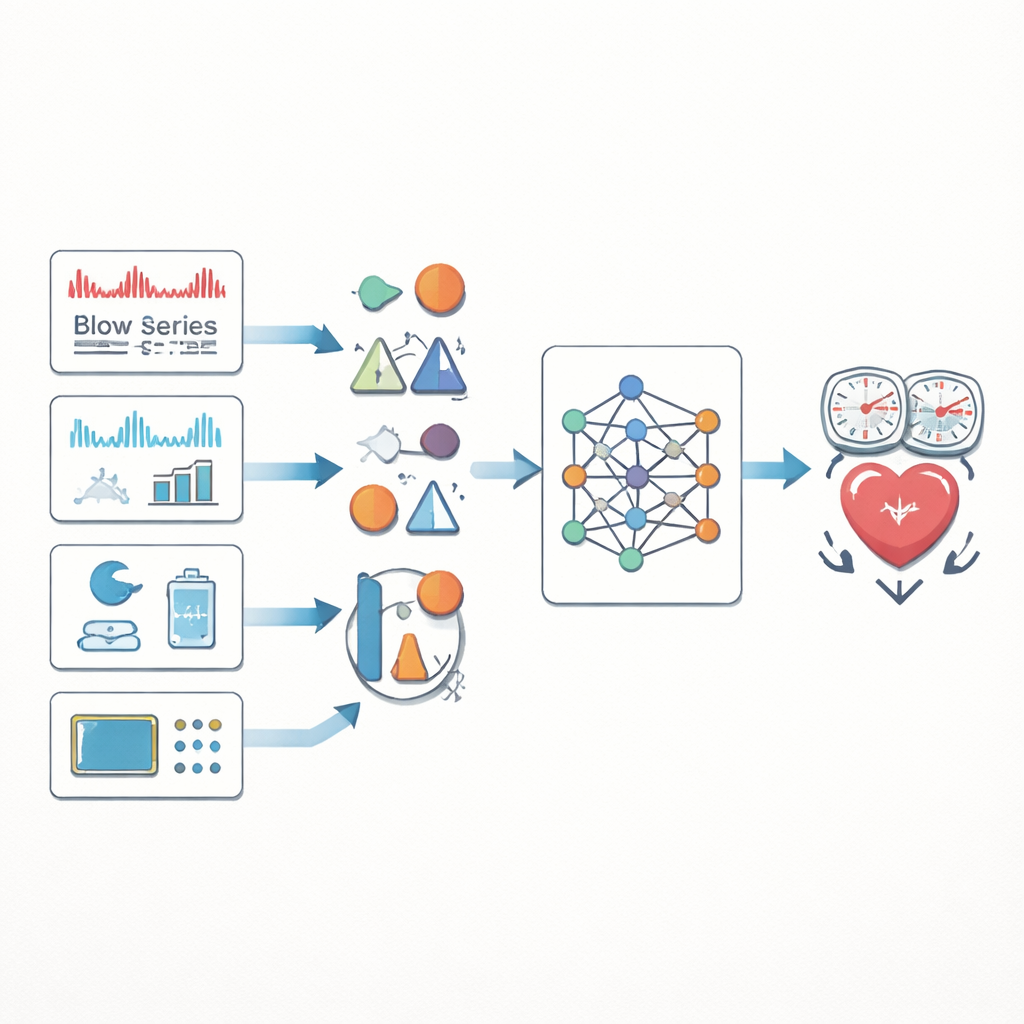
Modern apps and wearables generate long streams of numbers: daily pressures, steps, sleep time, body weight, and details of how often someone taps and scrolls through the app. Instead of feeding all of these raw values directly into a prediction model, the researchers used “feature engineering” software to create new, combined indicators. For example, the software could relate a person’s morning pressure to their starting pressure or blend several readings into a single stability score. The team then built two types of mathematical models at weeks 4, 8, 12, and 22 of the program: one using only straightforward measures such as age, medical history, and weekly averages, and another that also included these engineered combinations.
What Mattered Most in the Early Weeks
In the first month or two, some of the engineered indicators lined up more closely with later blood pressure change than any single original measure. Early morning pressure patterns and simple combinations of baseline readings rose to the top of the importance rankings. Digital behavior also played a role: people who spent more time looking at their logged data or the app’s home screen tended to have slightly different blood pressure trajectories. These subtle engagement clues suggested which participants might be drifting off track before their pressures clearly showed it.
Simple Trends Still Ruled the Long Game
Despite these early hints, adding engineered features did not meaningfully improve the overall accuracy of the prediction models. By week 22, both the simple and the engineered models predicted end‑of‑program systolic pressure changes quite well, and to almost exactly the same degree. The most powerful signal was straightforward: recent home blood pressure readings. As more weeks of measurements accumulated, these recent values overwhelmed the extra information gained from intricate combinations or from app‑usage patterns. In other words, consistent home monitoring itself provided the bulk of predictive power.
What This Means for People and Programs
For patients and health programs, the takeaway is both reassuring and practical. Regular home blood pressure checks, shared through a simple mobile platform, already allow computers to forecast later improvements with high accuracy. Fancy data tricks can slightly sharpen early warning signs, especially when only a few weeks of data are available, and app‑engagement traces can help flag users who might benefit from earlier outreach or extra coaching. But in the end, the most important ingredient remains steady home measurement: the recent pattern of your own readings is the clearest guide to where your blood pressure is heading.
Citation: Kanai, M., Park, S., Miki, T. et al. Investigating feature-engineered predictors for systolic blood pressure changes in an mHealth-based disease management program. Hypertens Res 49, 1204–1213 (2026). https://doi.org/10.1038/s41440-026-02569-w
Keywords: mobile health, home blood pressure, digital coaching, machine learning, hypertension management