Clear Sky Science · en
Distinct associations of blood pressure phenotypes with subclinical cerebrovascular disease and coronary artery calcification in Japanese men
Why different kinds of high blood pressure matter
Many people know that high blood pressure can lead to heart attacks and strokes, but fewer realize that blood pressure does not behave the same way in everyone. Some people’s readings spike only at the doctor’s office, while others look fine in the clinic but run high at home. This study of older Japanese men shows that these hidden patterns of blood pressure leave different fingerprints on the brain and heart, even before any symptoms appear. Understanding these patterns could change how we screen for risk and when we start treatment.
Hidden blood pressure patterns in everyday life
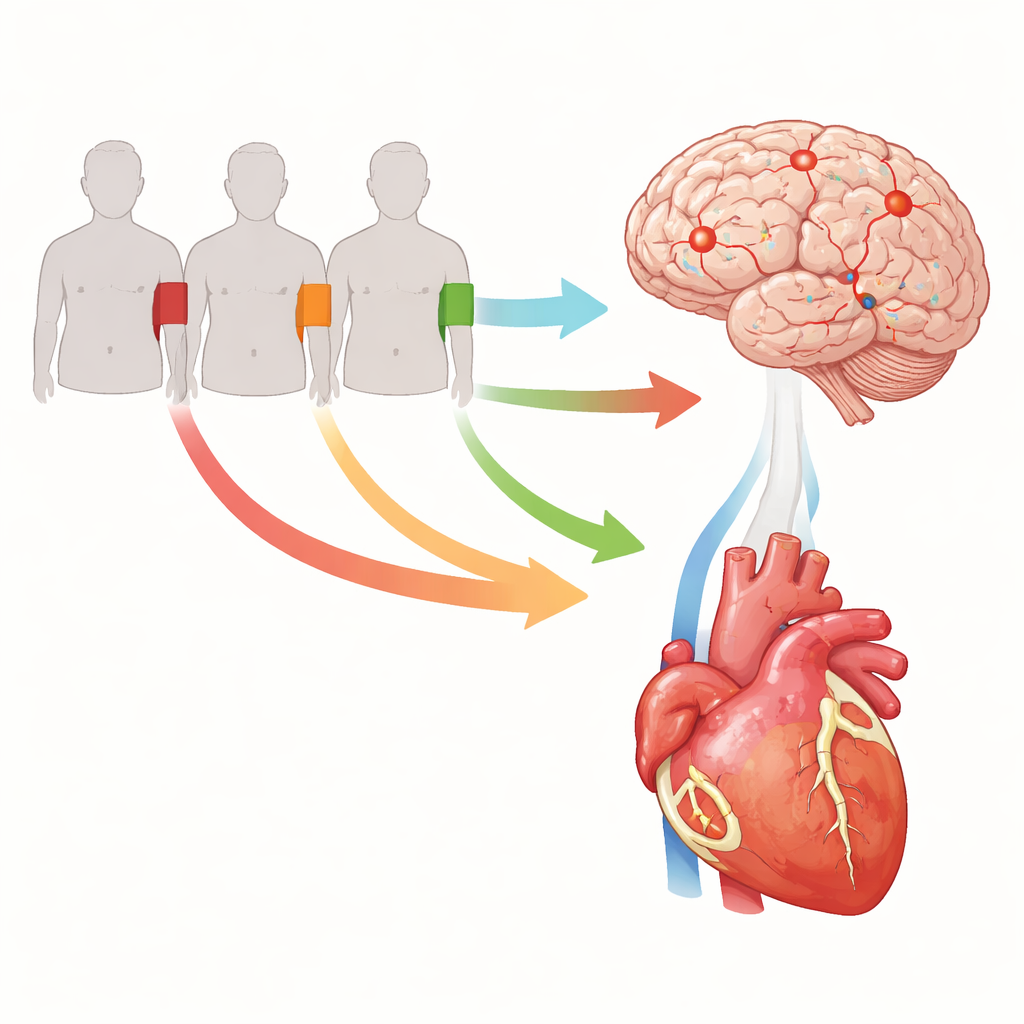
Doctors usually diagnose high blood pressure using readings taken in the clinic. Yet blood pressure changes from place to place and from moment to moment. The researchers focused on four patterns: consistently normal readings, “white‑coat” hypertension (high only in the clinic), “masked” hypertension (normal in the clinic but high at home), and sustained hypertension (high in both settings). To sort people into these groups, they measured blood pressure twice in a quiet office and asked men to record their own readings once each morning at home for at least five days. This approach captured a more realistic picture of how their blood pressure behaved in daily life.
Scanning the brain and heart for silent damage
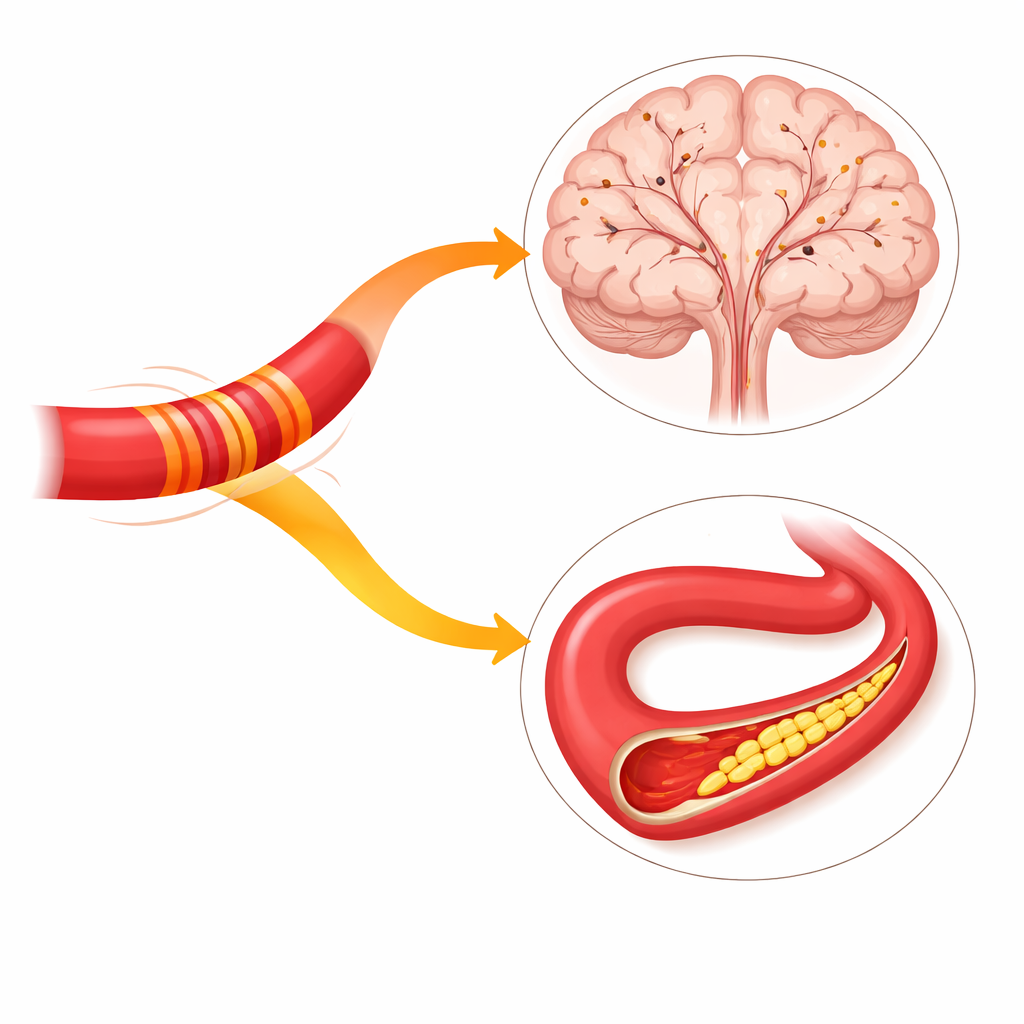
The team then looked for early, symptom‑free signs of damage in the brain and heart. Using magnetic resonance imaging of the brain, specialists searched for tiny “lacunar” strokes, bright spots in the white matter that signal wear and tear, microscopic bleeds, and narrowings in major brain arteries. These changes, grouped under the term subclinical cerebrovascular disease, are linked to later dementia, stroke, depression, and death. For the heart, they used CT scans to measure calcium deposits in the coronary arteries, a widely used marker of hidden artery hardening that predicts future heart attacks and other cardiac events, even in people who feel well.
Different patterns, different targets in the body
Among 686 men without prior stroke or heart attack, any type of elevated blood pressure pattern was tied to more silent brain problems compared with consistently normal readings. White‑coat, masked, and sustained hypertension were all linked to a higher chance of having tiny brain microbleeds. Sustained hypertension stood out further: men with high blood pressure both at home and in the clinic were more likely to have small strokes (lacunar infarctions) and narrowings of major brain arteries. When the researchers turned to the heart, only sustained hypertension showed a clear link with calcium buildup in the coronary arteries, suggesting that truly persistent high pressure is especially important for hardening of the heart’s vessels.
The role of medication and who is most at risk
The study also examined whether being on blood pressure medicine changed these patterns. Among men taking such drugs, those with white‑coat hypertension had a particularly strong link to microbleeds in the brain, hinting that large swings in pressure or long‑standing underlying disease may be stressing small vessels despite treatment. In contrast, among untreated men, sustained hypertension was the main driver of both microbleeds and artery narrowings in the brain. These findings suggest that looking only at clinic readings or at whether someone is taking medication can miss important details about how their blood pressure is behaving and what organs may already be under strain.
What this means for everyday health
For a layperson, the key message is that “normal” numbers in the doctor’s office do not always mean the brain and heart are safe, and that all forms of elevated blood pressure deserve attention. In this group of Japanese men, every pattern of raised pressure increased the chance of silent brain injury, while only truly sustained high pressure was clearly tied to hidden calcium in the heart’s arteries. Regular home monitoring, combined with office checks, can reveal these patterns early. Recognizing whether someone has white‑coat, masked, or sustained hypertension may help doctors tailor treatment and prevention strategies long before a stroke or heart attack occurs.
Citation: Bayaraa, N., Yano, Y., Kadota, A. et al. Distinct associations of blood pressure phenotypes with subclinical cerebrovascular disease and coronary artery calcification in Japanese men. Hypertens Res 49, 1128–1138 (2026). https://doi.org/10.1038/s41440-026-02559-y
Keywords: white-coat hypertension, masked hypertension, microbleeds, coronary artery calcification, home blood pressure monitoring