Clear Sky Science · en
Postpartum cardio-obstetrics rehabilitation program for women after hypertensive pregnancy: A single-arm proof-of-concept study
Why New Mothers’ Hearts Matter
Many women develop high blood pressure during pregnancy, and for years the focus has been mostly on getting them safely through childbirth. Yet these problems can leave a lasting mark on the heart and blood vessels. This study explores whether a short, structured rehabilitation program—similar to cardiac rehab after a heart attack, but designed for new mothers—can fit into the busy, exhausting months after birth and begin to protect long-term heart health.
A Hidden Risk After Birth
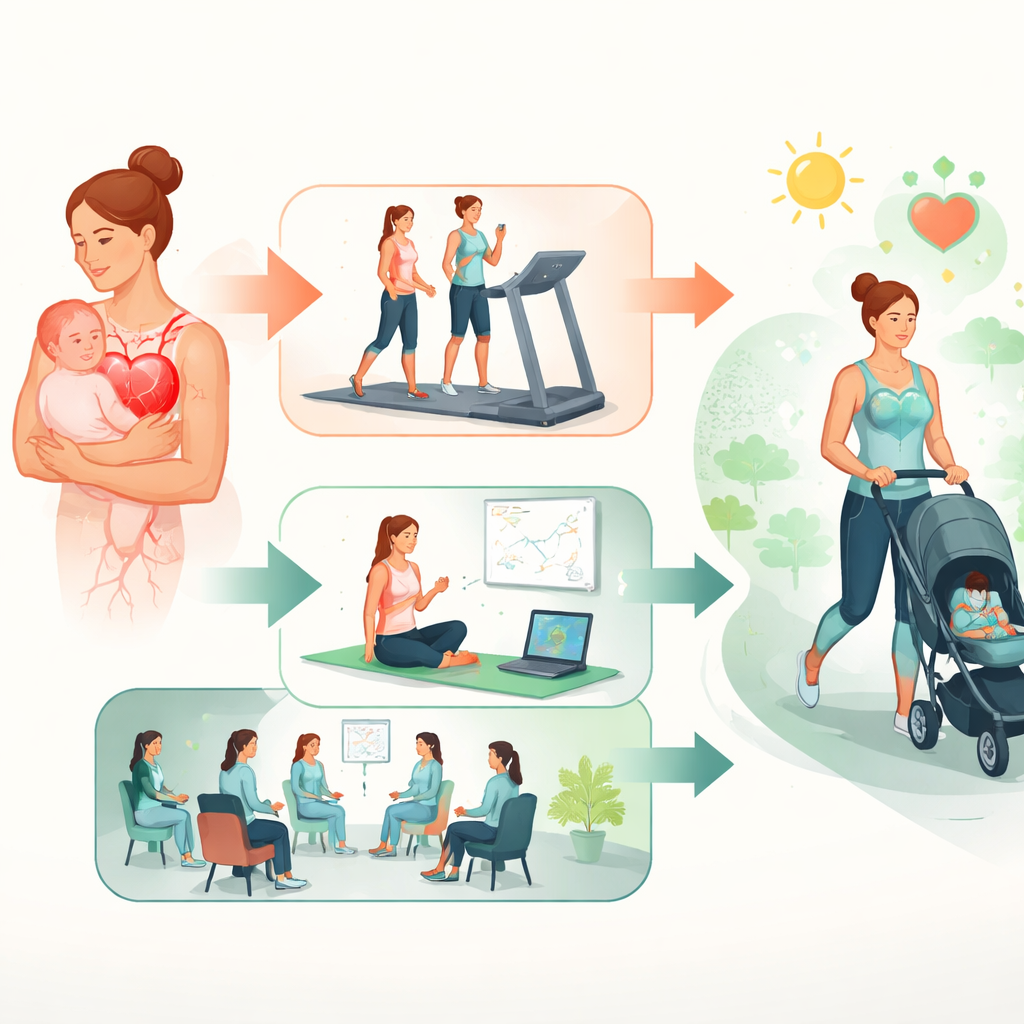
High blood pressure conditions of pregnancy, such as gestational hypertension and preeclampsia, are major causes of illness during pregnancy and delivery. Increasing evidence shows they also raise a woman’s chances of chronic high blood pressure, heart failure, and stroke later in life. Blood pressure can stay unstable for months after delivery, but routine postpartum care rarely includes structured help to improve heart health. Guidelines now recommend regular exercise in the first year after birth, yet little is known about how to deliver such programs in ways that feel realistic and safe for women recovering from complicated pregnancies.
A Hybrid Rehab Program for New Mothers
The research team designed a four-week “cardio-obstetrics” rehabilitation program tailored to women three to six months after a hypertensive pregnancy. The program mixed supervised gym sessions, live online exercise classes, and at-home workouts guided by prerecorded videos, plus three educational workshops on topics like nutrition, activity, and sleep. Each exercise session followed a clear routine: warm-up, 30 minutes of aerobic exercise, resistance training, core work, pelvic floor exercises, and stretching. Intensity increased gradually over the month. Women wore an activity monitor to track steps and heart rate, and were encouraged to work toward 10,000 steps per day. The goal of this first study was not to prove the program “works” definitively, but to see whether women would join, stay with it, and tolerate it safely.
Can Busy Mothers Stick With It?
Of 20 women screened, six met the criteria and enrolled; all six finished the four-week program, giving a perfect retention rate. Overall, they attended about seven out of every ten scheduled sessions, with the most consistent participation in the flexible prerecorded workouts and solid attendance at in-person classes. Live online sessions and education workshops were slightly harder to fit in, mostly because of childcare demands and time pressures. Still, every participant reported that the program felt helpful, that the exercises were useful enough to continue, and that the different formats were easy to follow. No injuries or other safety problems were reported, suggesting the program’s structure and monitoring were appropriate for this vulnerable period after birth.
Early Signs of Health Gains
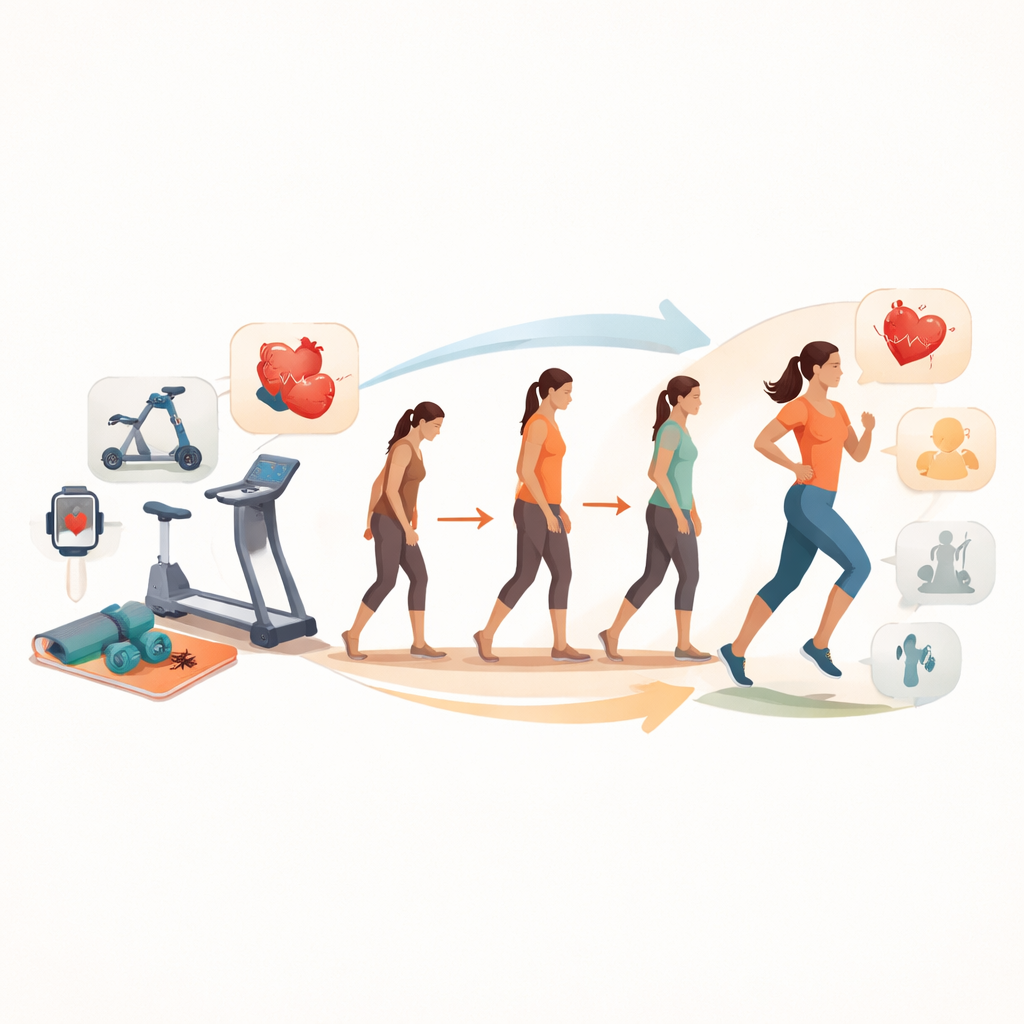
Although the study was small and had no comparison group, the women showed encouraging changes over the month. On average, their top blood pressure number (systolic pressure) fell by about 5 points—enough to be considered clinically meaningful in large population studies. Walking endurance measured by a six-minute walk test improved modestly, and both body weight and body mass index edged downward, approaching early pregnancy levels. Activity monitors showed more daily steps, more time spent in light and moderate movement, and less time sitting. Questionnaires revealed better scores for physical functioning, general health, and energy, along with slightly lower levels of depressive symptoms. Women also became more convinced of the physical and social benefits of exercise, even as they became more aware of real-world barriers such as fatigue, time conflicts, and feeling self-conscious while exercising.
What This Means for Mothers’ Futures
This proof-of-concept study suggests that a short, flexible rehabilitation program built specifically for women after hypertensive pregnancies is both doable and well received, and it hints at improvements in blood pressure, fitness, weight, activity habits, and quality of life. Because only six women took part and there was no control group, the results cannot prove that the program alone caused these changes. Still, the findings lay important groundwork: they show that new mothers at elevated heart risk are willing and able to engage in structured heart-health support when it is carefully designed around their realities. Larger, longer studies are now needed to test whether such programs can truly lower future heart disease risk and become a routine part of postpartum care.
Citation: Pongpanit, K., Patel, G., Sellan, L. et al. Postpartum cardio-obstetrics rehabilitation program for women after hypertensive pregnancy: A single-arm proof-of-concept study. Hypertens Res 49, 1415–1427 (2026). https://doi.org/10.1038/s41440-026-02556-1
Keywords: postpartum rehabilitation, hypertensive pregnancy, women’s heart health, exercise after childbirth, cardiovascular prevention